My Oven-Baked Vietnamese Shrimp & Pork Cakes
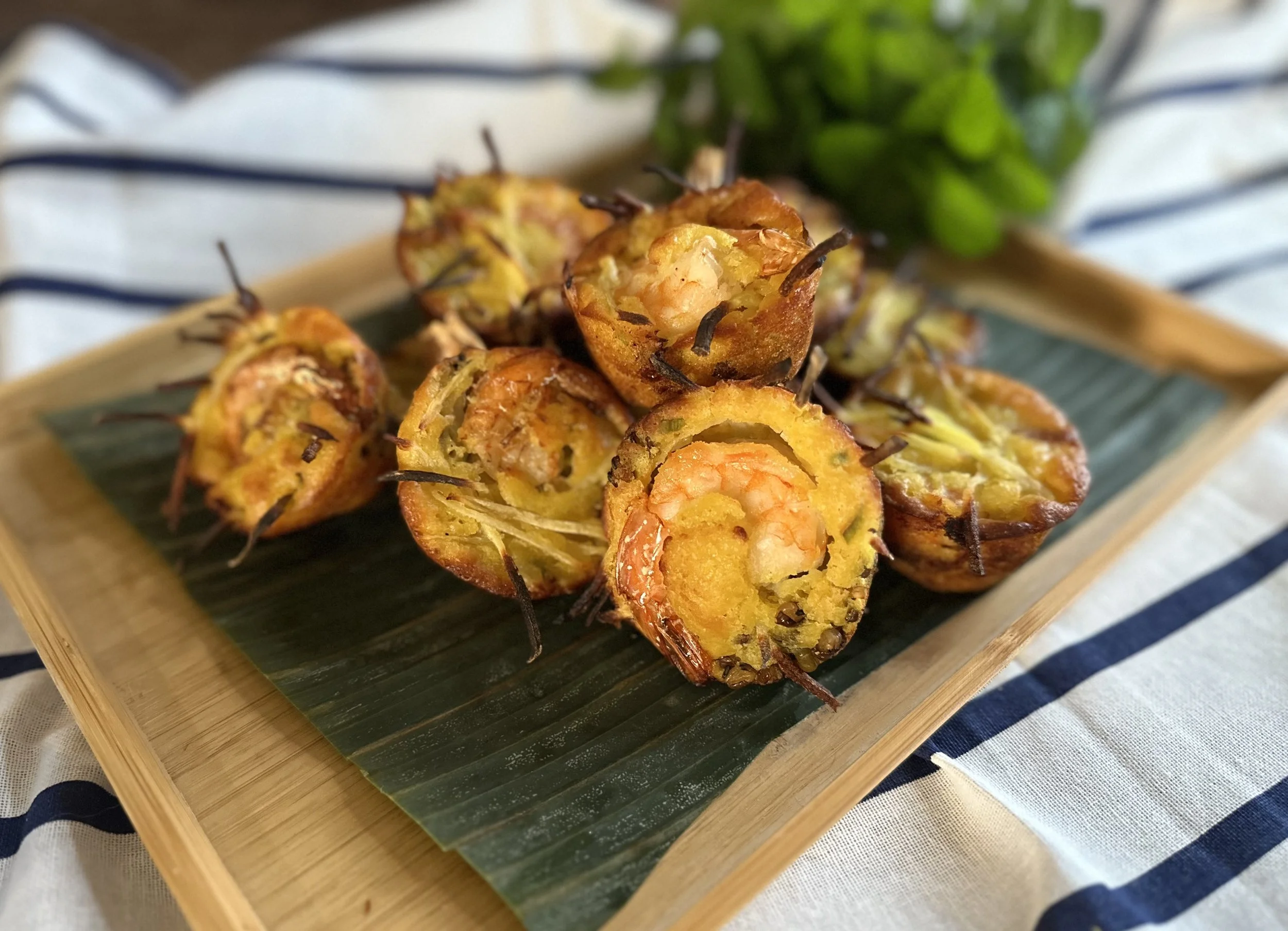
Bánh cống is a very popular dish in my hometown, a small city in Vietnam. I remember how it was traditionally prepared using small individual metal molds and a large pot of hot oil.
The cook would dip each mold into the hot oil, then pour in the batter and add the mung beans, pork, vegetables, and shrimp. Once the cake was firm enough to release from the mold, it would be removed and fried again until the outside became beautifully golden and crispy.
I love bánh cống, especially the contrast between the crispy outside and the soft, savory filling. But making it the traditional way at home requires quite a bit of oil, time, and attention.
So I decided to make my own oven-baked version.
Instead of frying each cake individually, I use a muffin tin to bake several bánh cống at once. I preheat the empty muffin tin in a hot oven, carefully add a little oil to each cavity, then pour in the yeast batter and add the fillings.
This method uses much less oil and saves time, while still giving the cakes a golden exterior and a soft interior.
And when I want them extra crispy, I have another little trick: I bake the cakes ahead of time, refrigerate them, then deep-fry or air-fry them the next day. The second cooking makes the outside even crispier.
How I Like to Serve Bánh Cống
In my hometown, bánh cống is often enjoyed with plenty of fresh vegetables and herbs, much like bánh xèo and bánh khọt.
I like to cut each bánh cống into halves or quarters, depending on the size.
Wrap a piece in fresh lettuce with Vietnamese herbs, then dip it into nước mắm chua ngọt, a sweet, sour, and slightly spicy fish sauce made with fish sauce, water, sugar, lime juice, garlic, and chili.
Bánh cống is also delicious served with bánh ướt, soft steamed rice sheets. The tender rice sheets, crispy bánh cống, fresh herbs, and dipping sauce make a wonderful combination.
For me, the best part is having a little of everything in one bite: the savory shrimp and pork, soft mung beans, crispy cake, fresh lettuce, fragrant herbs, and tangy dipping sauce.
Baking with Confidence — My Kitchen Adaptation
Traditional bánh cống is deep-fried in individual molds, but my version is baked in a hot muffin tin.
I don't expect the baked cakes to have exactly the same crust as the traditional version. My goal is to make a dish I love more practical for home cooking.
By heating the muffin tin before adding the oil and batter, I encourage the outside to brown while keeping the inside soft.
For an extra-crispy finish, I can bake the bánh cống one day and deep-fry or air-fry them the next.
It's a convenient way to prepare food ahead of time, especially when cooking for family and friends.
Sometimes adapting a traditional recipe isn't about changing what makes it special. It's about finding another way to enjoy the flavors you remember.
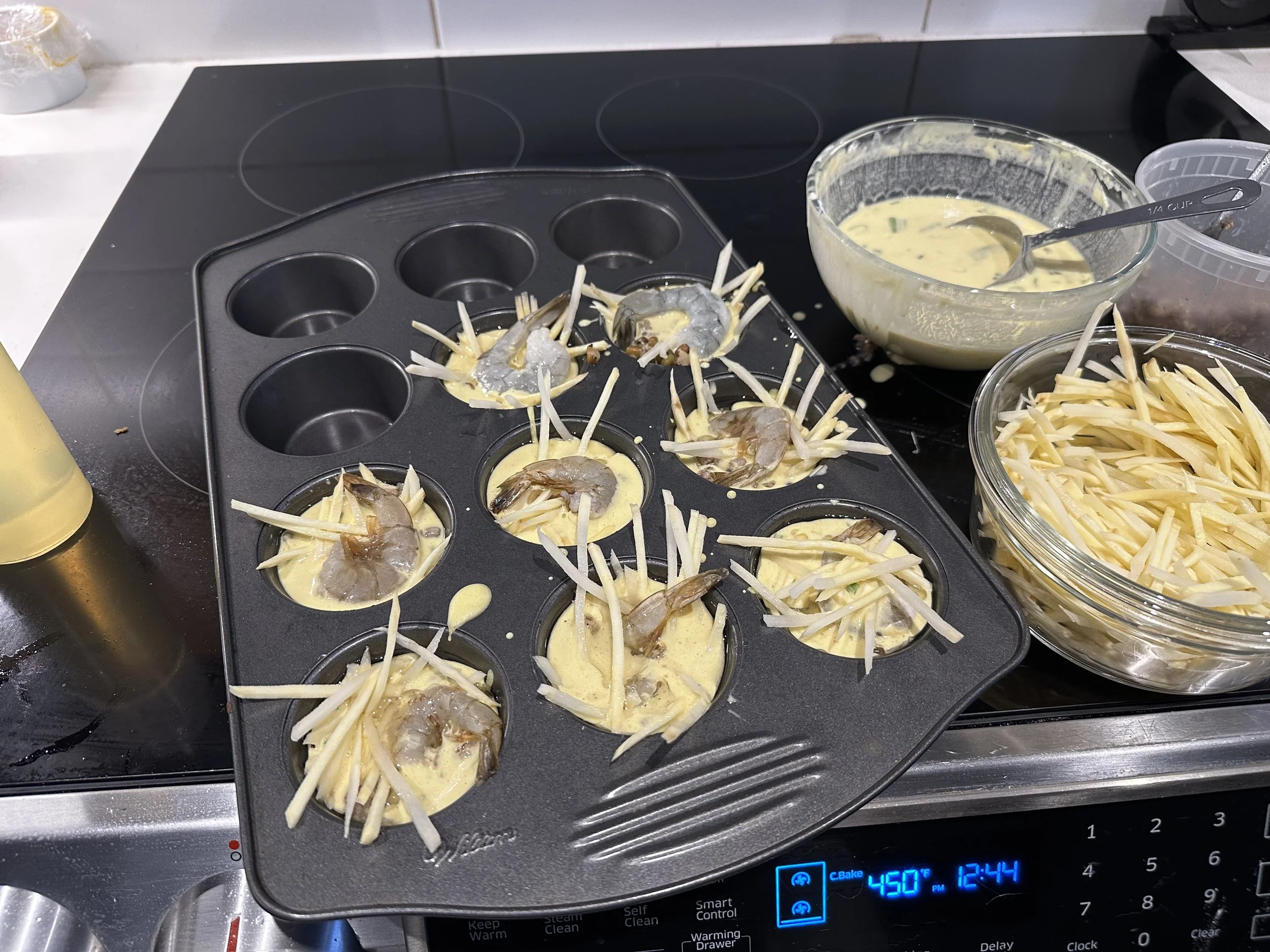
Each cake is filled with cooked mung beans, seasoned ground pork, and shredded sweet potato and potato, then topped with shrimp before baking.
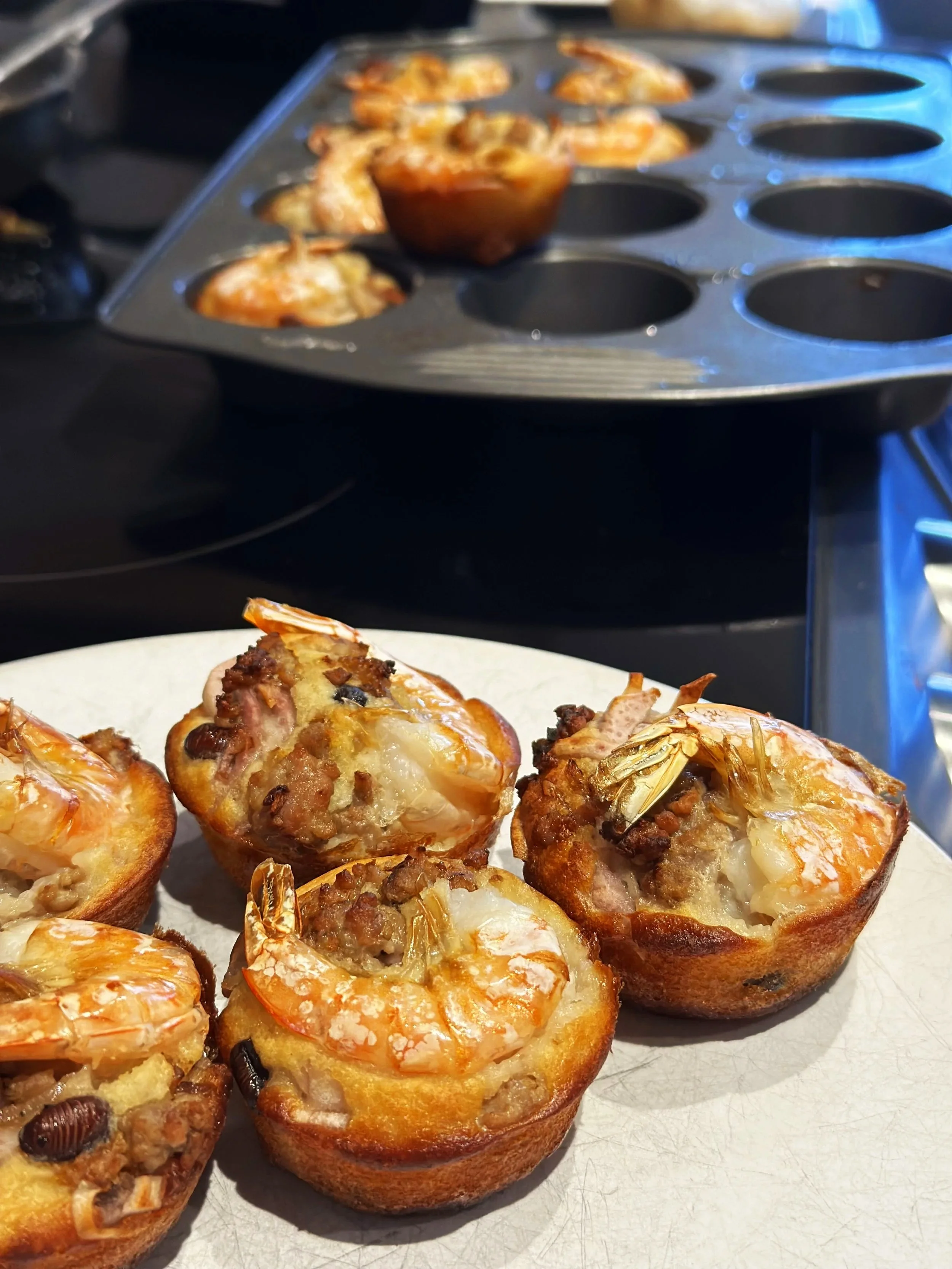
The finished cakes are golden on the outside, soft inside, and full of savory flavor.
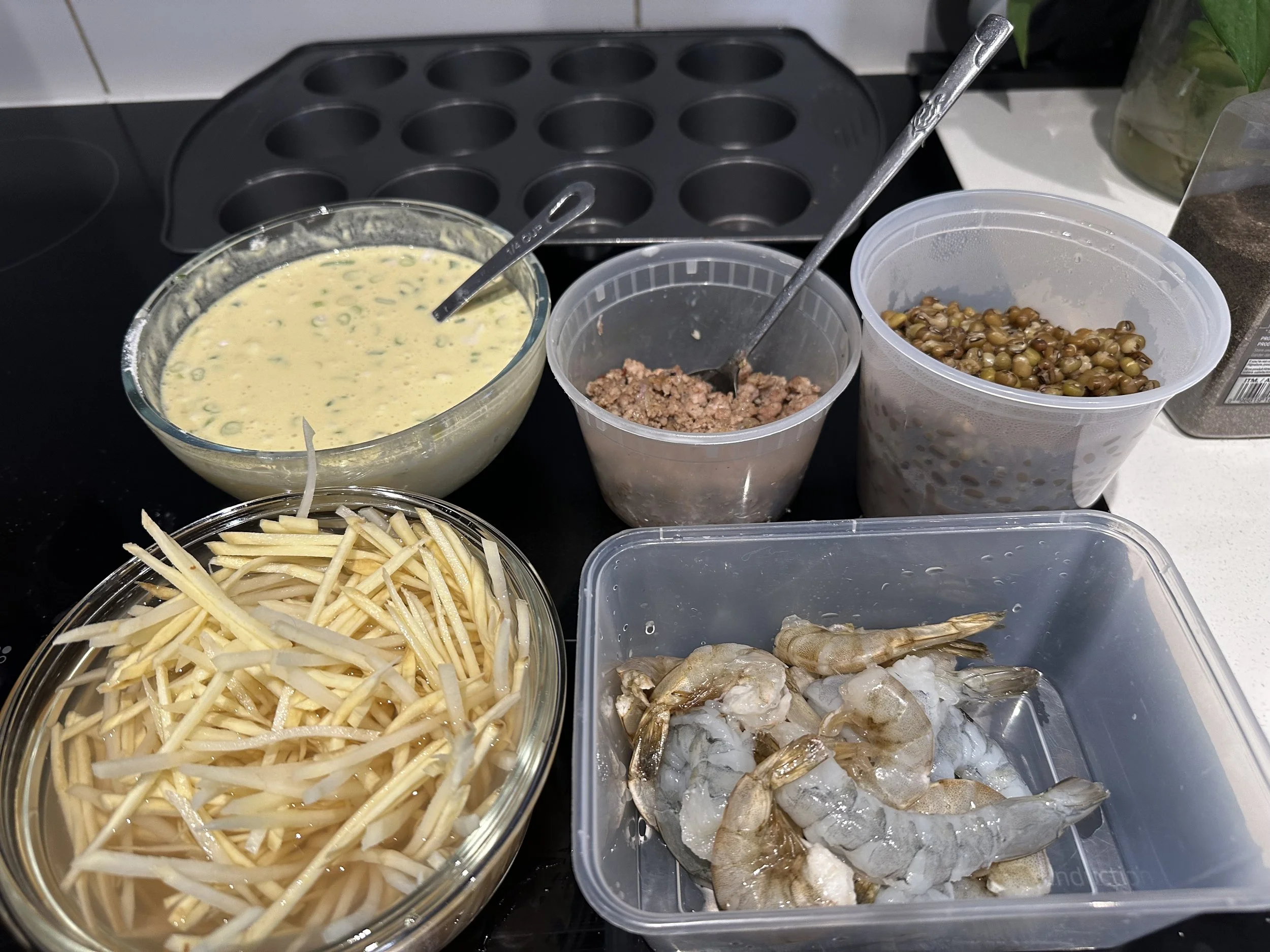
Ingredients
Yeast Batter
100g rice flour
150g all-purpose flour
10g sugar
5g salt
5g instant yeast (approximately 1½ tsp)
1 tsp baking powder
¼ tsp turmeric powder (optional)
400ml warm water or coconut water
¼ tsp ground white pepper
1 stalk green onion, finely chopped
1 tbsp neutral oil
Filling
1 cup Cooked split mung beans
200g Cooked, seasoned ground pork
1 shallot chopped
½ of medium shredded sweet potato
½ 1 medium rustic shredded potato
1 cup fresh bean spout (optional)
12 Shrimp, peeled or shell-on according to preference
The filling quantities can be adjusted to suit the size and number of cakes. Exact amounts can be added after measuring a batch.
For Baking
Neutral oil for greasing the muffin tin
Method
1. Prepare the Yeast Batter
In a large mixing bowl, combine the rice flour, all-purpose flour, sugar, salt, instant yeast, baking powder, and turmeric, if using.
Gradually add the warm water or coconut water, stirring until the batter is smooth and well combined.
Add the ground white pepper, chopped green onion, and 1 tablespoon of oil.
Mix well.
Cover the bowl and allow the batter to rest for approximately 45–60 minutes, or until it looks slightly puffy and aerated.
2. Prepare the Filling
While the batter is resting, prepare the fillings.
Cook the mung beans until tender.
Cook pork with shallot and season the ground pork according to your preference.
Shred the sweet potato and potato into thin strips so they can cook properly during baking.
Prepare the shrimp. You may leave the shells on or remove them, depending on how you prefer to serve the cakes.
3. Preheat the Oven and Muffin Tin
Preheat the oven to 450°F (230°C).
Place an empty metal muffin tin in the oven and allow it to become hot.
Carefully remove the hot muffin tin from the oven and place it on a heatproof surface. Be careful when handling the hot tin and oil.
Add a little neutral oil to each muffin cavity, coating the bottom and sides.
Immediately pour the rested yeast batter into each cavity, filling approximately one-third full.
Add the cooked mung beans, seasoned ground pork, shredded sweet potato, and shredded potato.
Place a shrimp on top of each cake.
Return the muffin tin to the oven and bake for 20–25 minutes, until golden brown and cooked through..
5. Bake
Bake at 450°F (230°C) for approximately 20–25 minutes, until the cakes are golden brown and cooked through.
The edges should be lightly browned, and the center should be set rather than wet or doughy.
The shrimp should be fully cooked.
Allow the cakes to cool briefly before carefully removing them from the muffin tin.
Serve warm.
Why This Recipe Works
Rice flour: Gives the cakes their characteristic rice-based texture and helps create a delicate exterior.
All-purpose flour: Adds structure so the baked cakes hold together when removed from the muffin tin.
Instant yeast: Aerates the batter during resting, helping create a softer interior.
Baking powder: Provides additional lift during baking.
Hot muffin tin and oil: Help the batter begin setting quickly against the hot metal and encourage browning around the edges.
Mung beans, pork, vegetables, and shrimp: Create the traditional combination of savory flavors and contrasting textures.
Baking with Confidence — Why I Heat the Muffin Tin
I heat the empty muffin tin before adding the oil and batter. When the batter touches the hot, lightly oiled metal, the outside begins to set quickly, encouraging a golden crust while the inside stays soft.
Be careful: The muffin tin will be extremely hot. Use oven mitts, add the oil carefully to avoid splashing, and work promptly without rushing.
My Make-Ahead Tip
After baking, cool the bánh cống and refrigerate promptly. The next day, you can deep-fry or air-fry them until the exterior becomes extra crispy and the center is thoroughly heated.
I especially like this method when preparing bánh cống for family gatherings because most of the work can be done ahead of time.
Serving Suggestions
Serve bánh cống warm with fresh lettuce, Vietnamese herbs, and nước mắm chua ngọt (Vietnamese sweet-and-sour fish sauce).
You can wrap a piece of bánh cống in lettuce with herbs, dip it into the sauce, and enjoy the combination of savory cake, fresh greens, and tangy dressing.
Confidence Note
My oven-baked bánh cống is an adaptation of the traditional deep-fried version.
It will not have exactly the same deep-fried crust, but baking in a hot, lightly oiled muffin tin gives it a golden exterior while keeping the inside soft.
For me, this is another way to enjoy a familiar Vietnamese dish using the equipment I have at home.
Make Ahead & Extra-Crispy Bánh Cống
One thing I love about this recipe is that you can make the bánh cống ahead of time.
After baking, allow the cakes to cool, then refrigerate them in a covered container. The next day, you can finish them in one of two ways.
Deep-Frying: Fry the cold, fully baked bánh cống in hot oil until the outside becomes golden and extra crispy and the center is heated through.
Air-Frying: For a lighter option, place the chilled bánh cống in the air fryer and cook until the outside becomes crisp and the center is thoroughly hot.
The second cooking gives the cakes an even crispier exterior while keeping the inside soft.
Baking with Confidence — My Tip
For the best texture, I like to bake the bánh cống first, refrigerate them, and crisp them again just before serving.
This is especially convenient when preparing food for a family gathering. You can finish the cakes shortly before everyone is ready to eat, rather than making everything at the last minute.
Storage: Refrigerate the fully baked cakes within two hours of cooking, preferably in shallow containers so they cool quickly. Keep refrigerated at 4°C (40°F) or below and use within 3–4 days. Reheat thoroughly to 74°C (165°F), especially because the filling contains pork and shrimp.
Serve hot with lettuce, fresh Vietnamese herbs, and nước mắm chua ngọt.