
Lemon Curd
Classic Lemon Curd
Smooth, Creamy & Bright
Lemon curd is one of those basic pastry recipes that is useful to have ready in the refrigerator. It has a smooth, creamy texture with a bright lemon flavor that balances sweetness with acidity.
I use it in many different ways—as a filling for cakes, tarts and éclairs, or simply served with scones and other desserts.
I prefer homemade lemon curd because I can control the flavor and texture. Fresh lemon juice and zest give it a brightness that makes a noticeable difference.
This recipe is simple, but the cooking technique is important. The egg, sugar, and lemon mixture needs to be cooked until properly thickened, then the butter is incorporated after the pan comes off the heat. An immersion blender can be used at the end for an especially smooth finish.
Yield:
330 grams small batch
Supplies:
Mixing bowl large size or stand mixer
Spatula
Whisk
Scale
Medium sauce pan
Ingredients
2 large whole eggs
120g caster sugar
80ml fresh lemon juice
Zest of 1 lemon
150g unsalted butter, cut into small cubes
3g powder gelatin, optional
Before You Begin
Zest the lemon before squeezing it for juice. Remove only the yellow outer layer of the peel and avoid the white pith underneath, which can taste bitter.
Cut the cold butter into small cubes and keep it ready for finishing the curd.
Make the Lemon Curd
Place the eggs, caster sugar, and lemon juice in a saucepan.
Whisk until thoroughly combined.
Place over medium heat and cook while stirring continuously, making sure to reach the bottom and corners of the saucepan.
As the mixture cooks, it will gradually thicken and begin to bubble.
Once the curd has thickened, remove it from the heat.
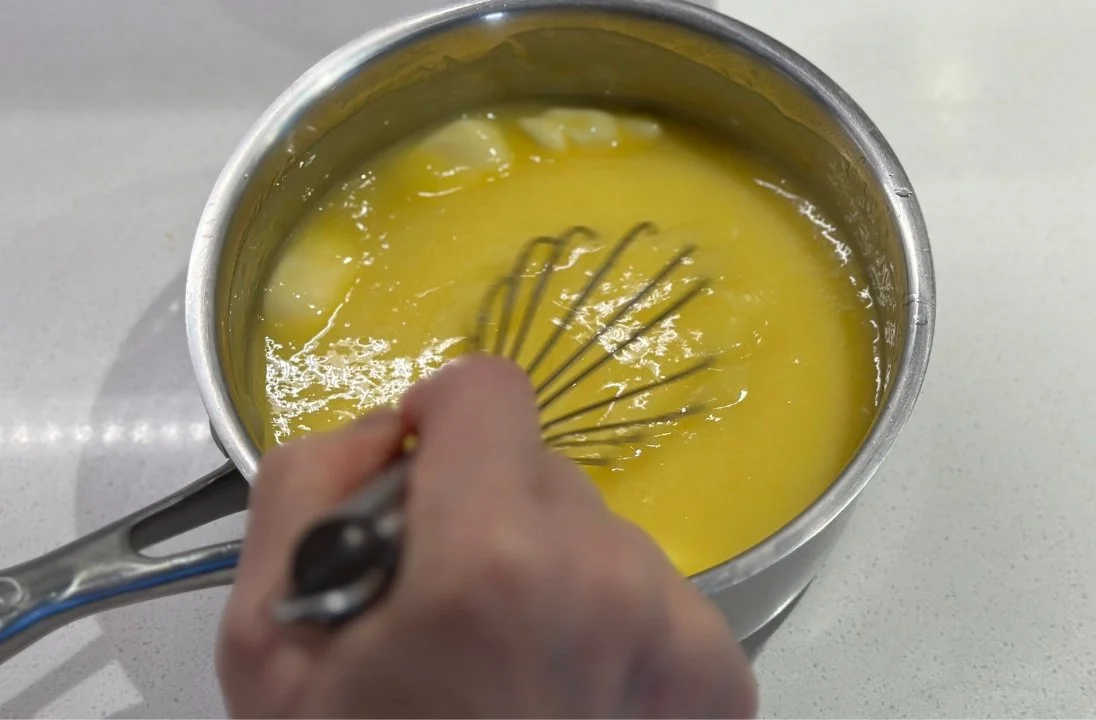
Add the cubed butter and lemon zest.
Stir until the butter is completely melted and incorporated and the curd becomes smooth and homogeneous.
For an especially smooth texture, use an immersion blender briefly to emulsify the curd.
Transfer to a clean container and cover the surface before refrigerating.
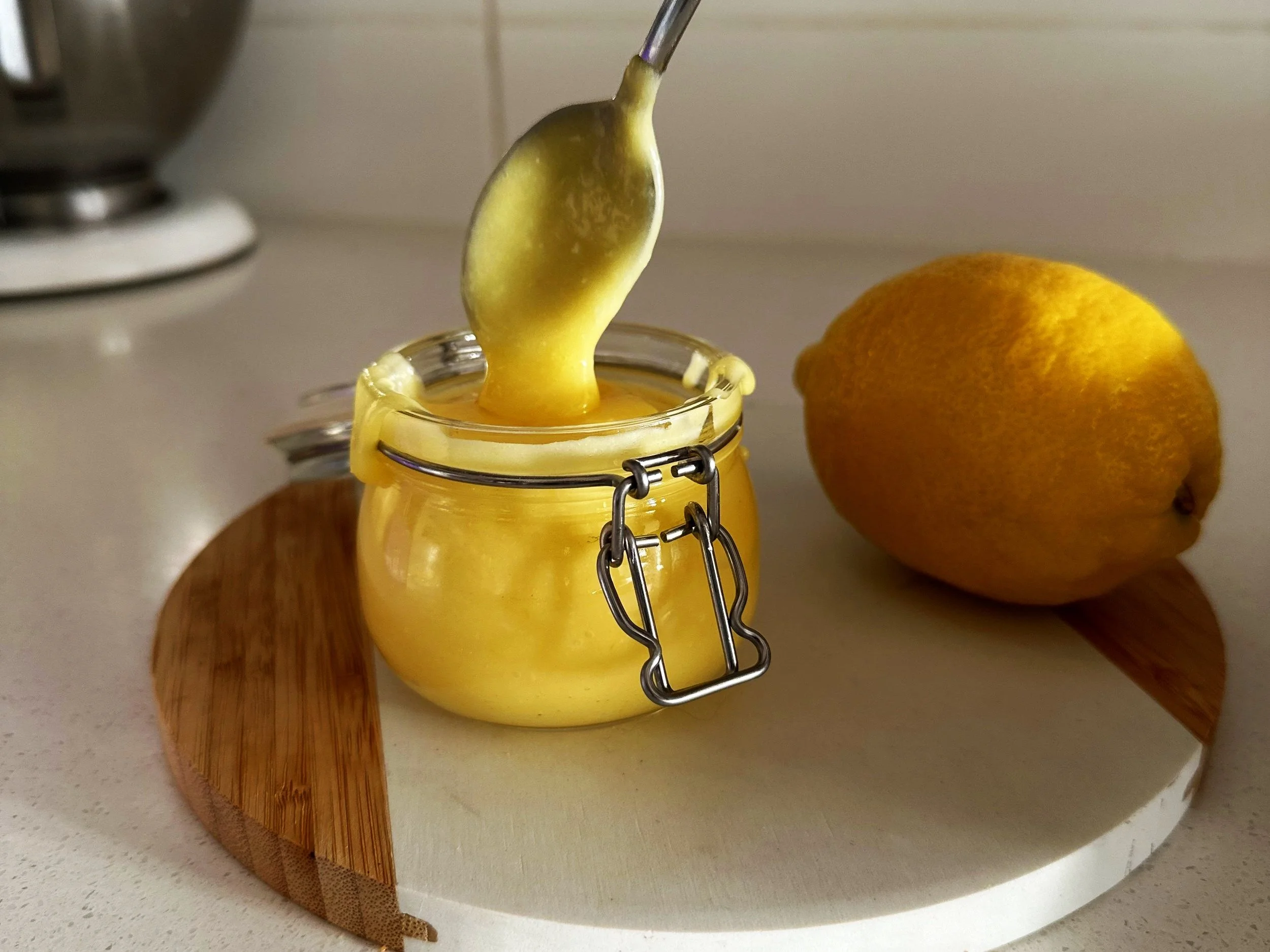
Chill completely before using. The lemon curd will become thicker as it cools.
Optional Gelatin
For a softer lemon curd: Leave out the gelatin when using the curd as a spread, sauce, or soft filling.
For more structure: Add 3g gelatin when you need the curd to hold more firmly as part of an assembled pastry or dessert.
Baking with Confidence
Stir constantly. Eggs cook quickly against the bottom of a hot saucepan. Continuous movement helps produce a smooth curd instead of little pieces of cooked egg.
Don't add the butter while the pan is still over high heat. Your method of removing the curd from the heat first is worth preserving. The butter then melts into the hot curd and creates that smooth, rich finish.
Use fresh lemon zest. The juice provides acidity, while the zest contributes much of the recognizable lemon aroma.
Blend for an extra-smooth finish. An immersion blender helps emulsify the butter into the curd. Keep the blender head submerged so you don't whip unnecessary air into it.
Remember that hot curd looks softer. Don't keep cooking simply because it isn't as thick as refrigerated lemon curd. It firms considerably as it cools.
How I Use It
This is another excellent foundation recipe for your book because you've already used lemon curd elsewhere.
You can point readers back to it for:
Cake and tart fillings
Éclairs and other pastries
Scones
Dessert cups
Fruit desserts
A contrast to sweet components such as meringue