LIEVITO MADRE FROM RAISIN WATER — STEP-BY-STEP
Combine raisins and water in a clean jar.
Ferment at room temperature (22–26°C / 72–79°F).
Shake well once or twice daily.
After 5 days, the water should:
smell fruity/sweet (not alcoholic)
show bubbles
taste lightly sweet–acidic
DAY 1 — First Flour Fermentation
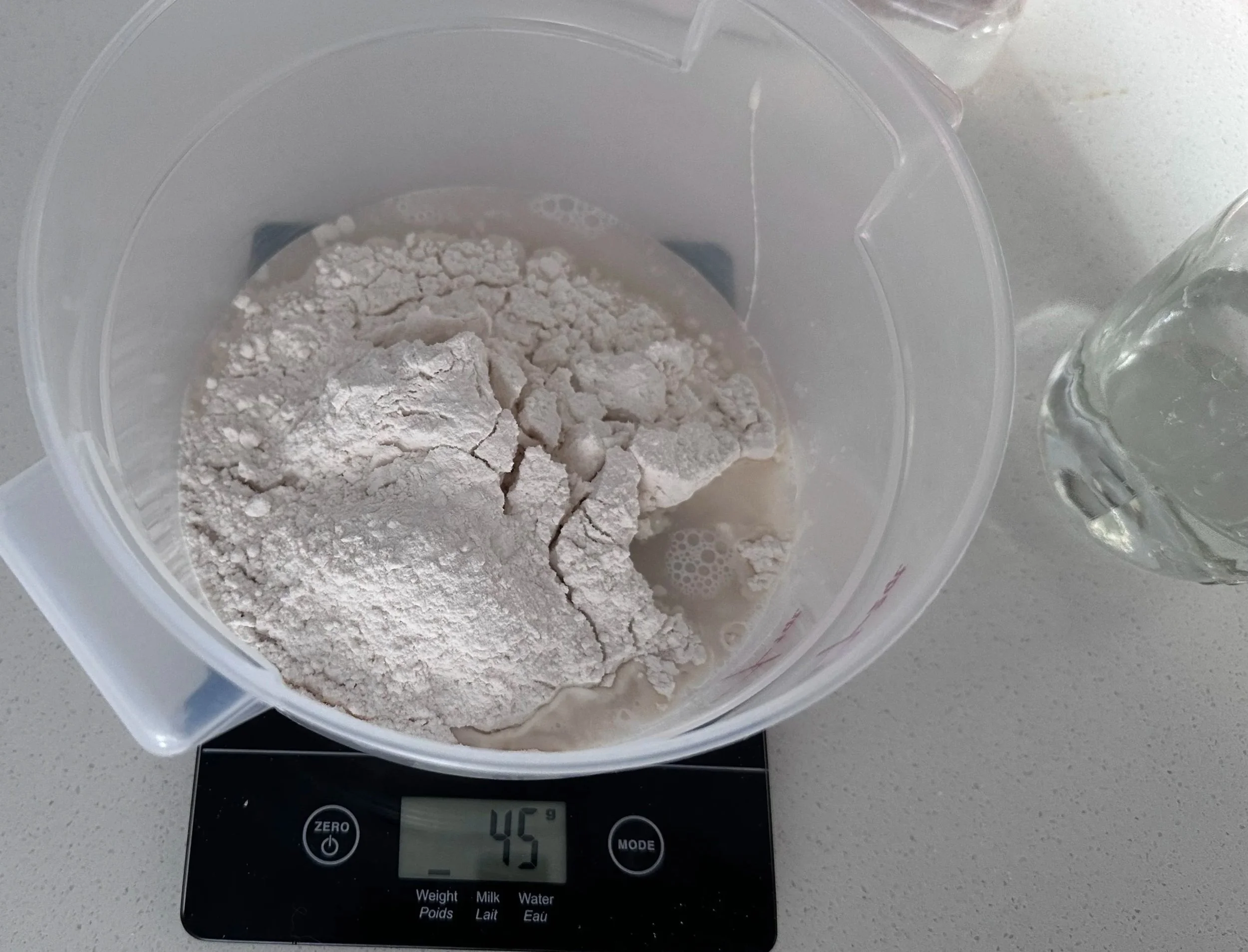
50 g fermented raisin water
50 g strong flour
Mix into a soft paste.
Ferment warm (26–28°C) until active.
DAY 2 — Second Feeding (Still Liquid)
Add:
50 g strong flour
50 g fermented raisin water
Mix and ferment again at 26–28°C.
Purpose: increase yeast population, keep acidity low.
DAY 3 — Transition to Starter (Lievito Begins)
Feed with:
50 g fermented dough (lievito)
50 g mineral water
50 g strong flour
Hydration is still liquid.
DAYS 3–6 — Strengthening Phase
Feed every 8 hours (2–3 times per day)
Feeding ratio
50 g lievito
50 g mineral water
50 g strong flour
Temperature
26–28°C (79–82°F)
This builds yeast strength and stability.
DAYS 7–12 — LIEVITO MADRE (STIFF PHASE)
Temperature
26°C
(chef allows warm temperature but only feeds when doubled)
Feeding Rule
Feed every time the lievito doubles in size
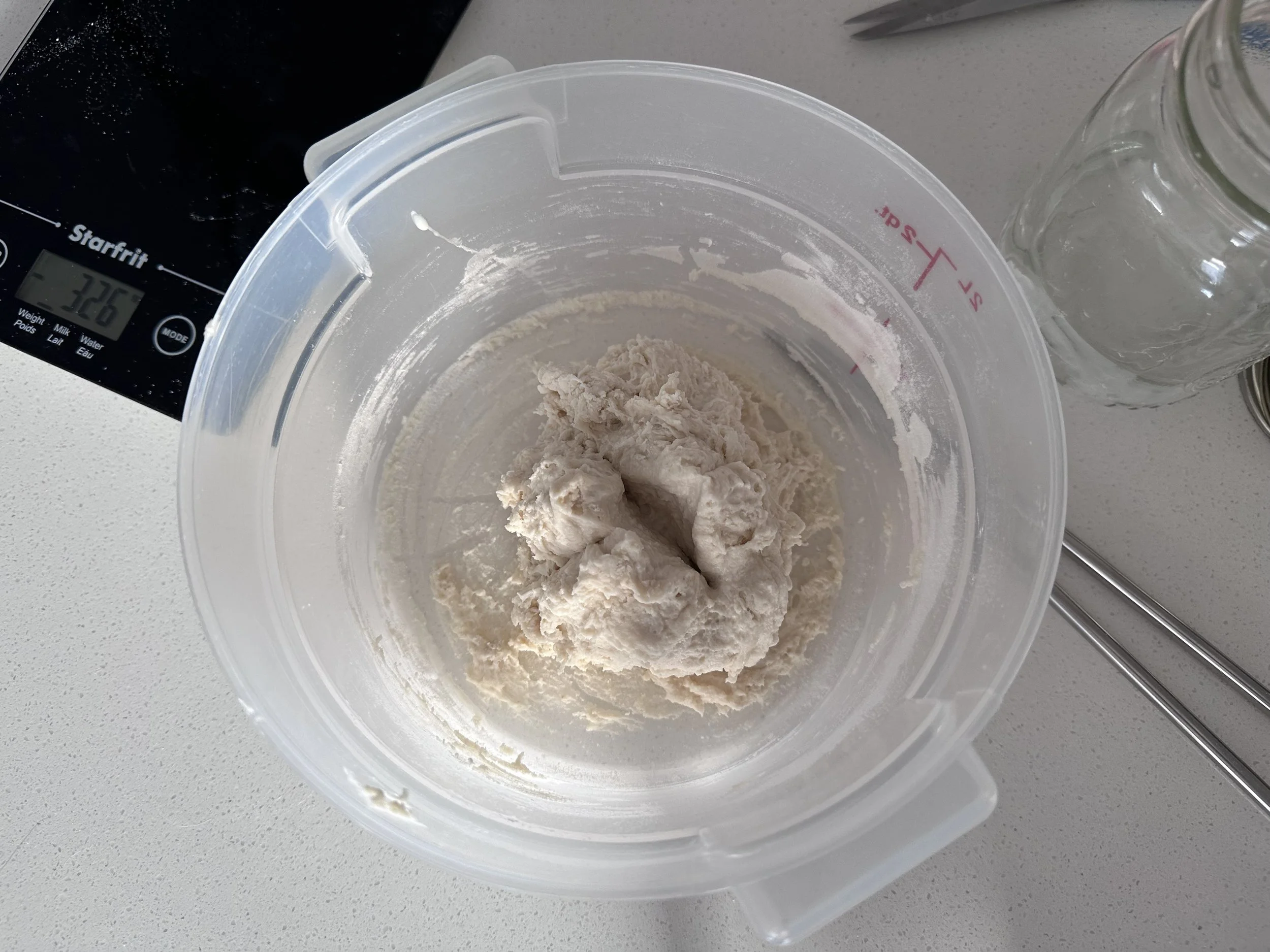
Lievito madre/stiff starter
Gradually reduce hydration until reaching final ratio:
FINAL LIEVITO MADRE RATIO
100 g lievito (100%)
100 g strong flour (100%)
45 g mineral water (45%)
This is true Italian lievito madre, stiff and low-acid.
What This Method Achieves
Uses raisin yeast to avoid acidity
Selects sweet, strong yeast
Gradually trains yeast for fat- and sugar-rich dough
Produces LM suitable for panettone
Ready Signs
By Day 10–12, LM should:
Double in 3–4 hours
Smell sweet (apple, yogurt, butter)
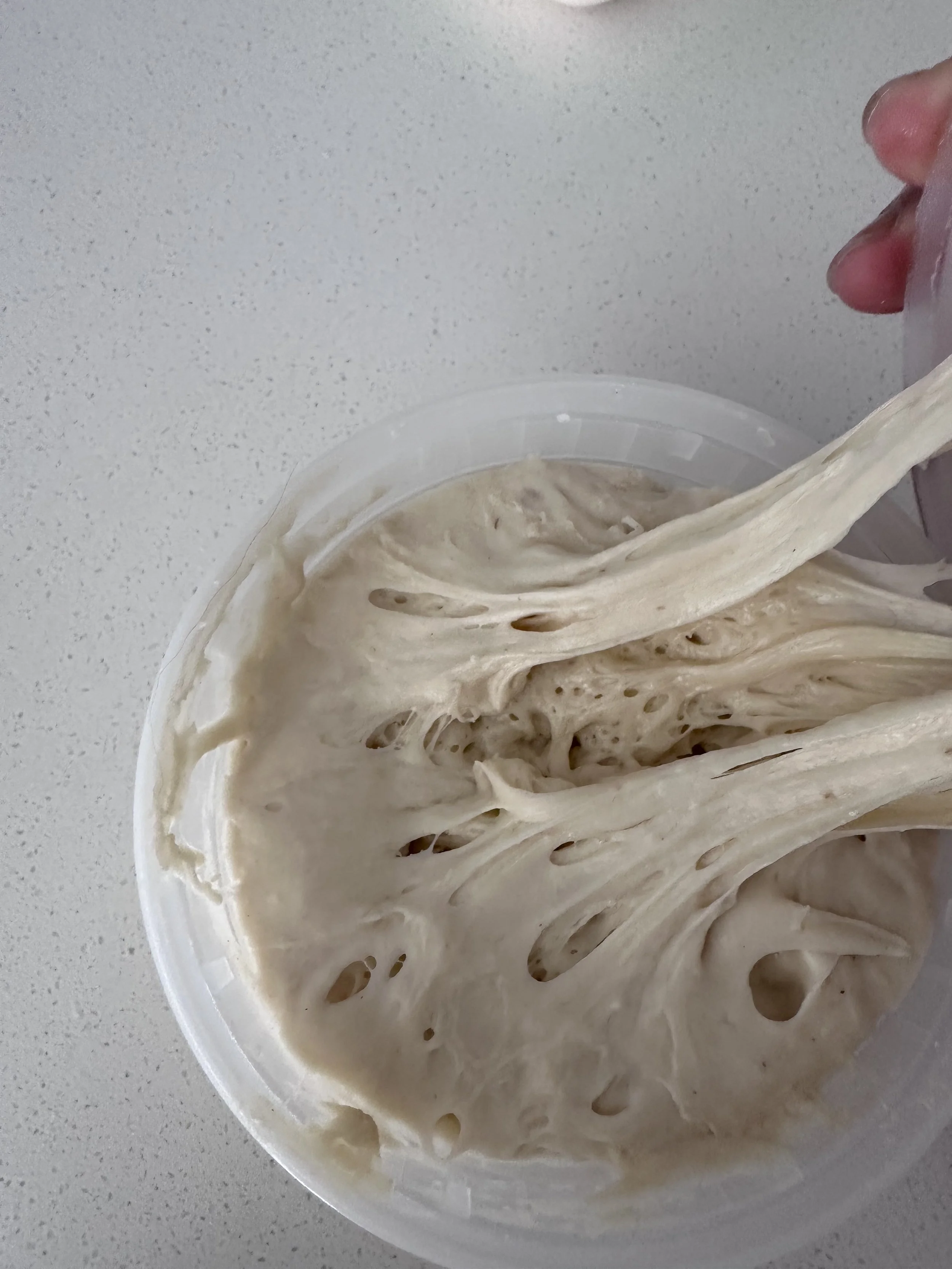
Stretch in strands
Handle butter without collapsing
Critical Notes
Raisins must be unsulfured
Do not rush hydration reduction
If smell becomes sharp → pause, refresh, or cool
Knead well once stiff phase begins
Chef truth:
This is not sourdough feeding.
This is yeast conditioning.