No-Knead Poolish Pizza Dough
An Easy Overnight Dough for Homemade Pizza Night
Pizza night happens often in my house, usually on the weekend. I enjoy making pizza at home because everyone can choose the toppings they like, and I can make each pizza a little differently.
Sometimes I use vegetables and cheese; other times I add whatever meat or leftover ingredients I already have in the refrigerator. That's one of the things I enjoy most about homemade pizza, you don't really need to make the same pizza twice.
For this version, I use a poolish, a simple pre-ferment made with flour, water, and a small amount of yeast. I prepare it the day before and leave it to ferment overnight. By the next day, it has expanded and developed lots of bubbles.
The poolish gives the finished dough more flavor and helps create a light, airy texture without requiring a lot of kneading.
This is also a good dough if you're nervous about making pizza at home. Instead of spending a long time kneading, I use a simple stretch-and-fold method and give the dough plenty of time to rest.
So yummy!
Supplies:
Mixing bowl medium size or stand mixer
Spatula
Rolling pin
Scale
Baking trays/pizza pan
Mixing bowl or food grade container with cover
Plastic wrap
Yield
3 medium pizzas
2 large thin crust pizza
Pizza with poolish Method
Ingredients:
Poolish — Prepare the Night Before
300g bread flour, all-purpose flour, or 00 flour
300ml water, 70–80°F (21–27°C)
¼ tsp active dry yeast
Final Dough
All of the poolish
300g bread flour, all-purpose flour, or 00 flour
150ml water, 70–80°F (21–27°C)
2 tsp salt
1 tsp instant yeast
1 tbsp olive oil, and more for lightly coating the dough and bowl
Extra flour, for shapingThe Day Before: Prepare the Poolish

Combine the flour, water, and yeast in a medium bowl and mix until no dry flour remains.
Cover and leave at room temperature overnight.
By the following day, the poolish should have increased in volume and developed plenty of bubbles. It should look active and fermented.

Making pizza at home with any your favourite topping

Day 1 — Prepare the Poolish
Combine the flour, water, and active dry yeast in a medium bowl.
Mix with a spoon or your hand until thoroughly combined and no dry flour remains.
Cover the bowl and leave it to ferment at room temperature for 12–16 hours.
The following day, the poolish should have expanded significantly and developed plenty of bubbles.
Day 2 — Mix the Final Dough
Transfer the poolish to a larger mixing bowl.
Add the flour, water, salt, and instant yeast.
Mix by hand or with a spoon until everything is thoroughly combined. The dough will be soft and sticky.
Cover and let the dough rest for 20 minutes.
No stand mixer is necessary for this dough. Time and folding will develop the gluten for you.
First Stretch & Fold
Wet your hand lightly to prevent sticking.
Reach underneath one side of the dough and gently pull it upward until you begin to feel resistance.
Fold the stretched portion over the center of the dough.
Turn the bowl and repeat the movement from another side.
Continue stretching, folding, and rotating the bowl until you have worked around the dough and it begins to tighten into a ball.
Cover and let rest in a warm place for approximately 2 hours.


Pizza on skillet with Butter chicken sauce with mushroom, pineapple and fresh mozzarella cheese
Second Stretch & Fold
Repeat the same stretch-and-fold process once more.
After the second fold, lightly coat the dough and sides of the bowl with olive oil to help prevent sticking.
Cover and allow the dough to ferment in a warm place for approximately 4–6 hours, or until doubled in volume.
Divide the Dough
Lightly flour your work surface.
With floured or lightly oiled hands, gently ease the dough out of the bowl. Try not to press out all of the air that developed during fermentation.
Divide into 3 equal portions of approximately 350g each.
Shape each portion gently into a ball.
Cover and allow the dough balls to rest before shaping.

Placing pizza on the the top rack of the oven will result in a charred crust
Divide & Shape
Lightly flour your work surface and hands.
Gently ease the fermented dough from the bowl, taking care not to unnecessarily press out all of the air.
Divide the dough into the number of pizzas you want to make and shape each portion into a ball.
Allow the dough to relax before stretching.
Use your hands to gently press and stretch each portion into a pizza round. A rolling pin can also be used if you prefer a thinner, more even crust.
Then comes my favorite part: choose your own toppings.
Tomato sauce, pesto, caramelized onion, vegetables, different cheeses, or leftover meat can all become part of pizza night.
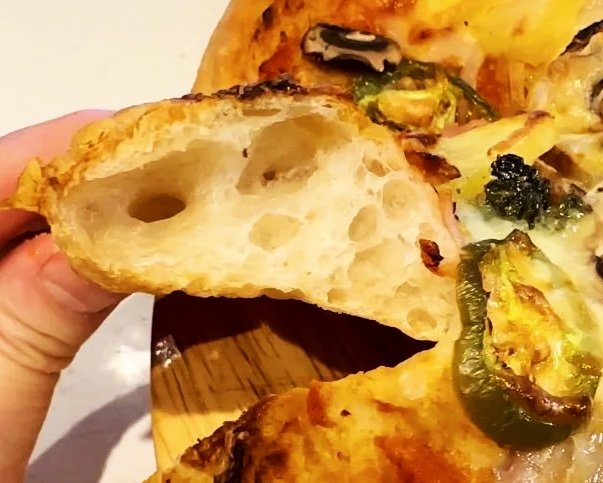
Veggies pizza with Fresh Mozzarella cheese, and a kick jalapeño pepper
For Beginners
Start with a smaller pizza rather than trying to make a very large one.
Soft, high-hydration pizza dough takes a little practice to handle. After you've shaped it a few times, you'll become much more comfortable with how the dough feels and stretches.
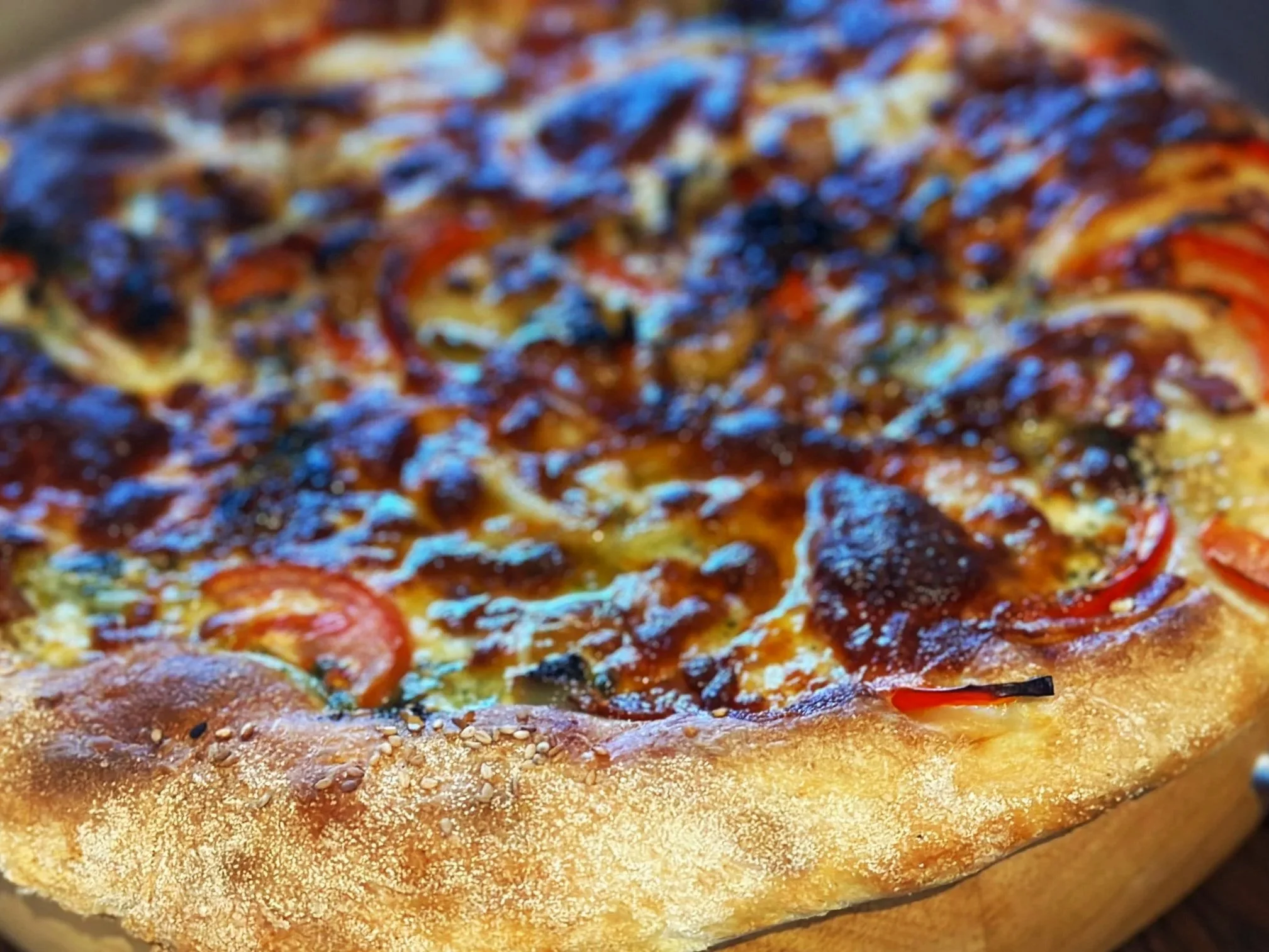
Pizza with Bechamel sauce
Top & Bake
Preheat the oven thoroughly to 470–500°F (245–260°C).
Add your choice of sauce, cheese, vegetables, meat, pesto, or caramelized onion jam.
Bake for approximately 20 minutes, depending on the thickness of the pizza, the amount of toppings, and your oven.
The pizza is ready when the crust is golden and crisp around the edges, the bottom is well baked, and the cheese is melted and bubbling.
Make Ahead

The Poolish dough as fermented overnight
Your original recipe says:
Refrigerate the dough for up to 3 days
Freeze for up to 2 weeks
Refrigerator: After dividing and shaping the dough balls, cover well and refrigerate.
Freezer: Dough portions can also be wrapped well and frozen for later pizza nights. Thaw overnight in the refrigerator before bringing toward room temperature for shaping.
Baking with Confidence
Expect a soft dough. With 450ml total water to 600g total flour, your formula is approximately 75% hydration, so its softness isn't a mistake. That's an important detail for beginners—they shouldn't panic and dump another cup of flour into it.
Wet hands for folding; flour for shaping. Wet hands make handling the sticky dough easier during stretch-and-folds. Flour becomes more useful when you transfer and shape the fermented dough.
Don't degas it unnecessarily. The bubbles created during the long fermentation contribute to the finished crust.
Use time as an ingredient. The poolish ferments for 12–16 hours, followed by the final fermentation. That's where this recipe differs substantially from your simpler pizza dough.

Measurement ingredients

The dough is folded for a second time after two hours of fermentation.
Don't rush the poolish. The overnight fermentation is what develops much of the flavor in this dough.
Look for bubbles. A properly fermented poolish should appear expanded and bubbly rather than looking like freshly mixed flour and water.
Don't fight sticky dough with excessive flour. A slightly wet dough can produce a lighter crust. Lightly wet or oil your hands when folding if necessary.
Give the dough time to relax. If it keeps shrinking while you stretch it, cover it and wait another 10–15 minutes. Gluten occasionally needs a small vacation from your ambitions.
Handle the fermented dough gently. After spending hours developing those lovely bubbles, there's little point in enthusiastically punching every last one out.
Pizza Night at My House
Making pizza at home has become part of our weekend routine. I like that I can make the dough myself and use whatever toppings we enjoy or already have in the refrigerator. As the pizza bakes, the smell fills the house, and everyone knows pizza night is almost ready.
Once I became comfortable making pizza dough at home, ordering pizza became much less interesting.
Enjoy your pizza night !

Relate topic: focaccia