Crème Caramel
Baked Vanilla Custard with Soft Caramel
Crème caramel is a simple baked custard, but the texture depends on gentle mixing and gentle baking. I make mine with whole milk, whole eggs, sugar, and vanilla, then bake it slowly in a bain-marie.
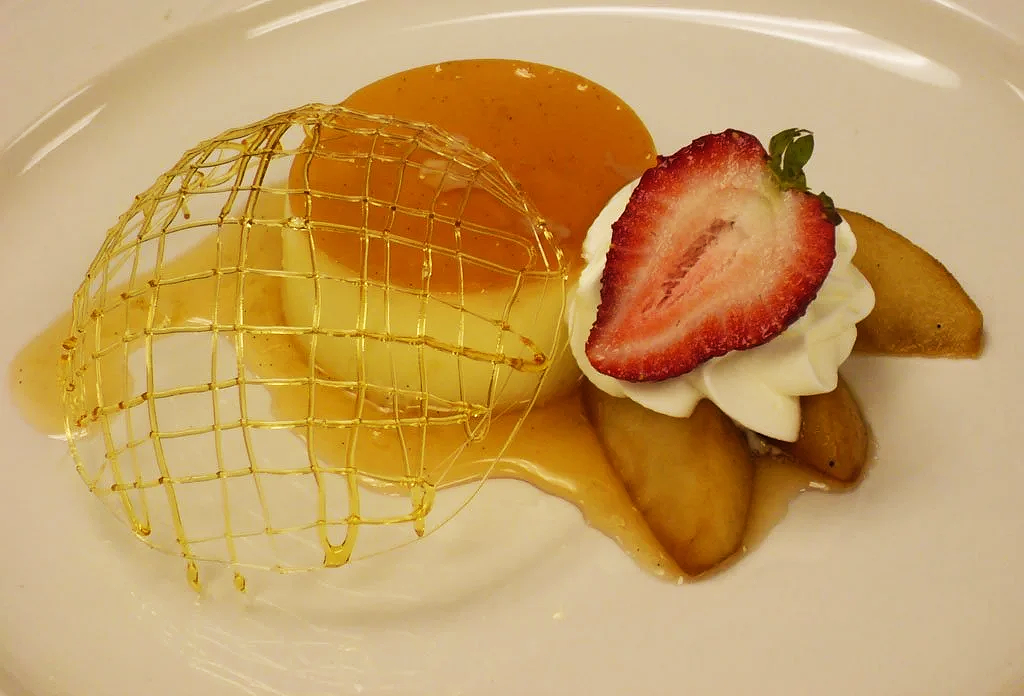
The finished custard should be smooth and delicate, with caramel that remains fluid enough to form a sauce when the custard is turned out onto the plate.
Custard
500ml whole milk
4 large eggs
100g granulated sugar
1 tsp vanilla powder
Method
Preheat the oven to 325°F (165°C).
In a mixing bowl, combine the eggs, sugar, and vanilla powder. Whisk until evenly mixed, but avoid incorporating excessive air.
Slowly pour approximately ⅓ of the milk into the egg mixture while whisking continuously.
Continue whisking until the mixture is completely smooth.
Add the remaining milk and whisk just until everything is incorporated.
Prepare the ramekins or molds with the caramel.
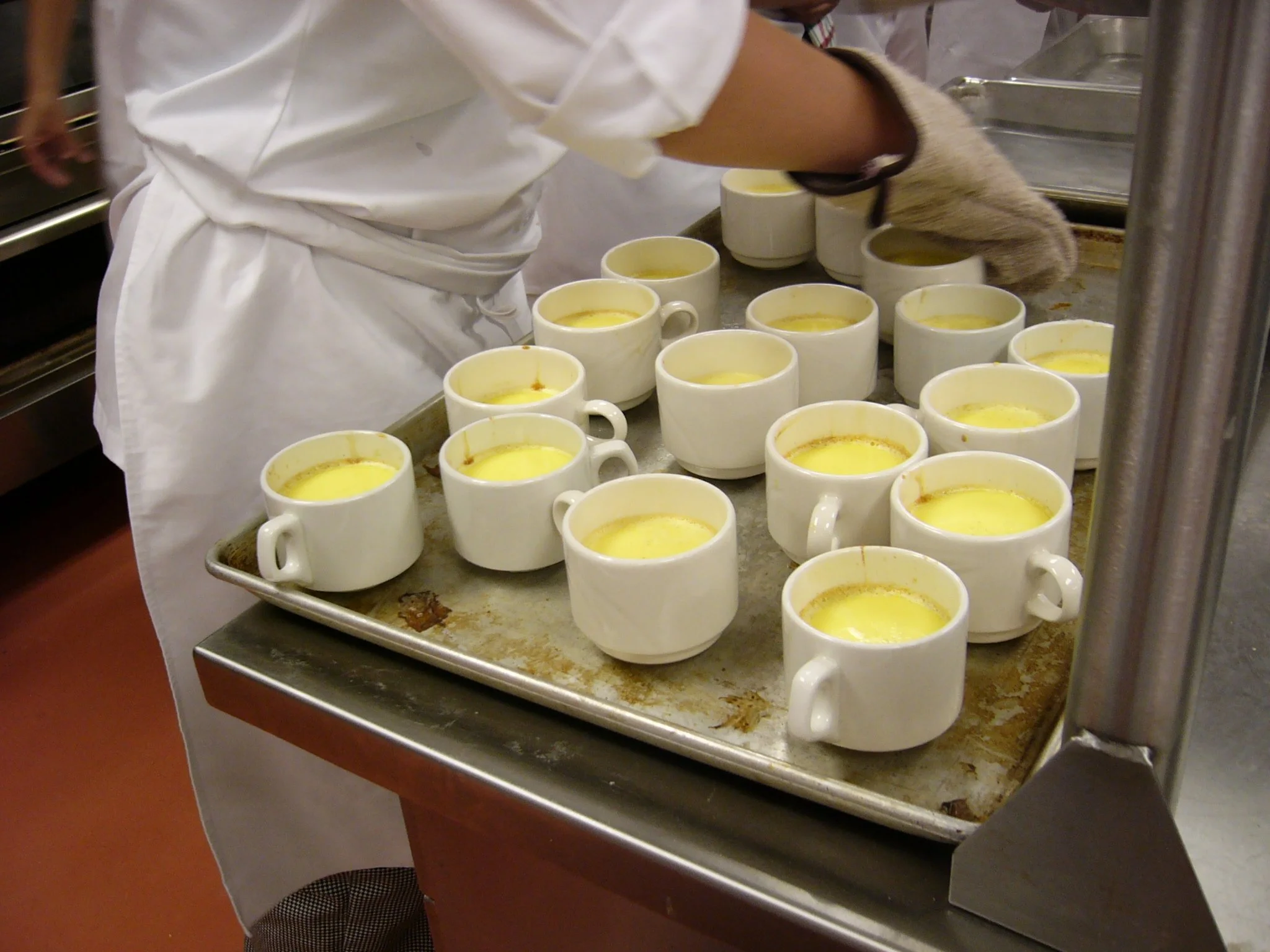
Divide the custard mixture among the prepared molds.
Place the molds in a deep baking pan and prepare a bain-marie (water bath).
Bake at 325°F (165°C) for approximately 1 hour, or until the custard is set.
Cool, then chill thoroughly before unmolding.
Soft Caramel
200g granulated sugar
60ml water
50g glucose
Additional water, as needed after caramelization
Method
Place the sugar and 60ml water in a saucepan and heat until the sugar dissolves.
Skim the surface if necessary.
Add the glucose and continue cooking over medium heat until the syrup reaches a rich caramel color.
Once the caramel reaches the desired stage, carefully add water to bring it back to a soft, fluid caramel consistency.
Use the caramel to coat the bottom of the molds before adding the custard.
Why Add Water After Caramelizing?
This is an important part of your method.
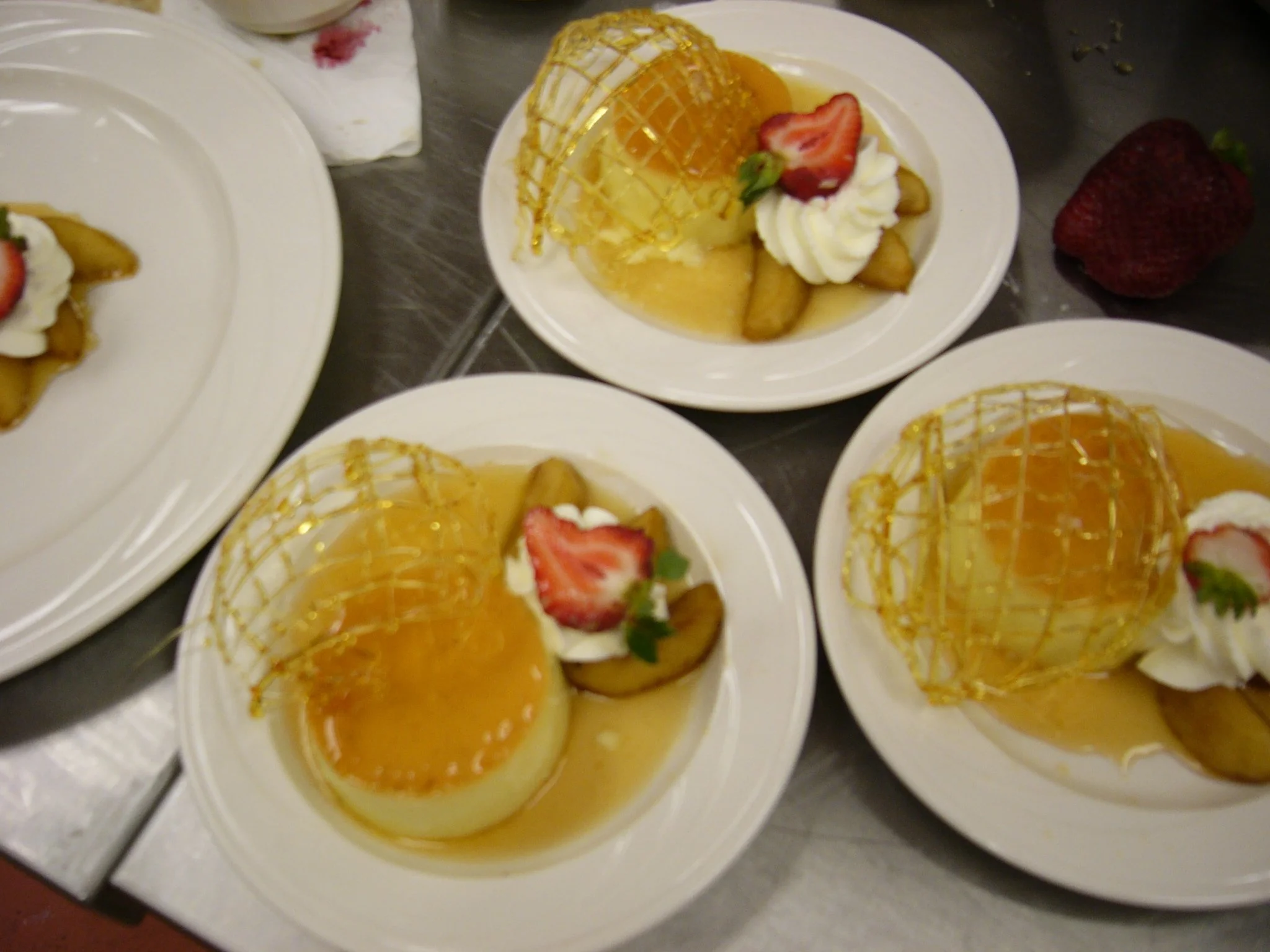
If the caramel is simply cooked and allowed to harden in the mold, its final consistency depends on how much dissolves during baking. By adding water after reaching the caramel stage, you bring the caramel back to a softer, more fluid stage, so there is a beautiful caramel sauce when the crème caramel is unmolded.
The glucose also helps keep the caramel smooth and reduces its tendency to crystallize.
Baking the Crème Caramel
Place the caramel-lined molds in a deep baking tray and fill them with the custard mixture.
Pour just enough water into the bottom of the tray to cover the base. You don't need a large amount of water or to bring it halfway up the sides of the molds. The purpose of the water is to create gentle steam and moisture around the custards as they bake.
Bake at 325°F (165°C) for approximately 1 hour, until the custards are set but still tender.
Allow to cool, then refrigerate thoroughly before unmolding.
Confidence Note
Don't use too much water. For my method, the molds don't need to be swimming in the bain-marie. A shallow layer covering the bottom of the tray is enough.
What to Look For
The finished crème caramel should be smooth and tender rather than firm or rubbery. When unmolded, it should hold its shape while still having a delicate custard texture, with caramel flowing down the sides.