
Focaccia
Crusty Delight: Easy Focaccia for All with Poolish Method
Focaccia is one of my favorite Italian breads to make because it looks impressive but is surprisingly simple. It has a crisp, golden crust, a soft and airy interior, and plenty of olive oil in every bite.
There are many ways to make focaccia, but for this recipe I use the poolish method. Poolish is a simple pre-ferment made with equal parts flour and water and a very small amount of yeast. It is prepared in advance and allowed to ferment slowly, which helps develop flavor and gives the finished bread a light, open texture.
What I especially like about this method is that it requires very little kneading. Time does much of the work for you.
To prepare the poolish, combine equal amounts of water and flour—I use either 00 flour or bread flour—with a small amount of yeast. Cover and leave at room temperature for approximately 12–16 hours. When ready, the poolish should look bubbly and active and have a pleasant fermented aroma.
The next day, combine the poolish with the remaining flour, water, olive oil, and salt. Mix until a soft, shaggy dough forms. Cover and allow the dough to rest for about 30 minutes, giving the flour time to hydrate and the gluten structure time to develop.
Transfer the dough to a generously oiled sheet pan. Gently stretch it toward the edges without pressing out all those beautiful bubbles. If the dough resists, let it rest for a few minutes before stretching it again.
Allow the focaccia to rise until light, airy, and visibly bubbly.
Then comes my favorite part.
Drizzle the surface generously with good olive oil and use your fingertips to make the traditional dimples. Sprinkle with coarse salt and add your favorite toppings. Rosemary is classic, but you can also use olives, cherry tomatoes, basil, caramelized onions, Parmesan, or whatever combination you enjoy.
Bake at 450°F (230°C) for approximately 20–25 minutes, or until deeply golden with crisp edges.
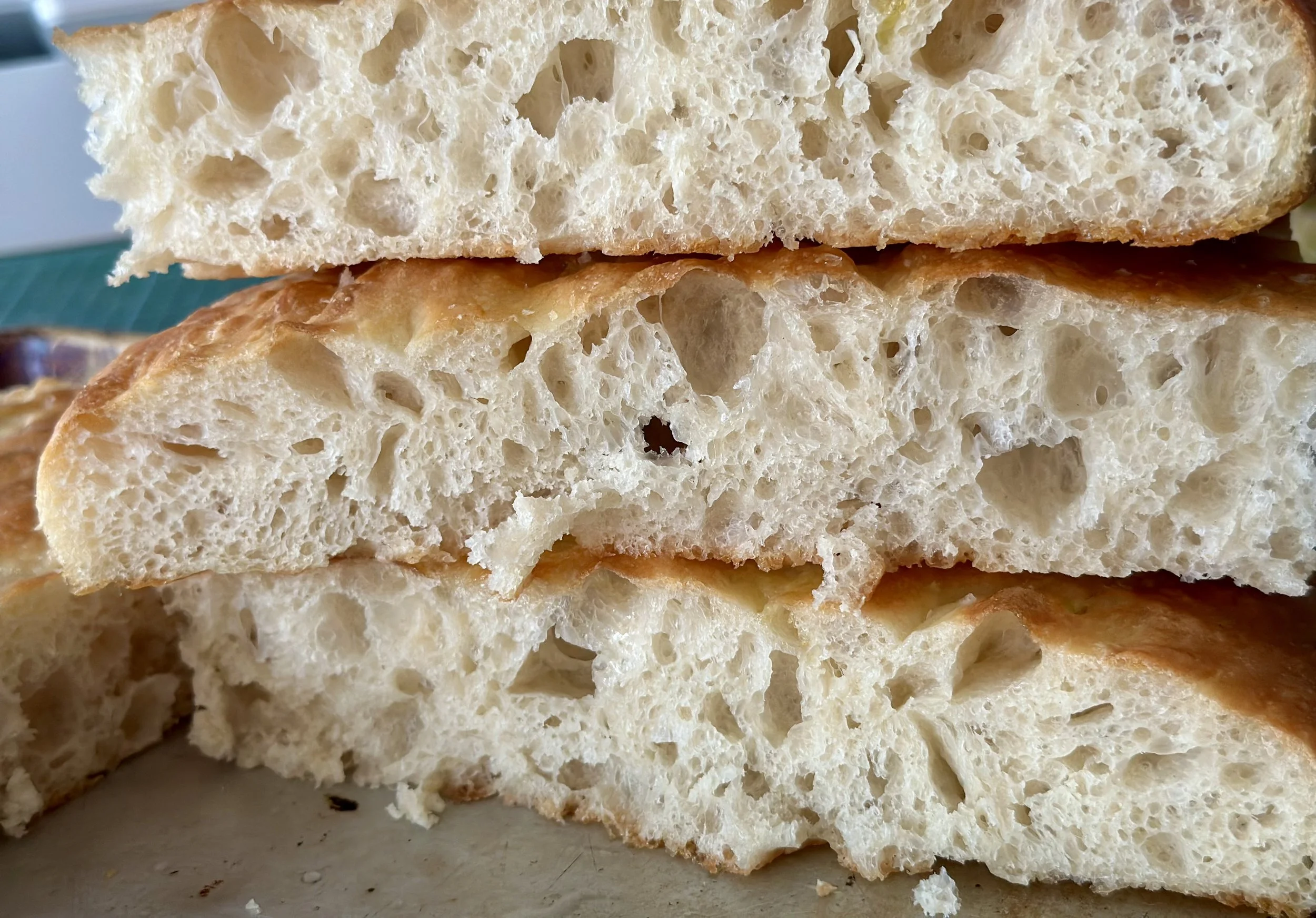
Allow the focaccia to cool slightly before slicing. The outside should be crisp and golden while the inside remains soft, moist, and full of irregular air pockets.
Serve it warm on its own, alongside soup or salad, or slice it horizontally for sandwiches.
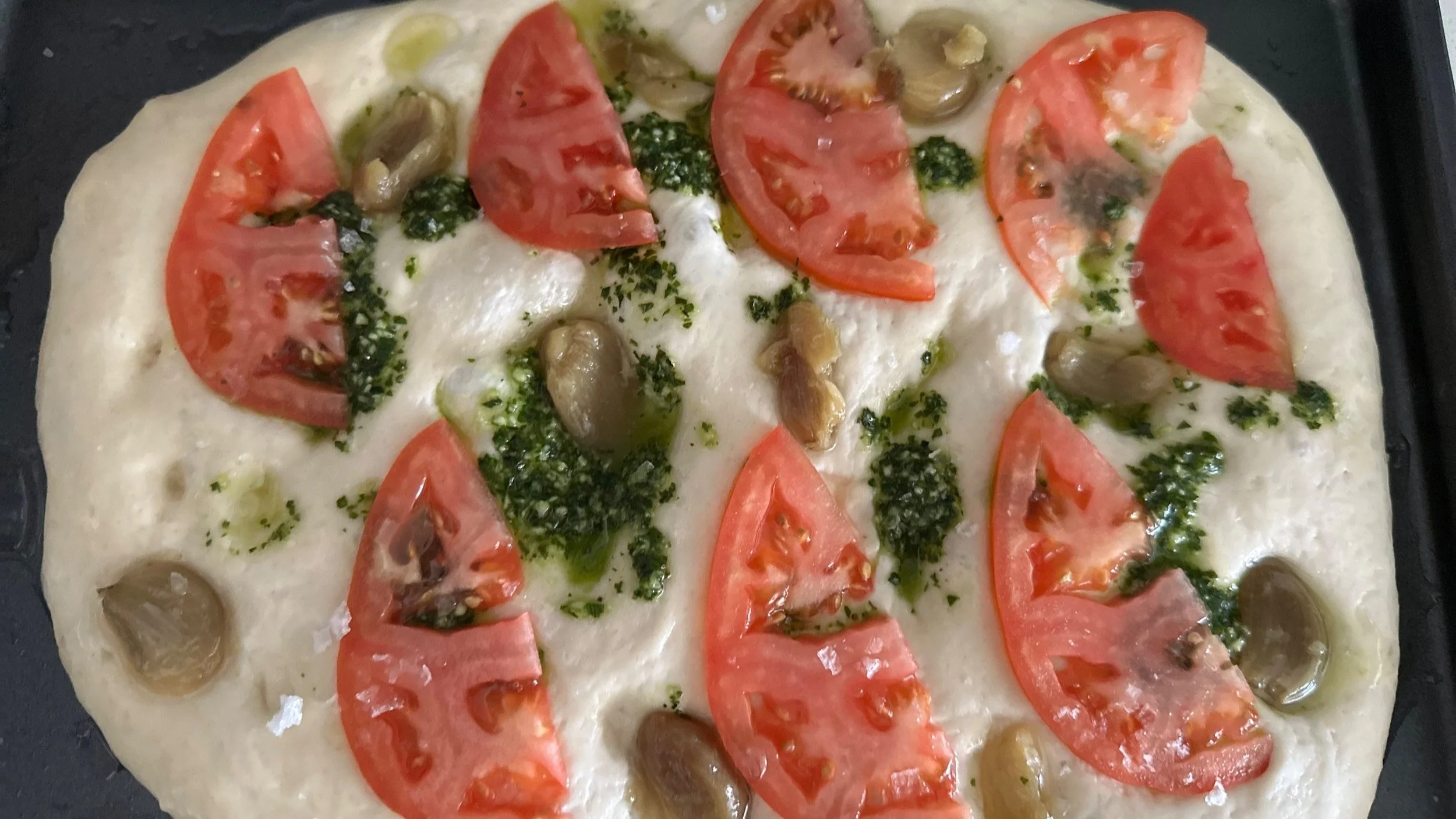
Focaccia baked with tomatoes, roast garlic, pesto basil
Why I Use Poolish
The poolish method is simple, but it makes a noticeable difference. The long fermentation develops more flavor and helps create a lighter, airier crumb without requiring intensive kneading.
For me, good focaccia is not about making the process complicated. Give the dough enough time, handle it gently, use plenty of good olive oil, and let fermentation do the work.
Buon appetito!
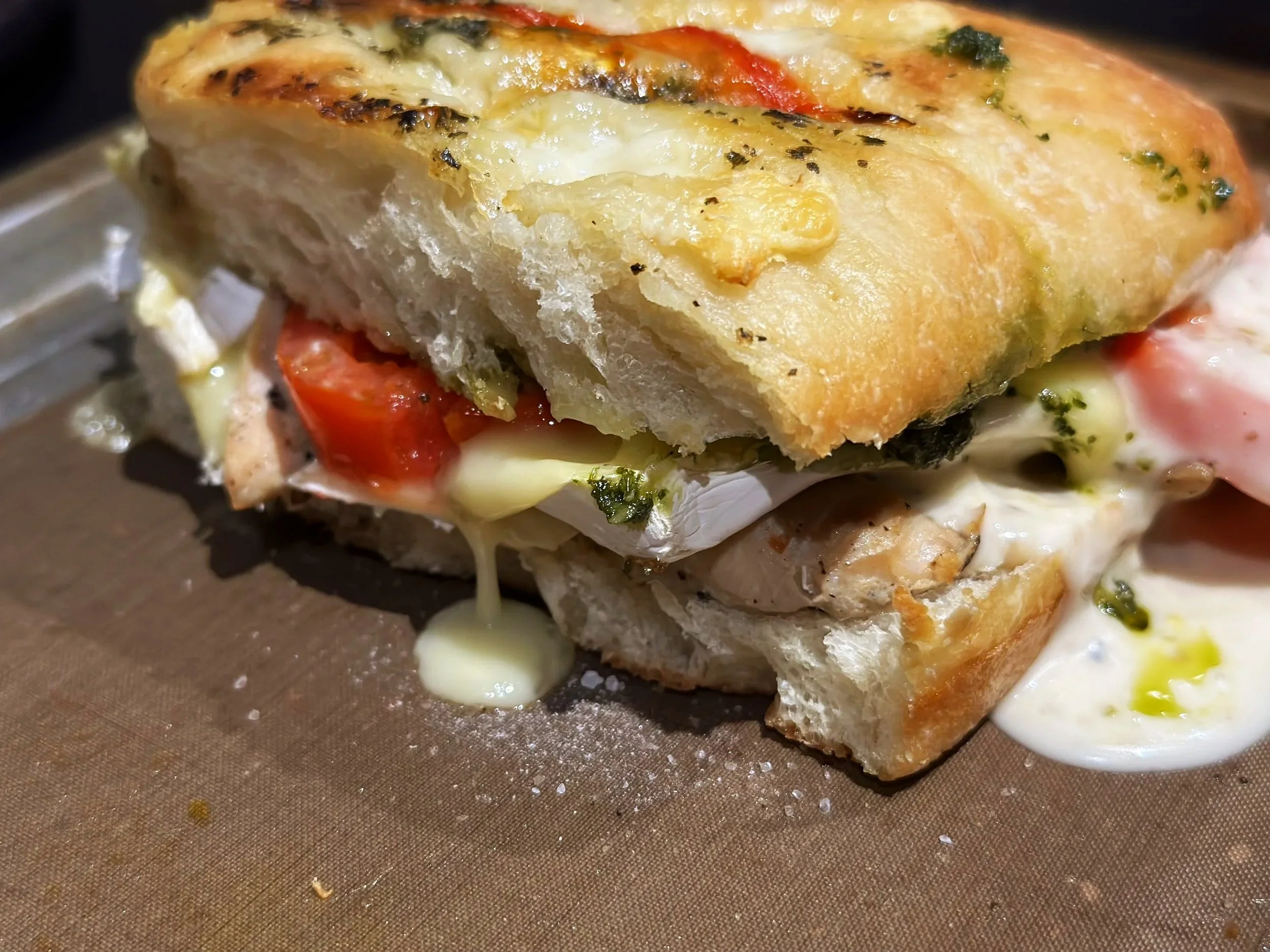
Chicken caesar Sandwich focaccia bread
Using Poolish method
I like using this poolish method baking bread at home. I use the same recipe of ciabatta and pizza.
Yield:
8 -12 servings
1050g total
Supplies:
Mixing bowl medium size and large size
Spatula
Baking tray 12X18 inch
Scale
Ingredients:
Poolish starter:
300g flour (Bread flour or all purpose flour or 00 flour)
300ml water (70-80 degree C)
1/4 tsp active dry yeast
Final dough:
300g flour
150g water
1/2 tsp active dry yeast
1 tbsp salt
2 tbsp olive oil
600g poolish
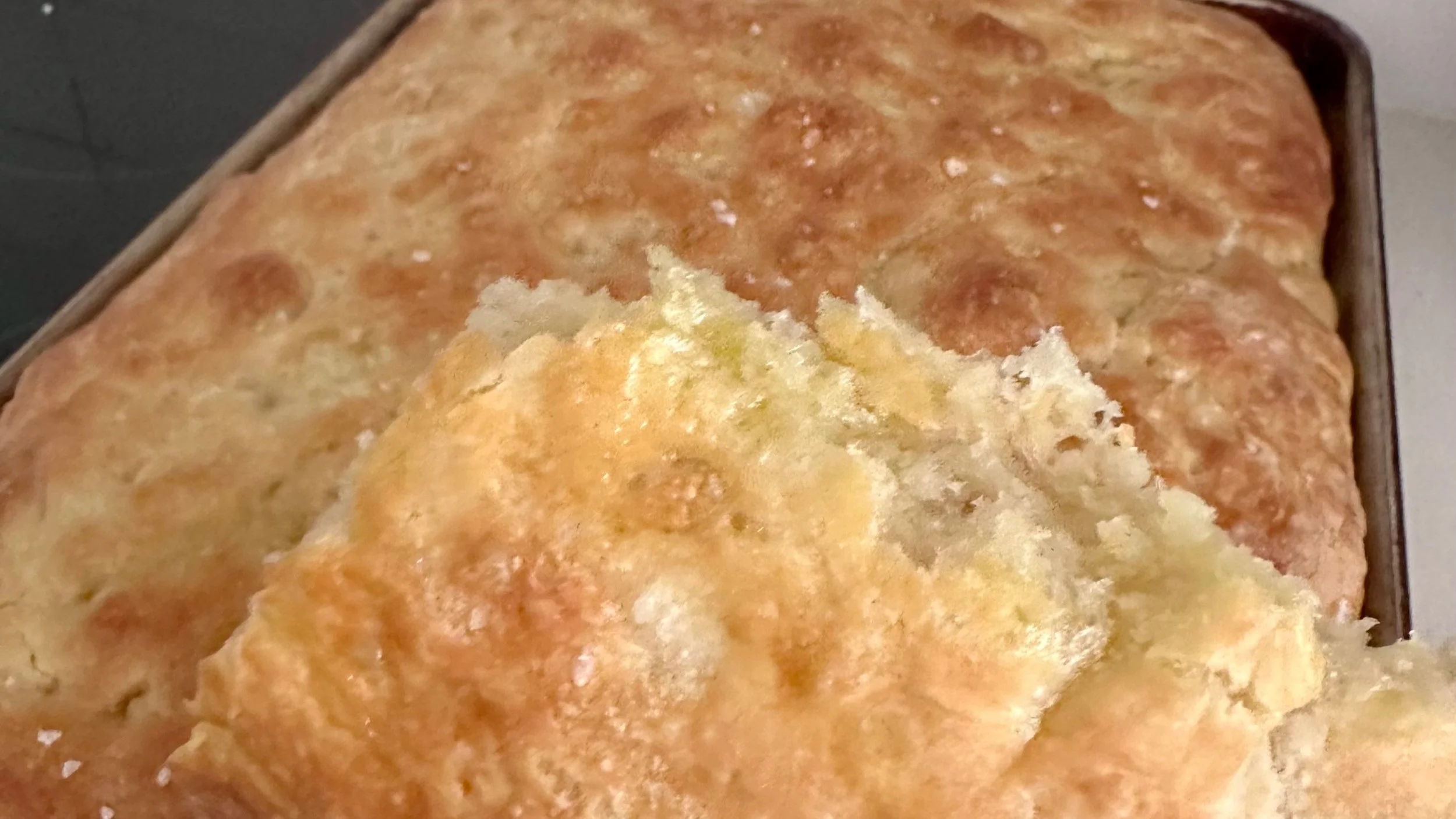
The outside is crispy, soft and spongy on the inside
1 tbsp coarse salt for topping
Steps:
Focaccia – Poolish Method
Making the Poolish
In a medium bowl, combine all the poolish ingredients. Mix with a spoon until well combined.
Cover the bowl and leave it at room temperature to ferment overnight, approximately 8–16 hours.
The next day, the poolish should have approximately doubled in size and be filled with bubbles. It is now ready to use.
Making the Final Dough
Combine the poolish with all the final dough ingredients. Mix until a soft, shaggy dough forms.
Cover and let the dough rest at room temperature for 20–40 minutes.
With slightly wet or oiled hands, perform a fold: gently pull one side of the dough up from the bottom and fold it over itself. Repeat around the dough.
Cover and let the dough rest for approximately 2 hours.
Perform one more fold.
For pizza: Divide the dough into two equal portions.
For focaccia: Generously oil an 18 × 11-inch sheet pan. Transfer the dough to the pan and gently stretch it toward the edges. Use plenty of olive oil to prevent sticking and help create a crisp, flavorful crust.
Cover and proof in a warm place for another 40–60 minutes, or until the dough looks light, airy, and bubbly.
Drizzle generously with olive oil. Gently press your fingertips into the dough to create dimples, then sprinkle with coarse salt and your choice of herbs or toppings.
Bake at 420–450°F (215–230°C) for approximately 20 minutes, or until the focaccia is deeply golden and crisp around the edges.
Baking with Confidence
Don't force the dough when spreading it in the pan. If it keeps shrinking back, let it rest for 10–15 minutes, then gently stretch it again. Relaxed gluten is cooperative gluten. Apparently even bread performs better when nobody is harassing it.
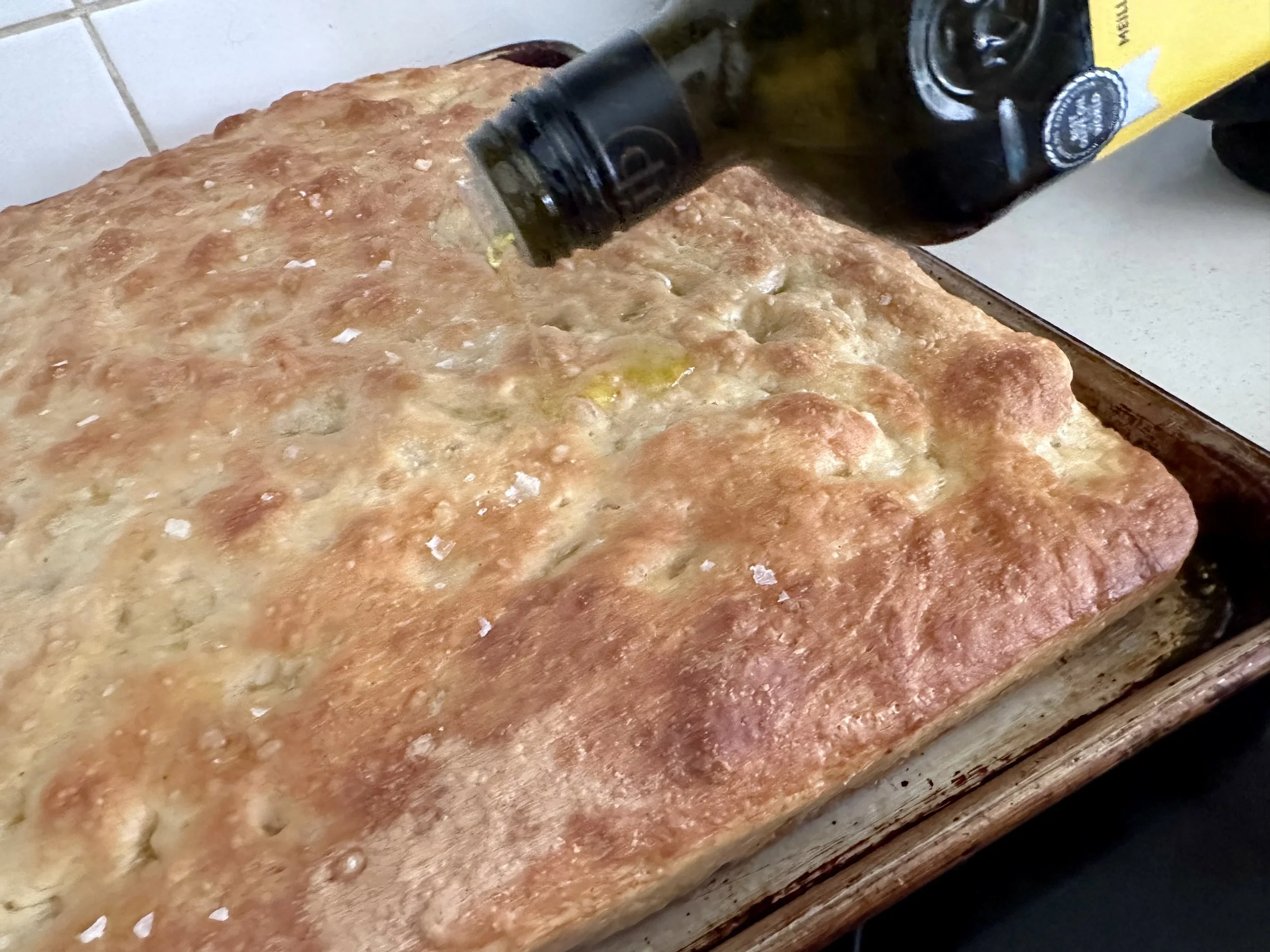
Drizzle more olive oil after baked
Enjoy your homemade focaccia!