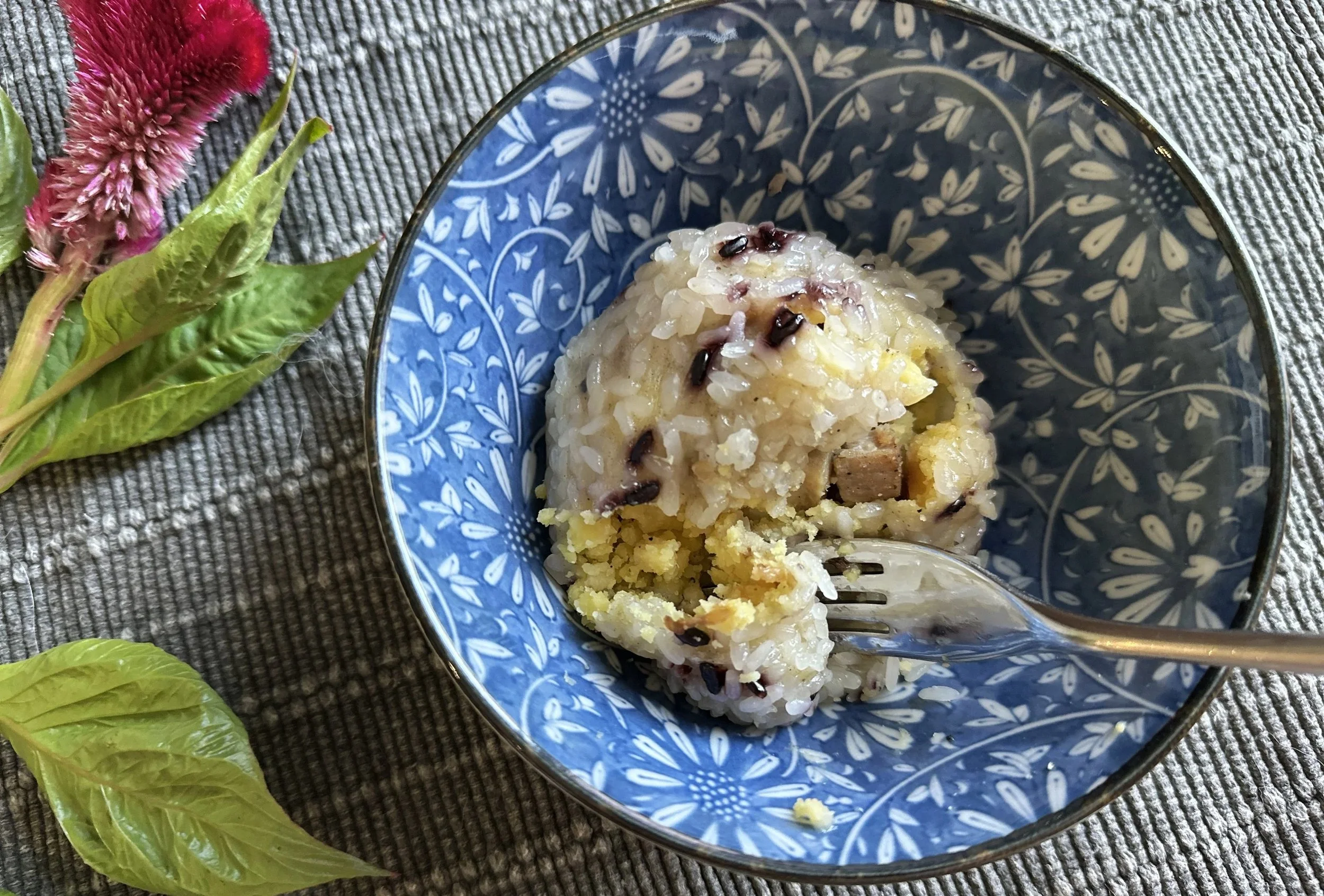
Xôi Khúc
Vietnamese Sticky Rice Dumplings with Mung Bean & Pork Belly
Xôi khúc is a traditional dish from Northern Vietnam, and every family seems to have its own way of making it.
In my family, the recipe is connected to the memories of Northern home cooking brought from Hà Nội to Saigon. Lá khúc, the herb traditionally used to make xôi khúc, was not readily available in the South. Northern families living in Saigon had to adapt, and some home cooks used leafy greens such as lettuce in its place.
Because of this, I grew up knowing xôi khúc without really knowing the flavor of fresh lá khúc.
That changed during a trip to Virginia to visit my mother. I noticed she had a bag of dried lá khúc, a gift brought from Vietnam. She wasn't using it, so naturally I brought the bag home. Apparently ingredients left unattended near me eventually become a recipe.
I didn't use very much the first time because the flavor was unfamiliar to me. This recipe is the version I developed from what I remember of my family's xôi khúc.
It has several wonderful layers: savory pork belly in the center, creamy mung bean surrounding the pork, soft sticky-rice dough, and finally a coating of whole glutinous rice.
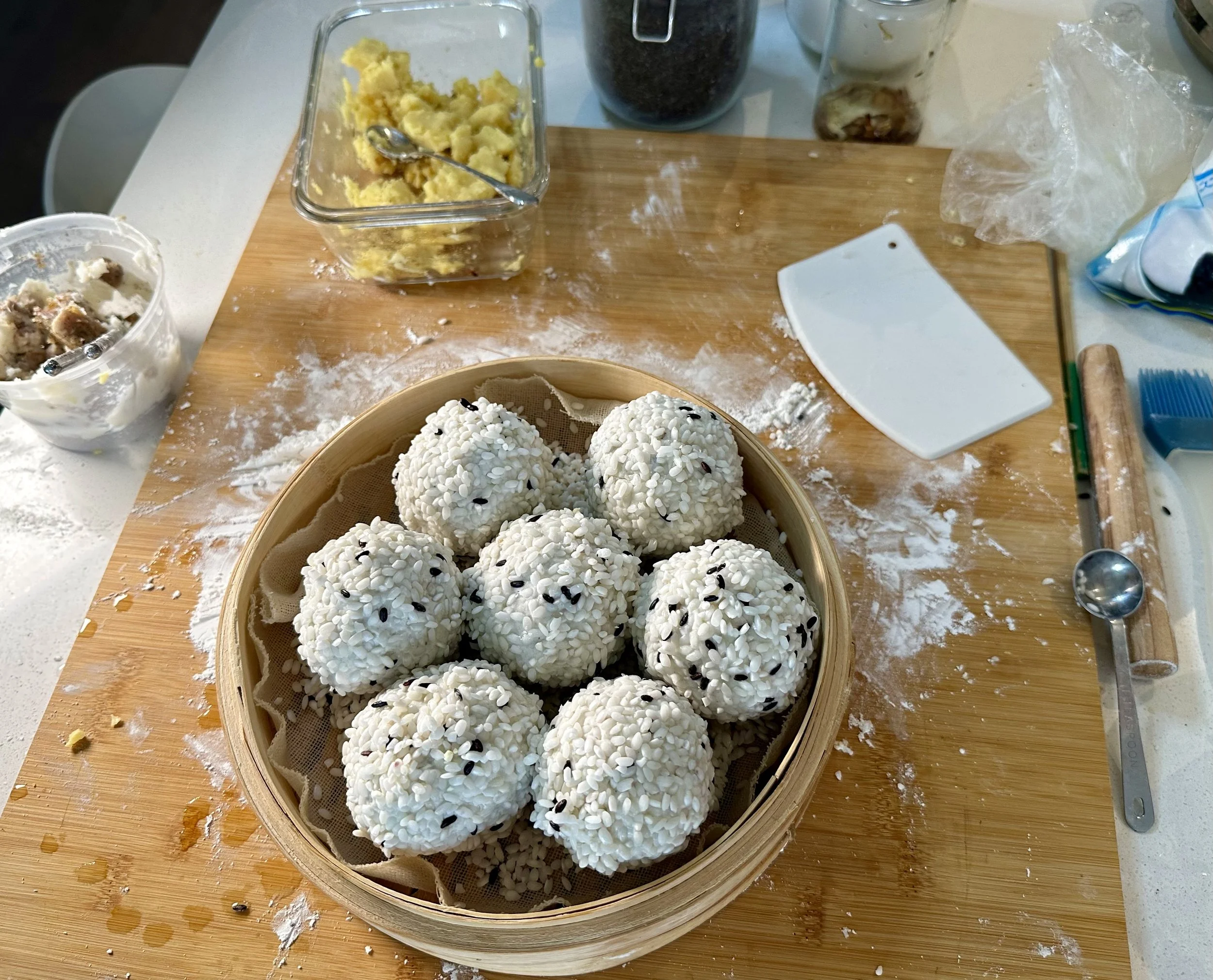
It is rich, fragrant, satisfying, and substantial enough for breakfast, lunch, or even dinner.
My Two-Day Method
When a friend asked me how to make xôi khúc, I explained all the steps. She looked at me and said, “Wow, that's a lot of work! It's like making bánh chưng or bánh tét. It will take the whole day.”
I told her, “Don't make everything in one day.”
I divide the work between two days. On the first day, I cook the pork belly, prepare and mash the mung beans, fry the shallots, and soak the glutinous rice. On the second day, I make the lá khúc dough, assemble the dumplings, coat them with rice, and steam them.
Preparing xôi khúc this way is much more relaxing. I don't want to spend the entire day cooking and then be so tired that I don't even enjoy the food I worked so hard to make. Divide the work, relax, and enjoy it. Happy cook, happier xôi khúc. 😄
Day 1 — Prepare
Cook and season the pork belly; cook and mash the mung beans; fry the shallots and reserve their oil; mix the shallots and some oil into the mung beans; and soak the glutinous rice overnight.
Day 2 — Assemble & Steam
Prepare the lá khúc dough; portion the mung beans and pork; form the six balls; wrap each one in dough; coat generously with soaked glutinous rice; and steam.
That also gives the recipe a nice philosophy that appears throughout your cooking: “make ahead” doesn't mean taking shortcuts. You're doing the same work, just organizing it so cooking remains enjoyable.
Yield :
6 large Xôi Khúc
Ingredients
Pork Belly Filling
200g pork belly, cut into small pieces
Fish sauce
Sugar
Salt
Freshly ground black pepper
Shallots
A little water, for braising
Mung Bean Layer
150g dried split mung beans
Fried shallots
Shallot oil
Salt and pepper, to taste
Lá Khúc Dough
200g glutinous rice flour
Dried lá khúc, as available
or2 green lettuce leaves, tough stems removed
30g-50g Dried lá khúc in hot water –200ml hot water, as needed
Sticky Rice Coating
2 cups glutinous rice
A small amount of black glutinous rice, optional
Fried Shallots
About 3 shallots, plus additional shallots as desired
Neutral cooking oil
Makes approximately 6 large xôi khúc.
Day One — Prepare the Fillings
I like to prepare the pork belly, mung beans, and fried shallots one day ahead. This makes assembling and steaming the xôi khúc much easier the following day.
Prepare the Pork
Season the pork belly with fish sauce, a little sugar, salt, black pepper, and chopped shallot.
Place it in a small pot with a little water and cook gently until the pork becomes soft and tender.
The idea is somewhat similar to braised pork, but I do not add nước màu. I want the pork tender and flavorful without the dark caramel color.
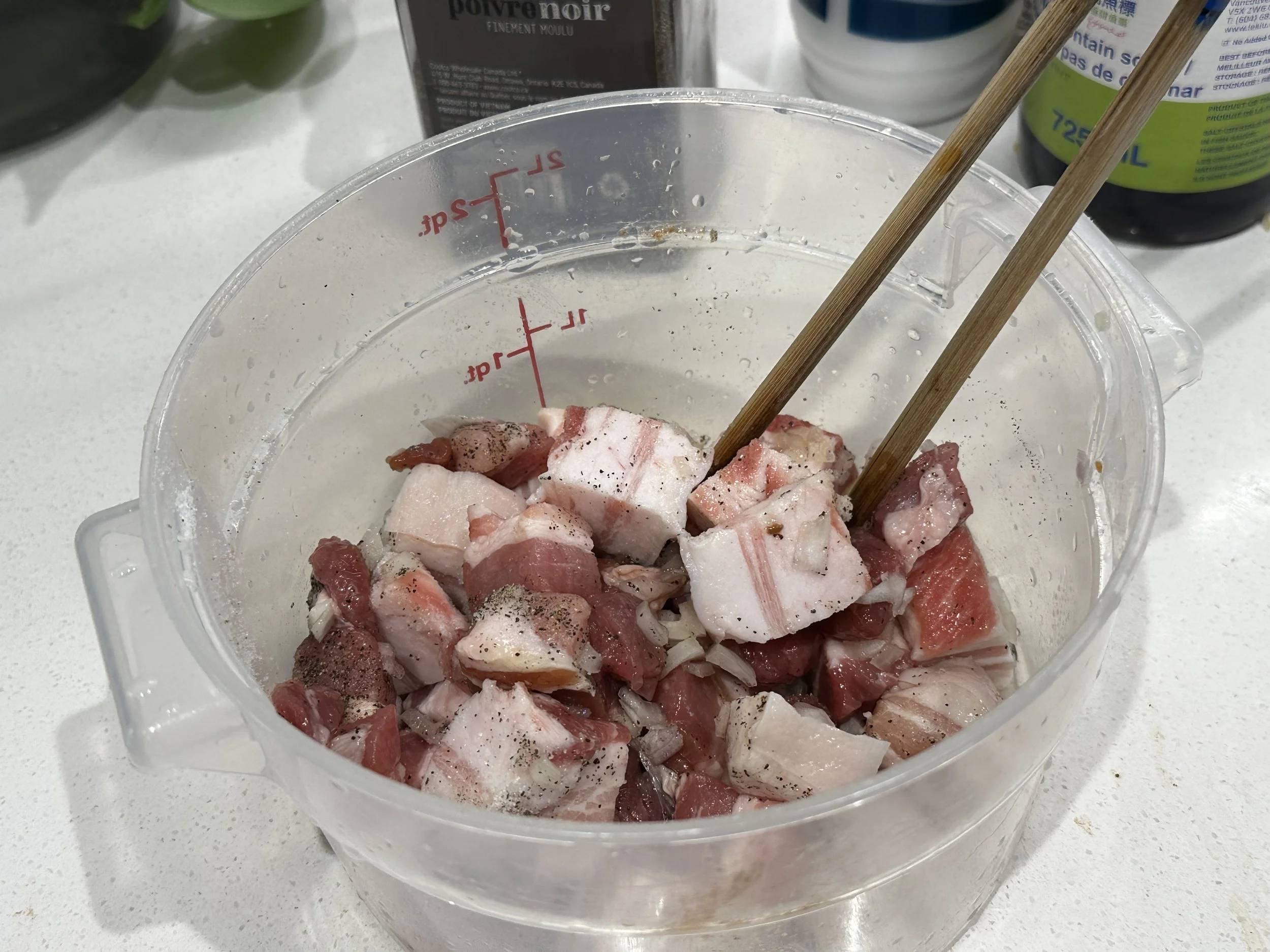
Allow it to cool and refrigerate until needed.
Prepare the Mung Beans
Cook the mung beans until completely tender.
Drain well if necessary and mash them until they have a consistency similar to mashed potatoes.
Mix in fried shallots and a lot of the fragrant shallot oil. Season to taste.
Cool, cover, and refrigerate.
Prepare the Glutinous Rice
Rinse the glutinous rice and soak it in cold water overnight, or for at least 2 hours.
I sometimes mix in a little black glutinous rice because I enjoy the additional color and texture.
Drain well before assembling.
Day Two — Prepare the Lá Khúc Dough
If using dried lá khúc, prepare it and incorporate it into the dough.
If lá khúc isn't available, use approximately 2 green lettuce leaves. Remove and discard the tough stems, keeping the tender green portions.
Purée the greens with water until fine bring to boil, if using Dried lá khúc add to water bring to boil to release the green color.
Place the 200g glutinous rice flour in a bowl and add the puréed greens.
Gradually add hot Dried lá khúc mixture, mixing until a soft, workable dough forms. The exact amount of water may vary, so don't pour it all in at once.
Cover and allow the dough to rest for about 10 minutes.
Fried Shallots & Shallot Oil
2 large shallots or 3 small shallots, thinly sliced
¼ cup (4 tbsp / about 60ml) neutral cooking oil
Heat the oil in a small pan over low heat.
Add the sliced shallots and cook slowly, stirring occasionally, until they become lightly golden and crisp. Watch them carefully toward the end because shallots have a remarkable ability to spend ten minutes doing absolutely nothing and then burn while you look away for twelve seconds.
Remove the fried shallots from the oil and drain.
Keep the shallot oil. Mix some of the fried shallots and fragrant oil into the cooked, mashed mung beans. The shallots give the filling a deeper savory flavor, while the oil keeps the mung beans rich and moist.
Save additional fried shallots for serving if desired.
Shape the Filling
Divide the cooked mung bean mixture into 6 equal portions.
Flatten one portion in your hand and place some of the cooked pork belly in the center.
Bring the mung bean mixture around the pork until it is completely enclosed.
Gently roll it into a ball.
Repeat until you have 6 mung-bean balls with pork belly hidden inside.
Wrap with the Dough
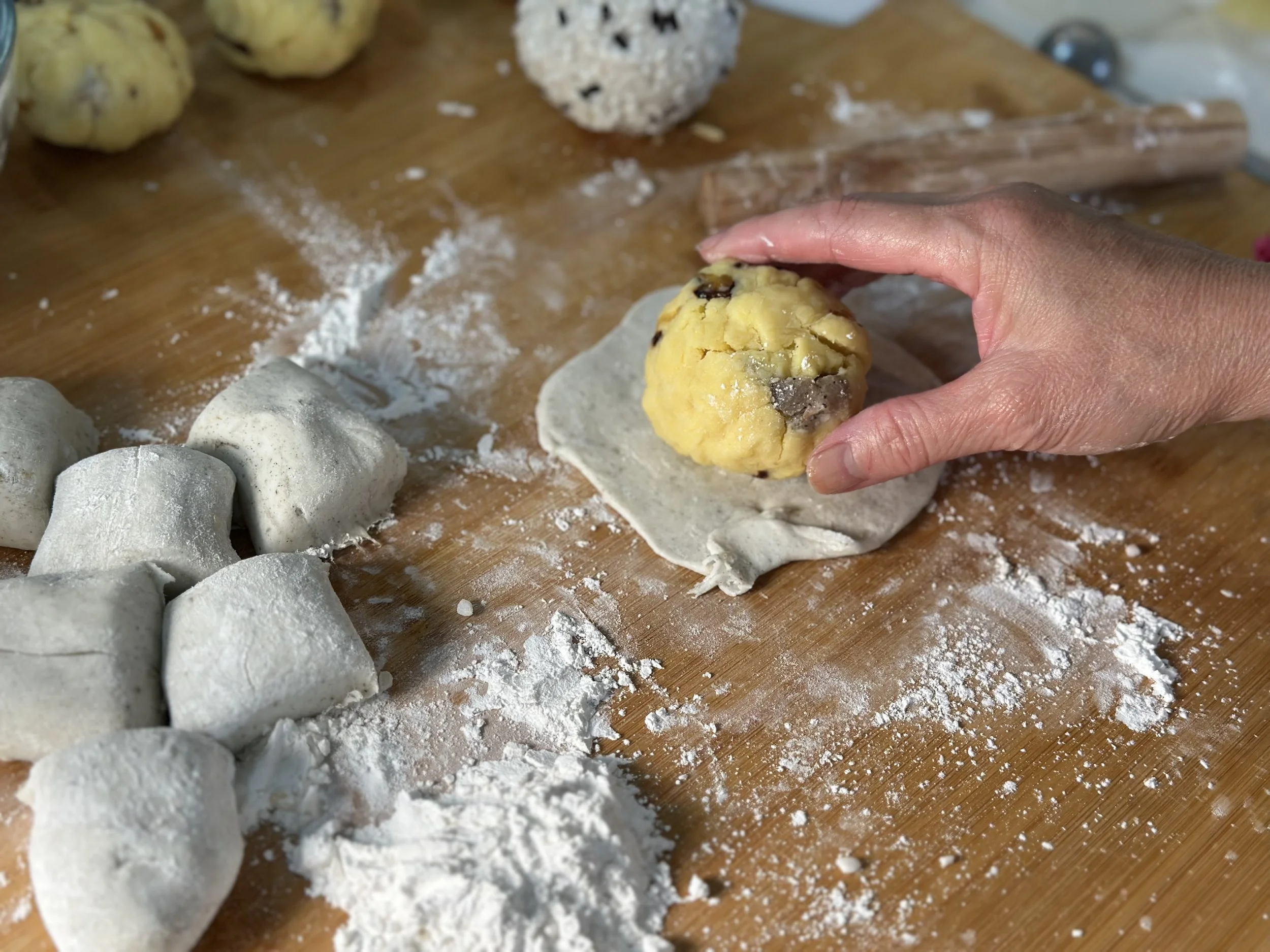
Divide the lá khúc dough into 6 equal pieces.
Take one piece and roughly flatten it with your fingers.
Place a mung-bean-and-pork ball in the center and gently bring the dough around it until completely enclosed.
Roll carefully into a round ball.
Repeat with the remaining portions.
Coat with Sticky Rice
Roll each finished ball in the drained soaked glutinous rice, gently pressing so the grains adhere to the outside.
Arrange the balls in your steamer with a little space between them.
Scatter the remaining soaked rice over and around the xôi khúc.
If you especially love sticky rice, use enough to cover the spaces between the dumplings and generously cover the tops.
Steam until the outer rice is completely tender and the dough underneath is cooked through.
The Layers of Xôi Khúc
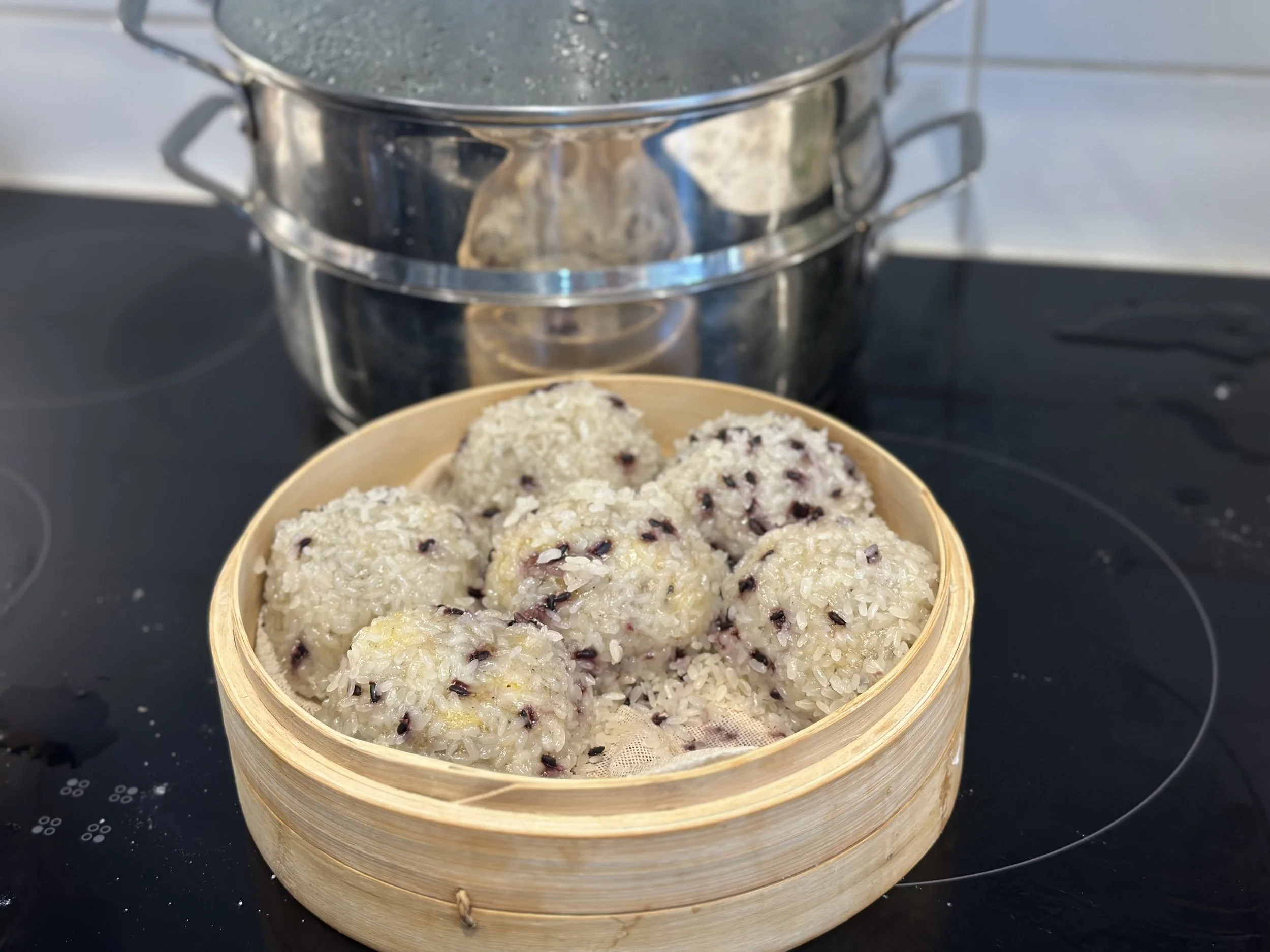
When you cut one open, you can see what makes this dish so satisfying:
Glutinous rice
↓
Lá khúc sticky-rice dough
↓
Mashed mung bean with fried shallot
↓
Tender, peppery pork belly
Then the same layers travel back out again.
The fatty pork belly gives richness, the black pepper and shallot provide savory flavor, the mung beans are creamy, and the sticky rice makes the whole thing wonderfully substantial.
Make Ahead & Freeze
Xôi khúc is excellent for preparing ahead and freezing.
Because each one is practically a complete meal wrapped into a ball, it makes a very convenient breakfast or quick meal once reheated.
A Taste I Learned Later
For many years, I knew xôi khúc from my family's cooking, but I didn't really know the flavor of lá khúc itself because it wasn't an ingredient we commonly had in Saigon. When I found the dried lá khúc in my mother's kitchen many years later, I finally had the opportunity to make it with the traditional herb.
I used only a little at first because I didn't know how strong the flavor would be. This is not meant to be everyone's definitive version of xôi khúc. It is my version—made from my family's memories, the ingredients we had available, and the flavor I came to discover later.