
My Saigon Bánh Mì
A Childhood Memory & Homemade Recipe
What Is Vietnamese Bánh Mì?
Vietnamese bánh mì is often compared to a French baguette, but it has its own unique texture and identity. The crust is thin and crisp, while the inside is soft, light, and airy. When freshly baked, homemade bánh mì has a delicate crunch that makes it perfect for sandwiches.
A traditional Vietnamese bánh mì sandwich is layered with pickled radish and carrot, homemade mayonnaise, fresh cucumber, herbs, and your choice of protein such as grilled pork, chicken, shredded pork, fish, or even vegan fillings.
But for me, bánh mì is more than just a sandwich.
A Childhood Memory of Vietnamese Street Bánh Mì
I have a vivid memory of street vendors delivering freshly baked bánh mì to our home during my childhood in Saigon.
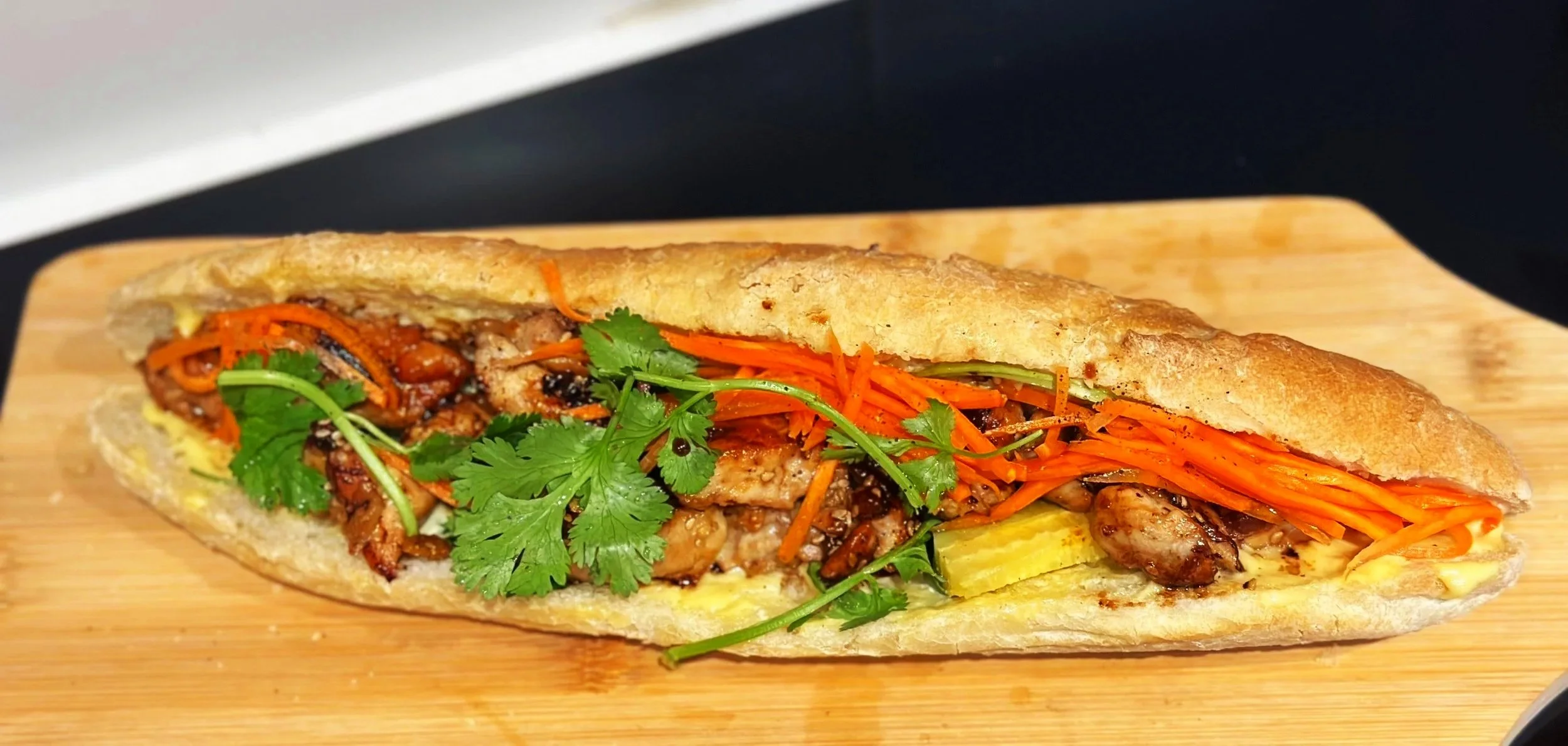
Banh Mi with pork liver pate and chicken lemon grass
At the beginning of the year when the communists took over the reunited country, my family moved to Saigon — the big city — where I truly discovered the goodness of Vietnamese bánh mì.
Every morning, street vendors walked through the neighborhood carrying large burlap bags filled with hot, freshly baked bread. Their cheerful voices filled the streets:
“Who wants fresh bánh mì, straight from the oven? Hot and crunchy!”
That was our breakfast.
Sometimes we ate it with fried eggs and butter, drizzled with soy sauce. Some preferred butter with salt and pepper, but I loved mine with butter and Maggi seasoning sauce. That combination — warm bread, melting butter, and savory Maggi — was simple but unforgettable.
Recreating Homemade Bánh Mì in the United States
When our family moved to the United States, we missed the soft-and-crunchy texture and fresh-baked aroma of authentic Vietnamese bánh mì.
After searching for years, we finally found a reliable homemade bánh mì recipe that allowed us to recreate that beloved bread at home.
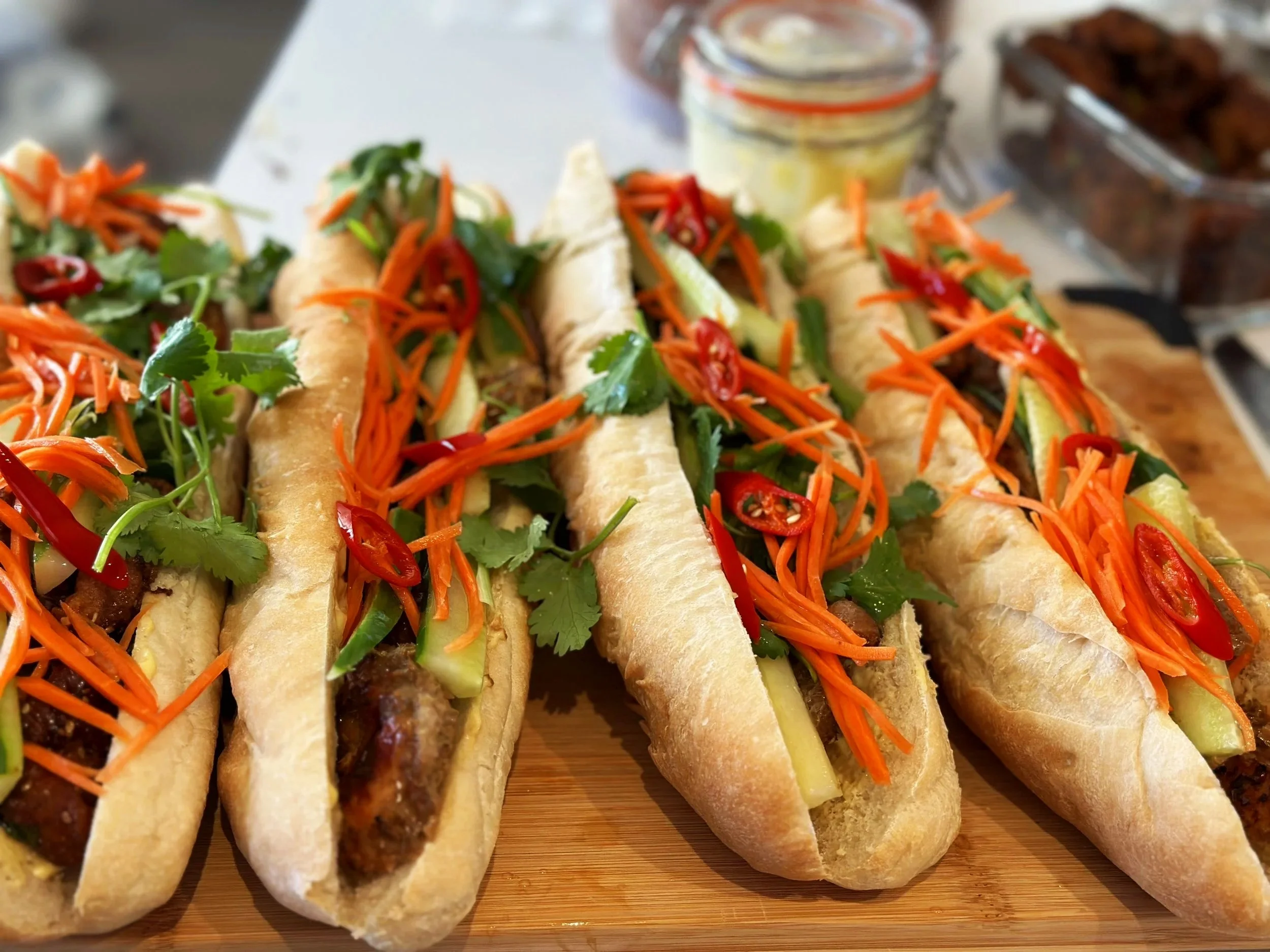
Banh mi with chicken lemongrass and Korean fry chicken
Now, every time I bake Vietnamese bánh mì from scratch, it brings me back to those early mornings in Saigon — the smell of hot bread, the voices of vendors, and the comfort of a simple but meaningful meal.
So yummy !
Yield :
Make 4 small baguette (230g each)
Prepare time 4 hours
Suplies:
Scale
Timer
Stand mixer with dough hook - if you have strong hand there is
Spray bottle of water
Sharp knife
Any size baking dish
Baking trays/baguette baking trays
Yield:
Make 4 small baguette (230g each)
Banh Mi Ingredients:
423g all-purpose flour
27g rice flour
340ml-350ml water (70C-80C)
7g yeast/2 tsp active dry yeast
5g salt/1 tsp
5g sugar/1 tsp
1/4 tsp bread enhancer optional
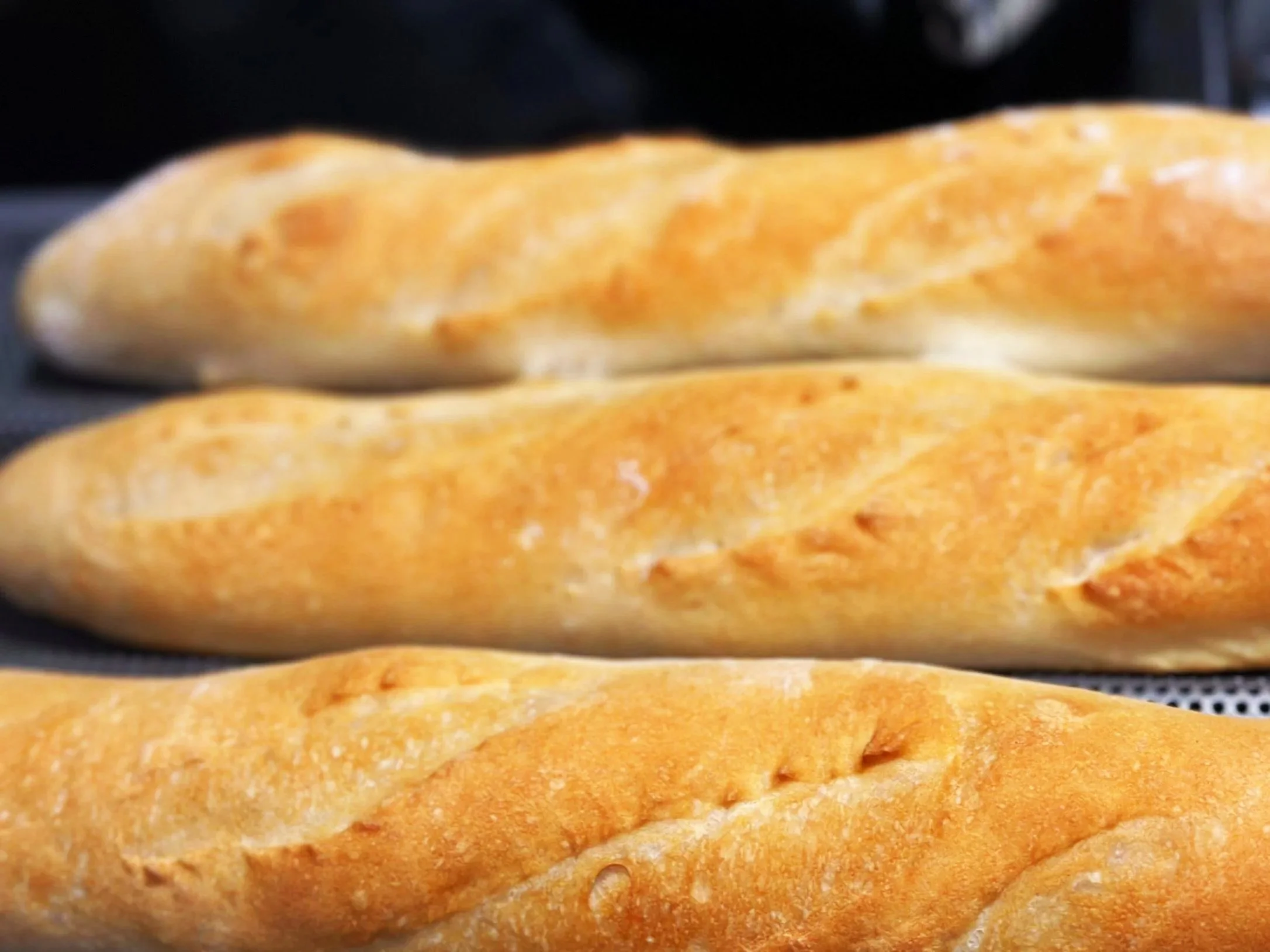
Steps:
First the Mixing and fermentation stage:
Combine flour, salt and sugar, bread enhance if use, in a stand mixer bowl.
Dissolve yeast in a small bowl of water and set aside for 2-5 minutes.
In a stand mixer bowl, combine sugar, salt, and flour. Add yeast mixture and mix with dough hook for 10 minutes to distribute yeast evenly and develop gluten.
When dough forms and pulls together, remove hook, cover with plastic wrap, and rest for 30 minutes. Then, mix dough again for 1-2 minutes to deflate, and rest for another 30 minutes.
Repeat steps 1-2 times; after approximately 2 hours, dough will become smooth, elastic, and flavorful through fermentation.
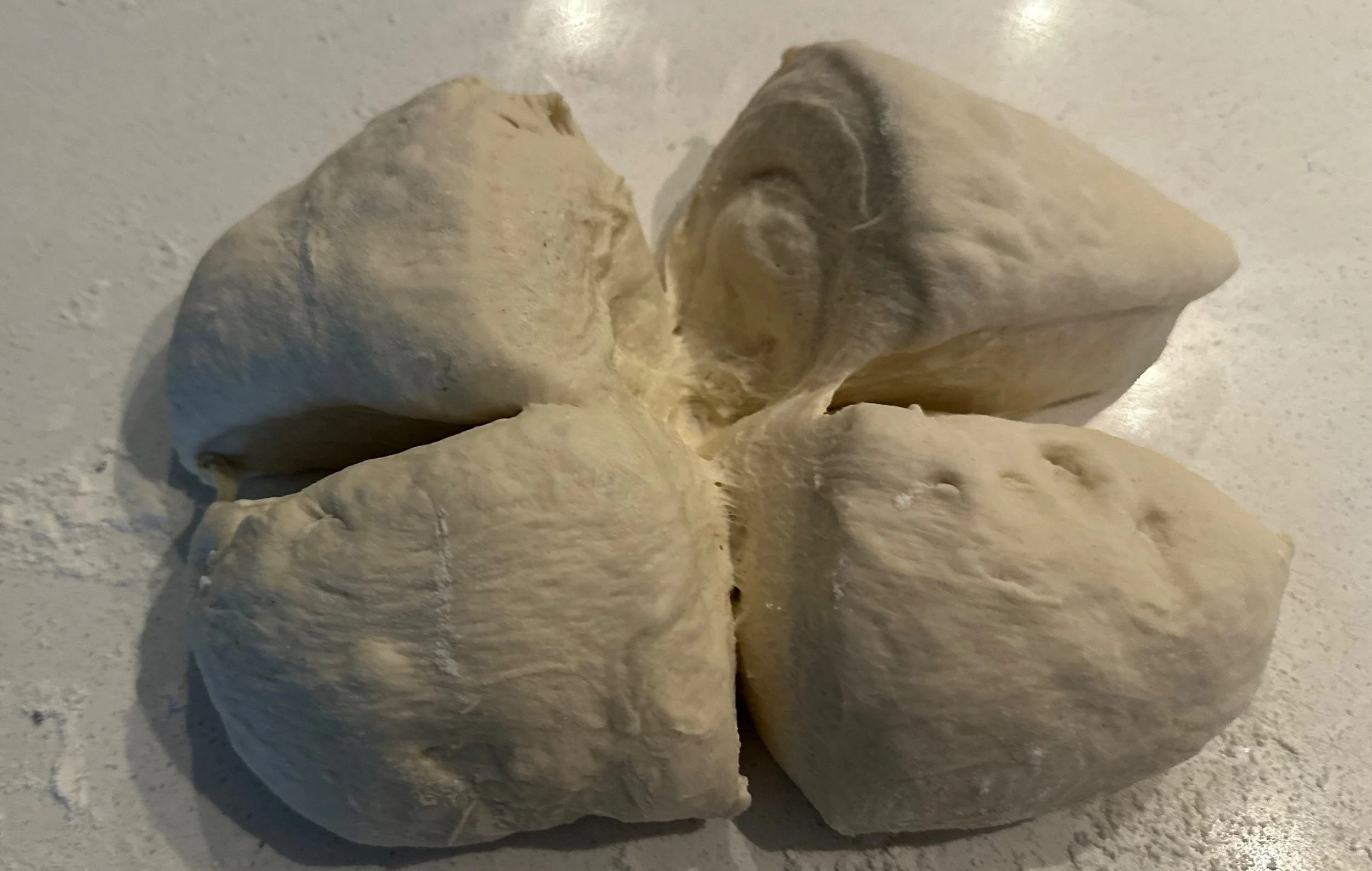
Divide the Dough to equal 4 chunks
Next the pre shape and proofing stage
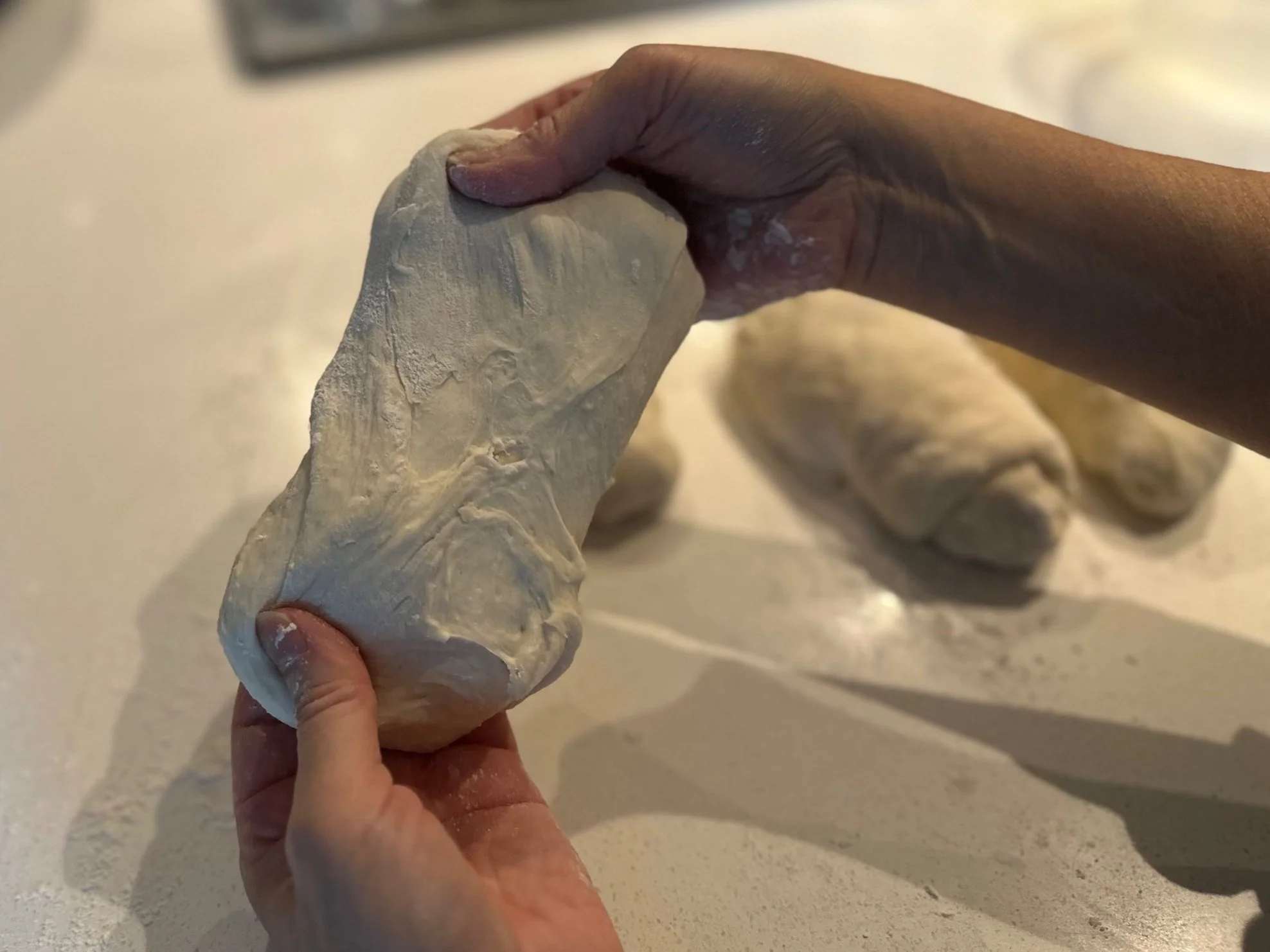
1. Divide the dough into 4 (230g) chunks
2. Roll the dough into balls or small log
3. Cover the dough using kitchen towel or cloth allow to rest for 10 -20 minutes to allow the dough to relax so it is easier to shape later
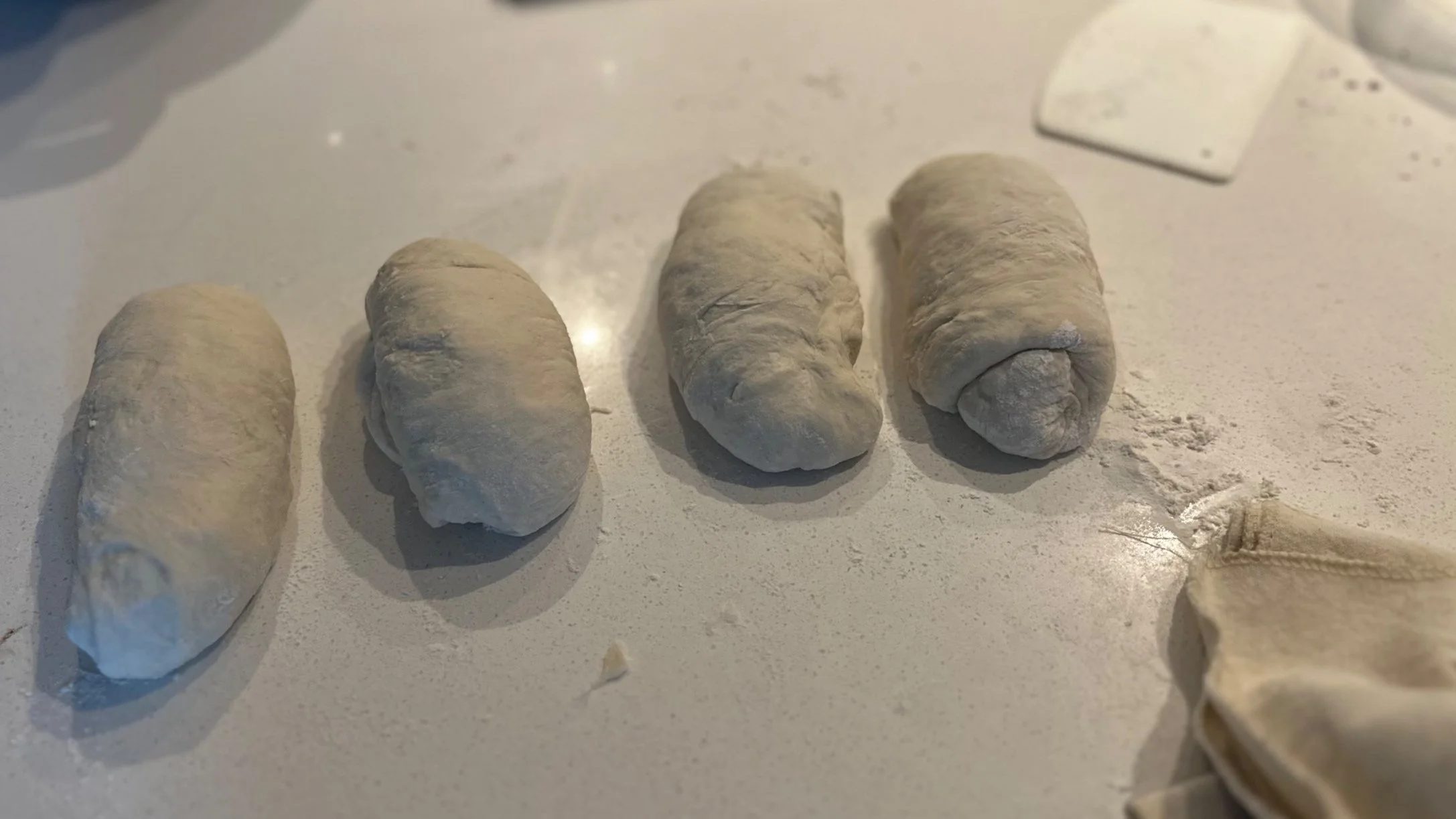
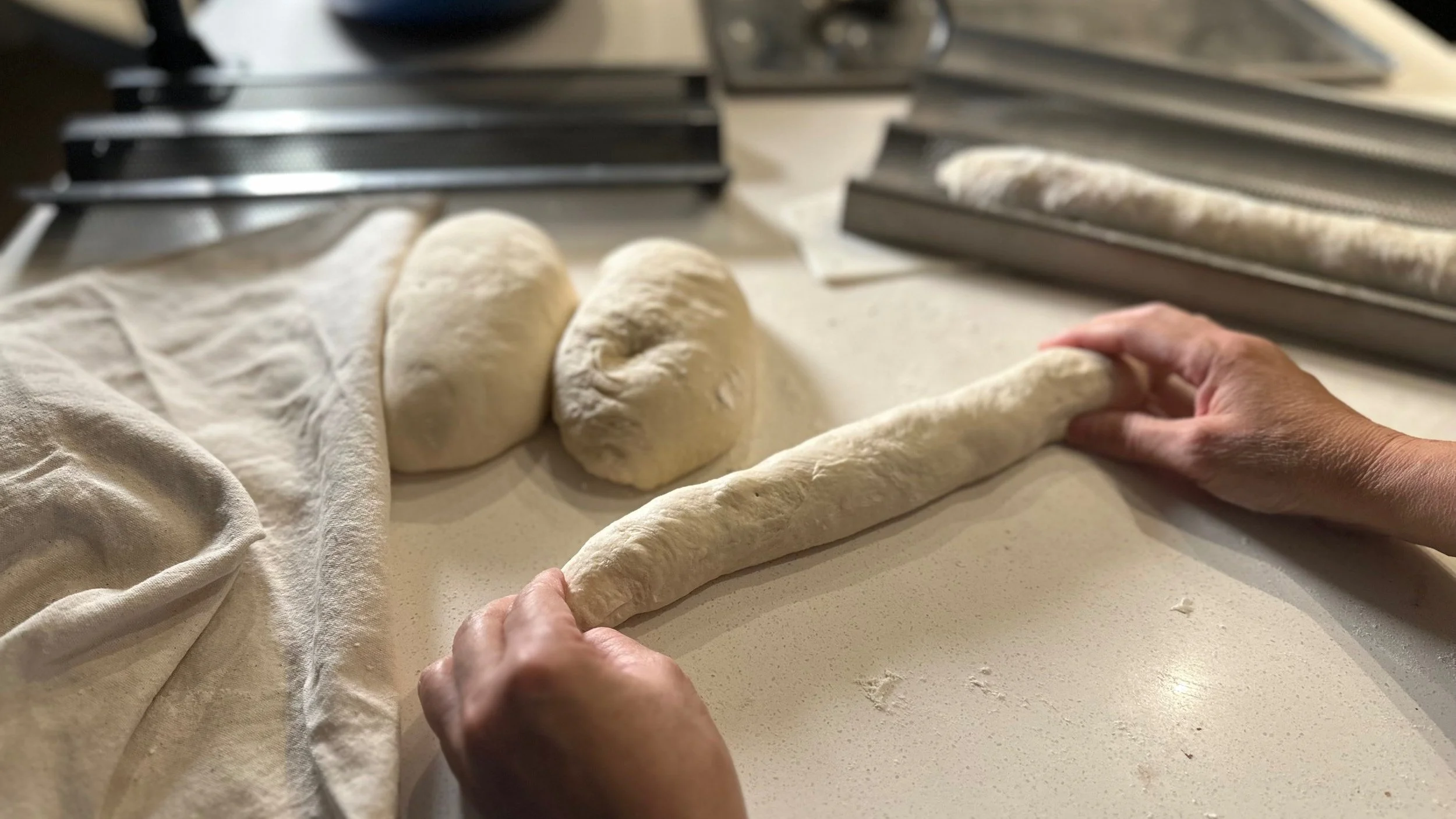
Roll the dough into small log
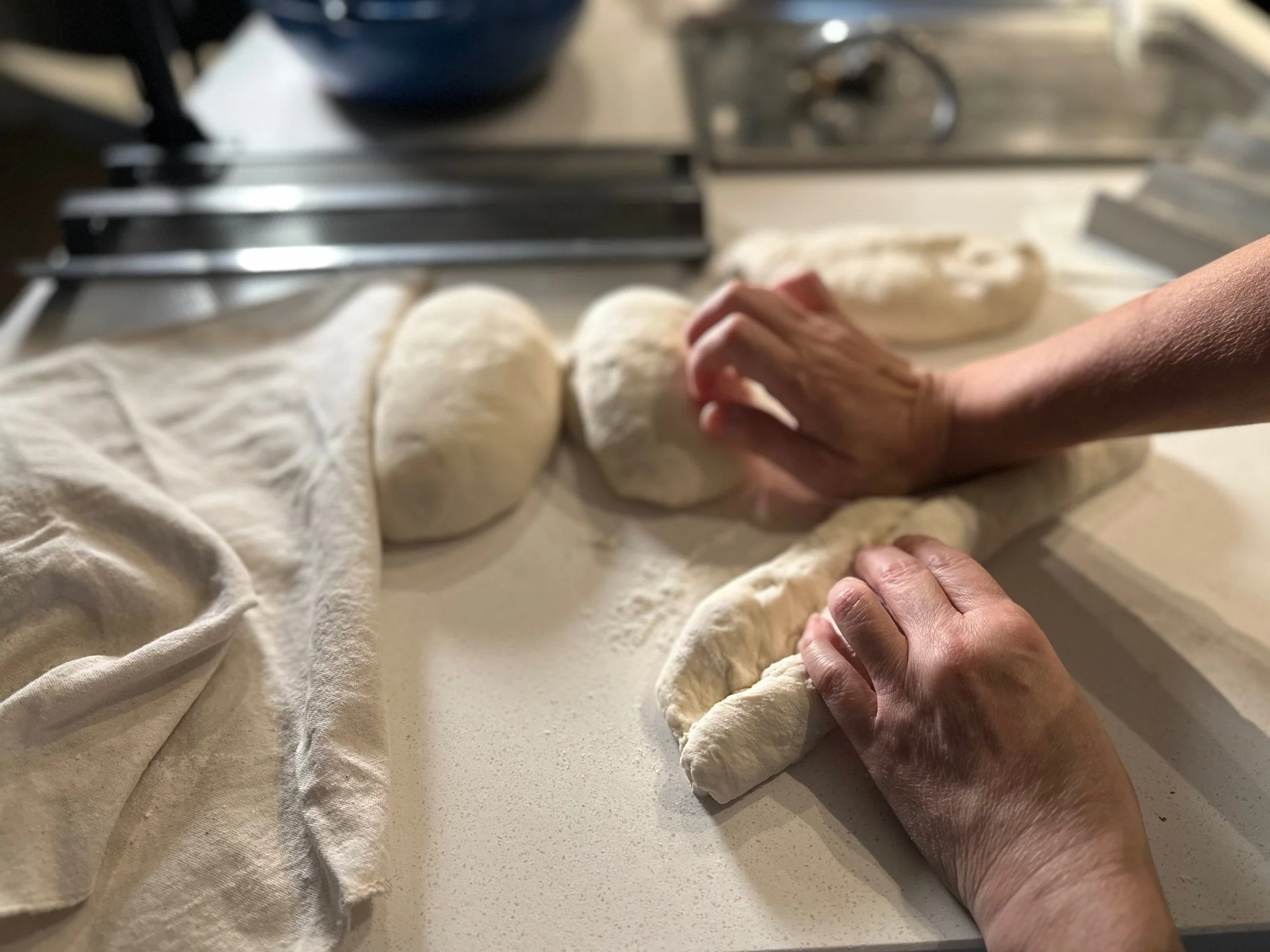
Shape the Banh Mi:
1. Prepare a clean work surface with flour.
2. Flatten the dough using a rolling pin as needed.
3. Stretch the dough into a rectangle by holding each end.
4. Roll and fold the dough inward to seal.
5. Ensure the seam faces down.
6. Roll out the dough from the middle, increasing pressure toward the ends.
7. Cover the dough using kitchen towel or cloth
8. Proof for 40-60 minutes or longer in cold temperatures.
9. Use the oven's proofer with hot water for 40 -50 minutes if available.
10. Otherwise, proof in a warm oven (75-80°F) with hot water create warm, humid environment.
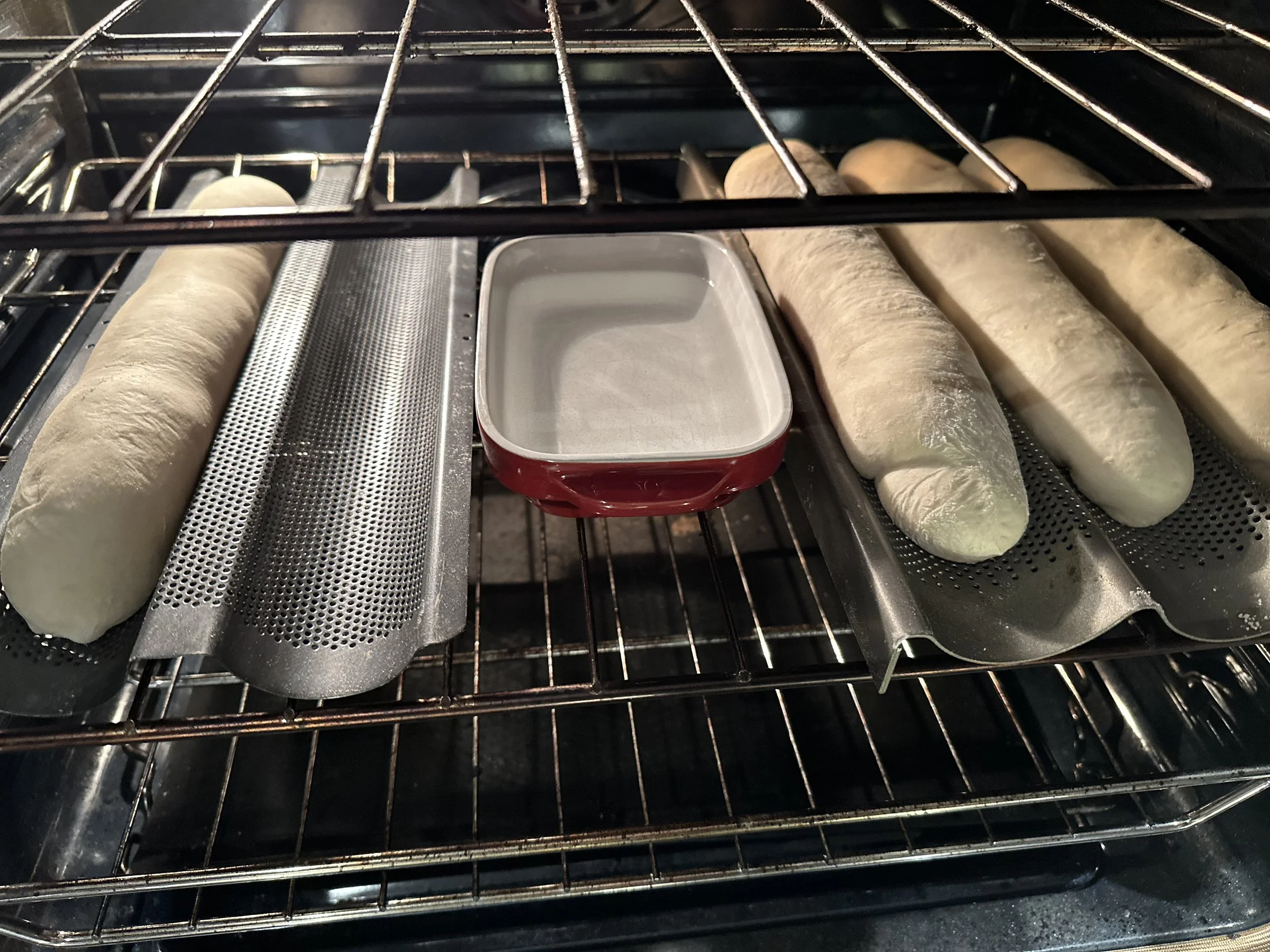
Proofing the bread dough with hot water dish in the oven
After 40-50 minutes waiting for the dough to rise
Preheat the oven to 425-430°F. Prepare steam with a spray bottle, or a cup of hot water
The dough is ready to bake when doubled or when it passes the finger test – press lightly and check for springback. If not, wait.
Before baking, score the dough ¾ inch deep.
Then, place it in the oven and immediately create steam by spraying water or or Splash hot water into the oven to generate steam Bake 20-25 minutes or until golden brown.
Oven Proof Step-by-Step Instructions:
1. Preheat oven to 200°F (90°C).
2. Place a baking dish or pan filled with hot water (around 100°F to 110°F) on the oven floor.
4. Place the bread dough tray in the oven, above the water.
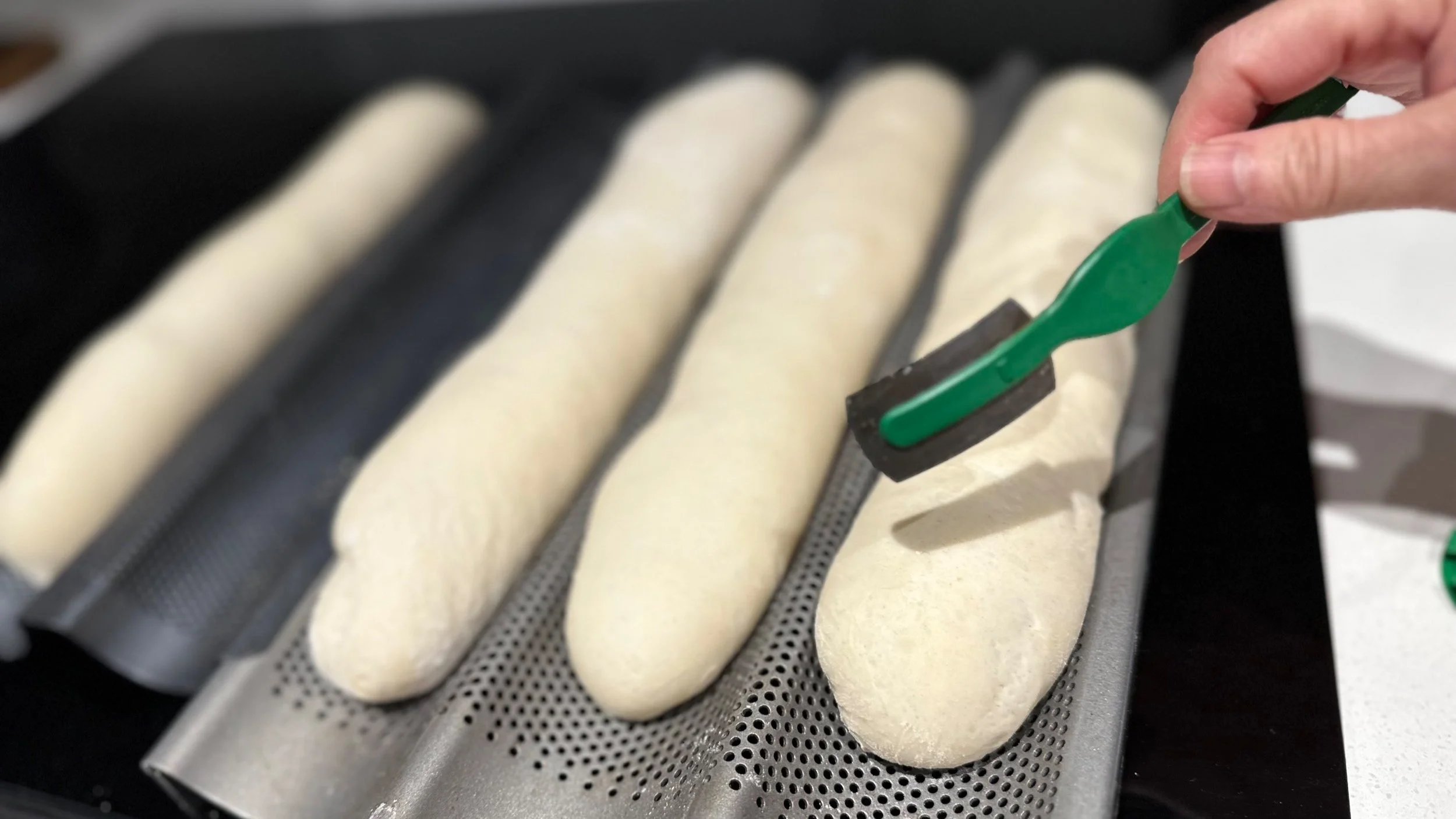
Score the dough with lame
5. Close the oven door, ensuring a warm, draft-free space.
6. Let the dough proof for 1-2 hours, or until doubled in size.
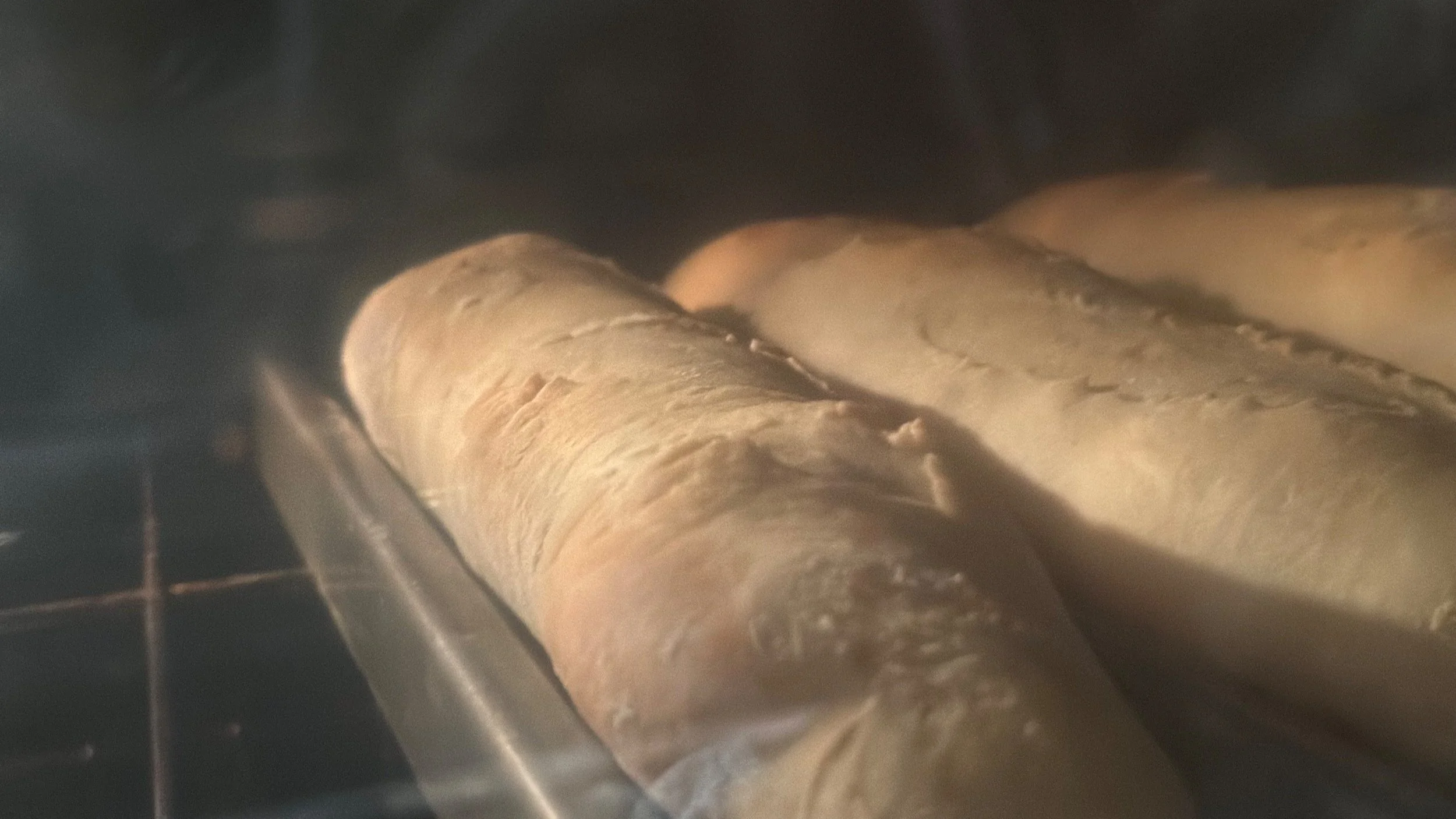
Crispy and soft, YUM !
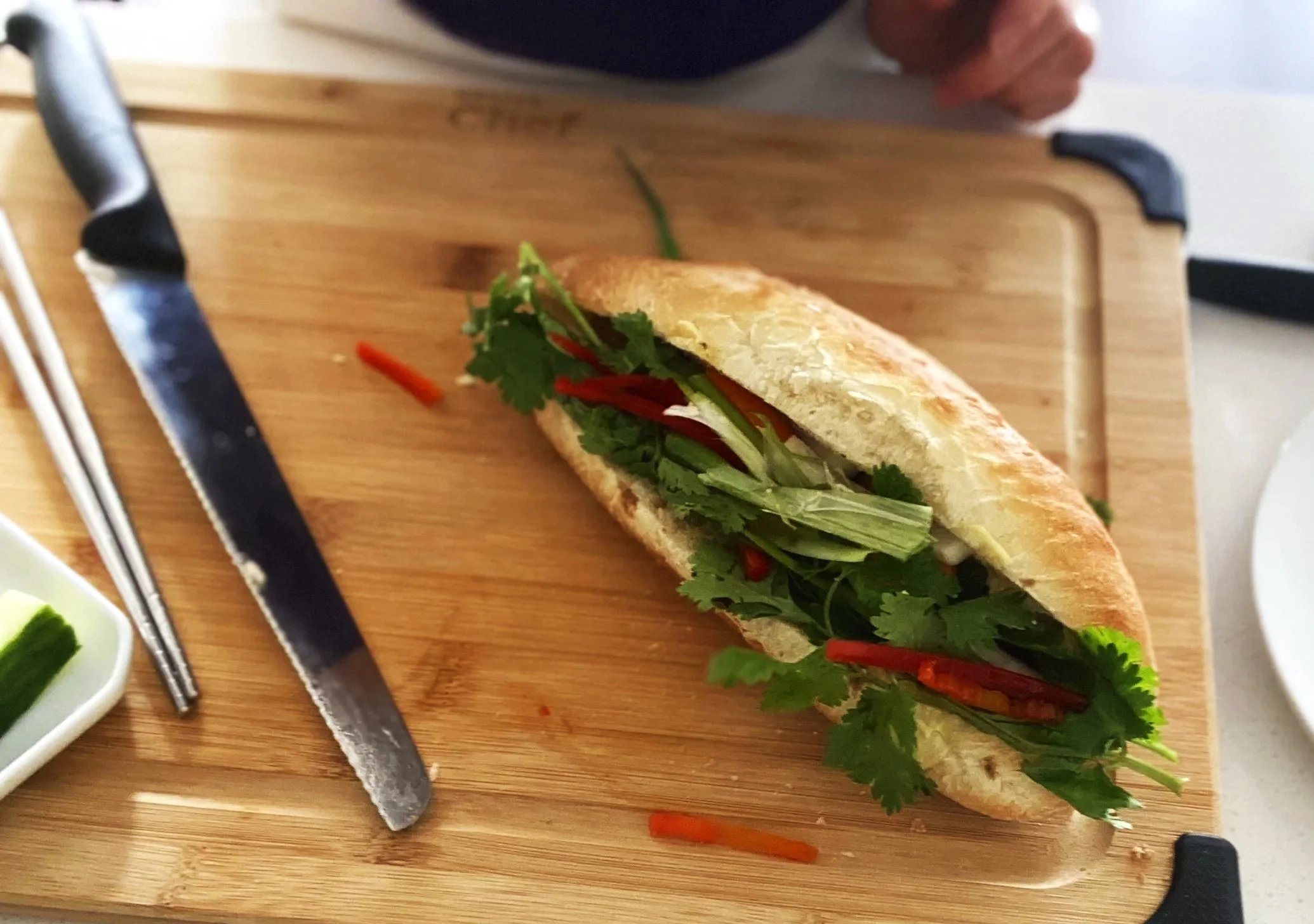
Banh mi and tempet