Light & Airy Genoise Sponge Cake (Vietnamese Bánh Bông Lan Recipe)
Genoise Cake – A Childhood Memory of Bánh Bông Lan
I have a vivid memory of my mother making birthday cakes for us when we were children. At that time, we did not have a conventional oven. Instead, she baked the cakes on a charcoal stove.
Her decorating style was simple but beautiful. The cakes were usually made with genoise sponge and buttercream, what we called bánh kem. Interestingly, the French genoise method is very similar to Vietnamese bánh bông lan, a reflection of the historical French influence in Vietnam. The ingredients are almost identical, just adapted to local ingredients and techniques.
My mother would pour the batter into a cast-iron pot, place a lid on top, and pile hot charcoal over the lid to create heat from both directions. Sometimes the cake came out slightly charred, which disappointed her greatly. But as children, we didn’t mind at all — we were simply excited to have cake.
On her next attempt, she adjusted the placement of the charcoal and watched the cake more carefully. Slowly, she perfected the method.
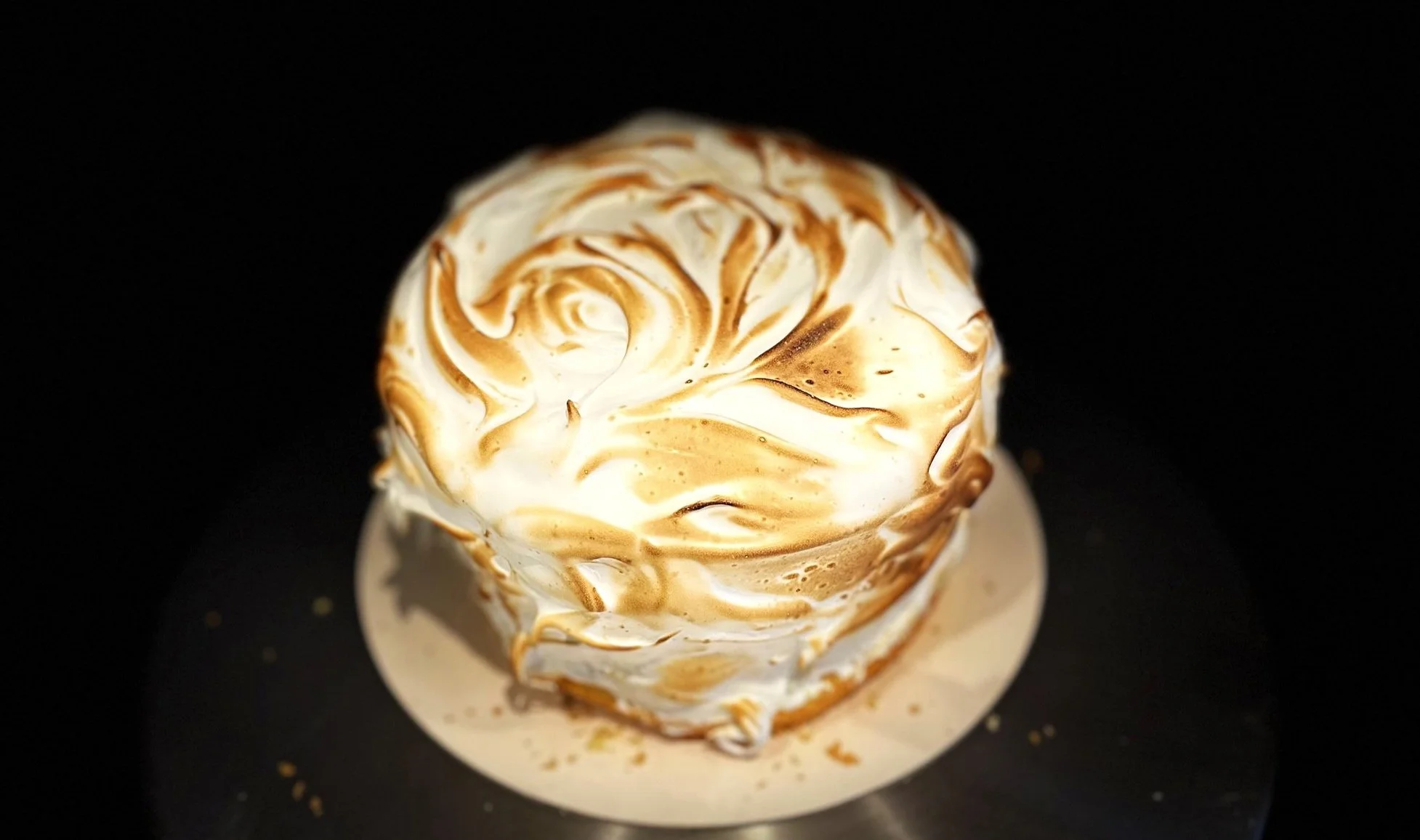
For the icing, she made a French meringue buttercream, whipping egg whites with sugar before incorporating soft butter. The finished cake was decorated with bright red maraschino cherries and a border of finely chopped toasted peanuts. The flavor of that cake is something I still remember today.
The aroma of freshly baked genoise coming from the charcoal stove filled the whole house. My mother often whipped the batter by hand, and sometimes even used duck eggs, which gave the cake a richer flavor. The combination of salted butter and meringue created a taste that was both delicate and unforgettable.
Later, when a friend from the city visited, my mother received a stand mixer and a small set of food coloring. With these new tools, she quickly learned more decorating techniques. Soon she was piping beautiful buttercream roses and delicate leaves.
I still remember the excitement when my sister received her first decorated birthday cake. Made with the new mixer and baked in a tin similar to the old charcoal pot, the cake was decorated with a pink buttercream rose and green leaves. To us, it looked like a masterpiece.
After we moved to the city, we met many talented bakers and chefs. My mother collected recipe cards and learned more refined baking techniques. Through these friendships, she perfected the art of making genoise bánh bông lan, the same method I continue to use today.
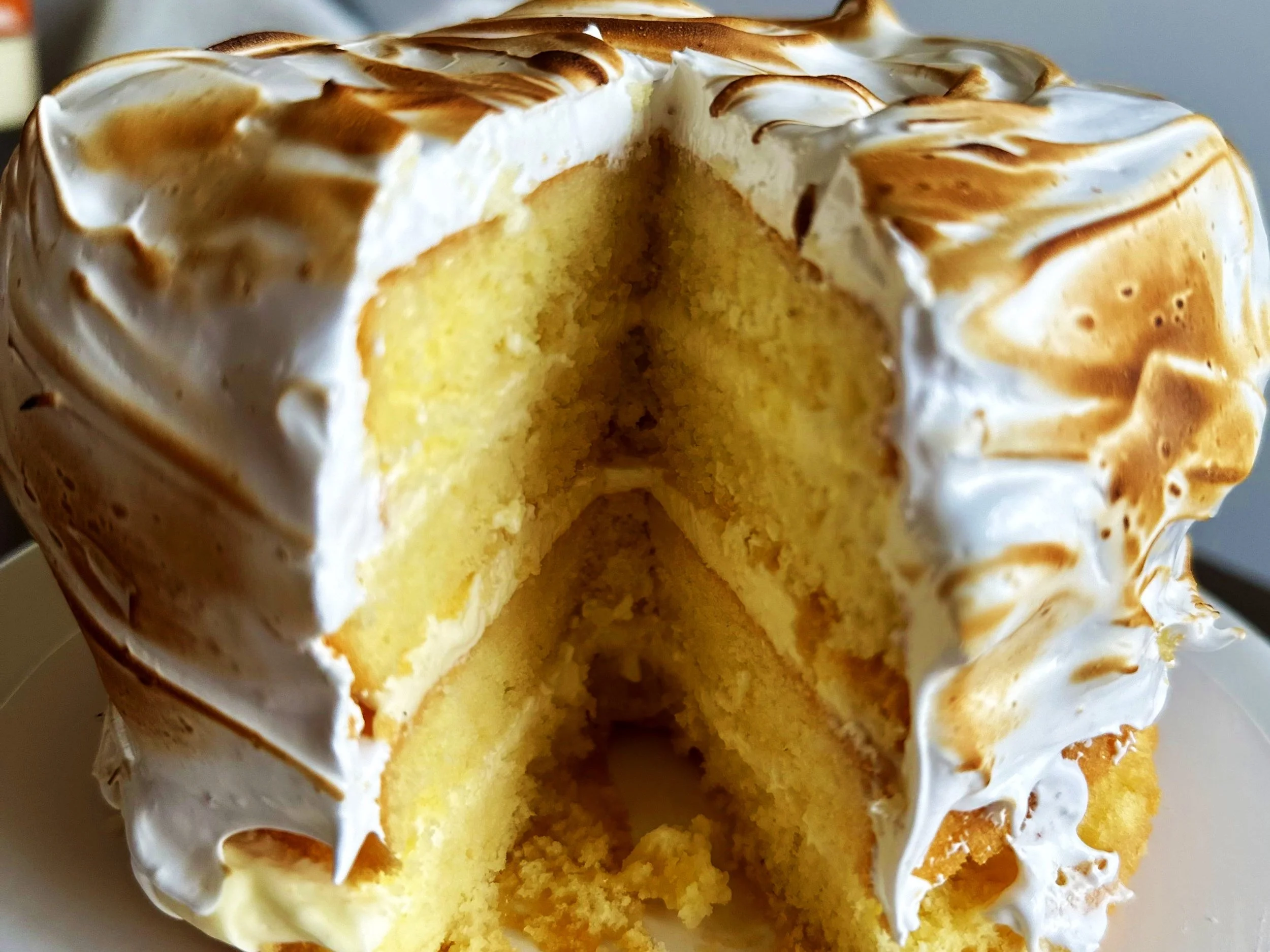
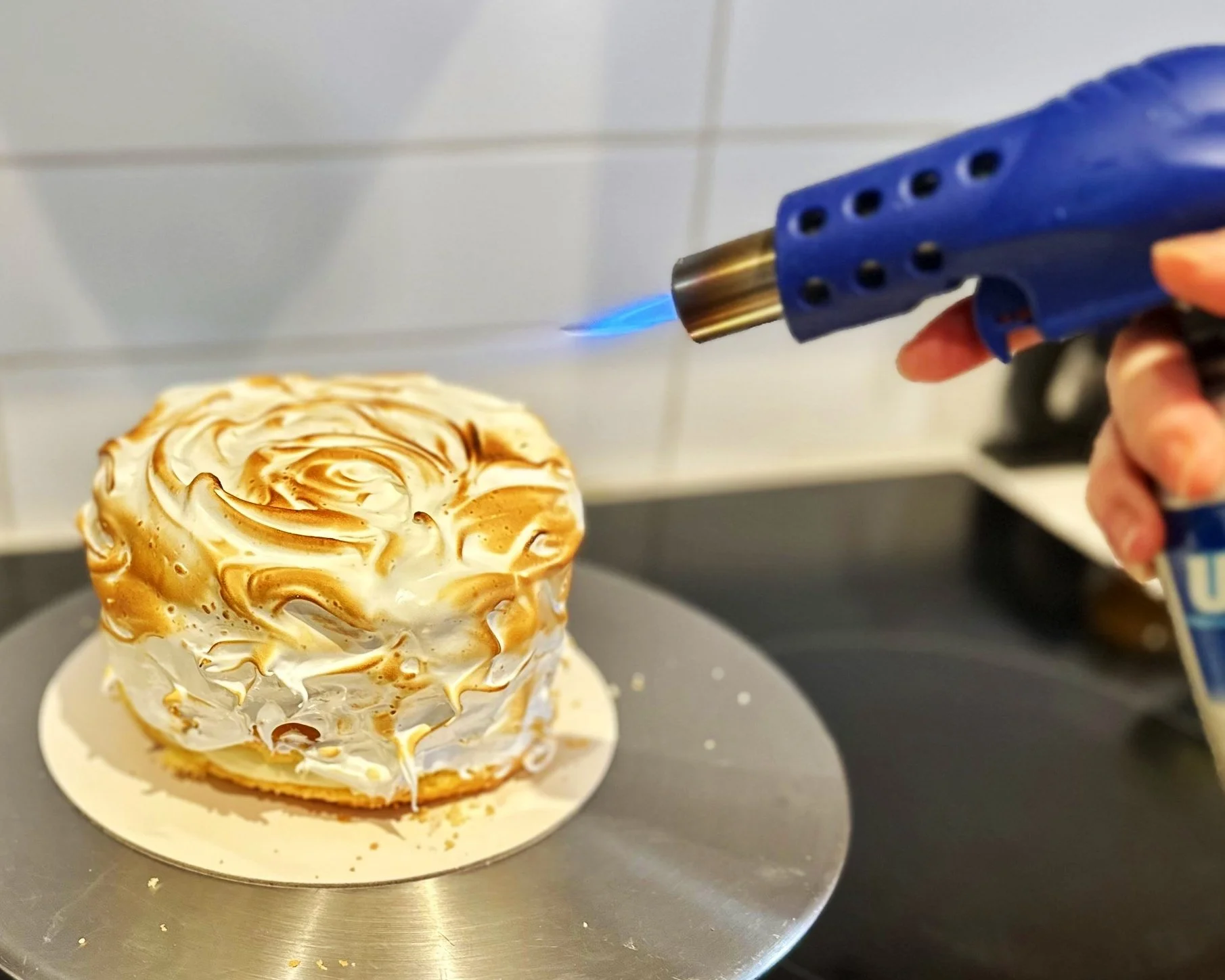
Genoise layers lemon curd and meringue
With the convenience of an electric oven, baking became much easier. The cakes no longer risked burning, and the genoise turned out incredibly light and airy.
Yet even today, every time I bake a genoise sponge cake, I am reminded of those early cakes made over charcoal — imperfect, fragrant, and full of love.
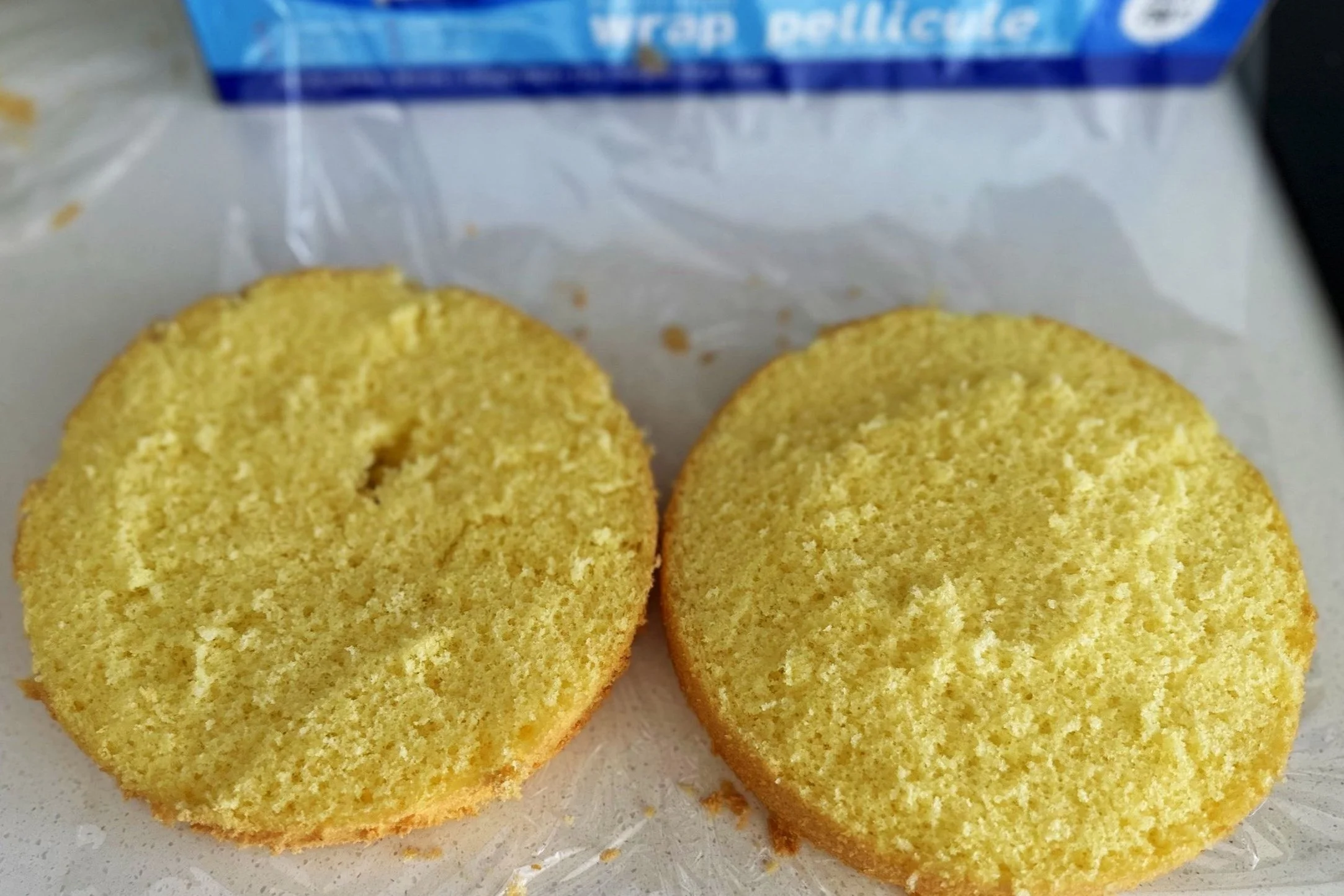
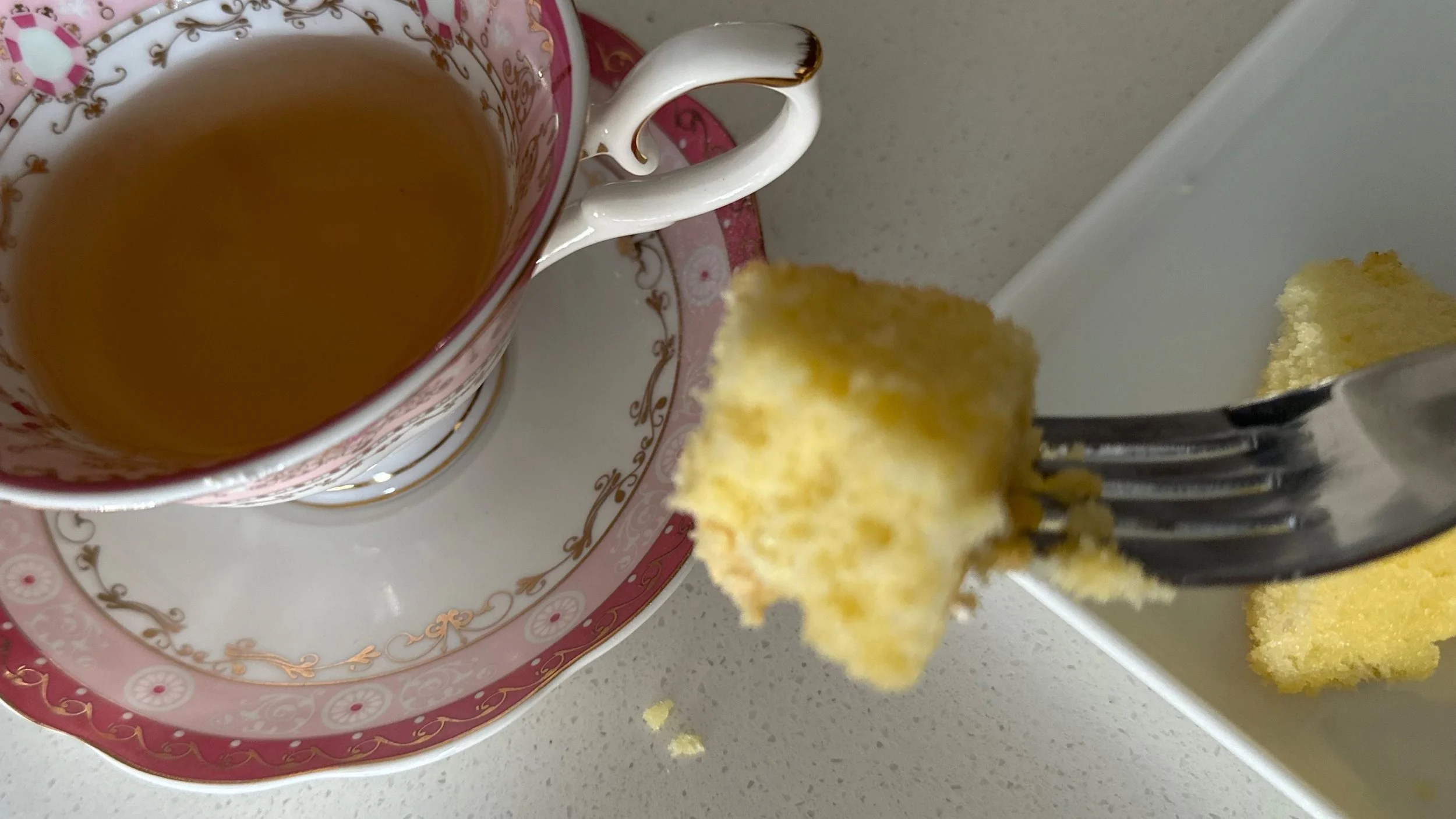
Tender crumb
I always have room for a slice of this cake. It’s the perfect comfort dessert food.
Yields:
1 small cake serve 10-15 people
Supplies:
Mixing bowl medium size or stand mixer
Spatula
Cake pans
Scale
Baking trays
Baking pan, loaf, Bundt
Genoise Sponge Recipe
Ingredients:
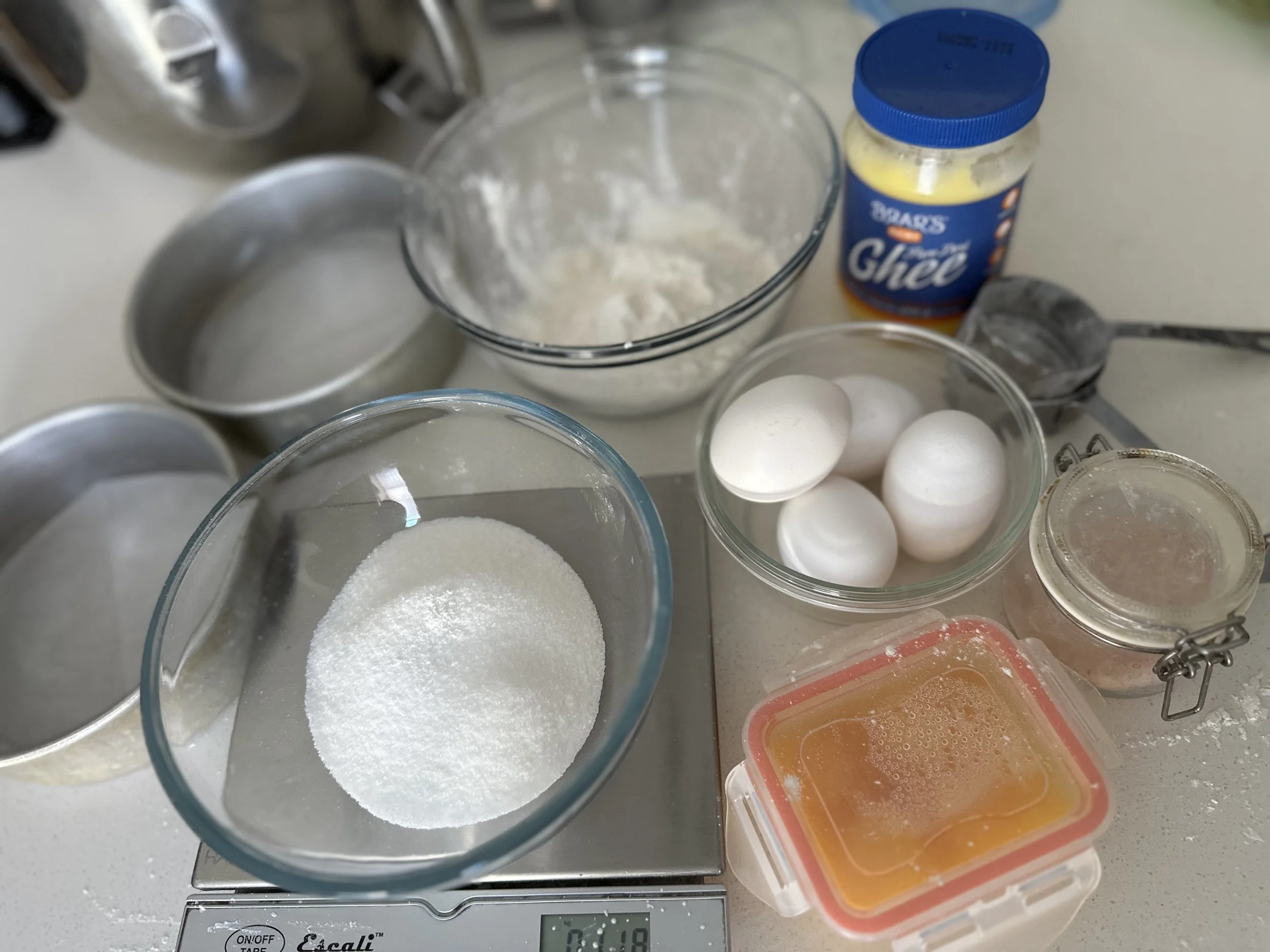
Two 6 in cake
Ingredients
50 g cornstarch (⅓ cup)
110 g all-purpose flour or cake flour (¾ cup)
4 large eggs
2 egg yolks
130 g sugar
30 g clarified butter (2 tbsp melted butter)
2 tsp lemon juice
2 tsp water
1 tsp vanilla extract or vanilla sugar
Pinch of salt
Instructions
1. Prepare the Oven and Pans
Preheat oven to 350°F (175°C).
Prepare two 6-inch cake pans by lining the bottom with parchment paper.
2. Beat the Eggs
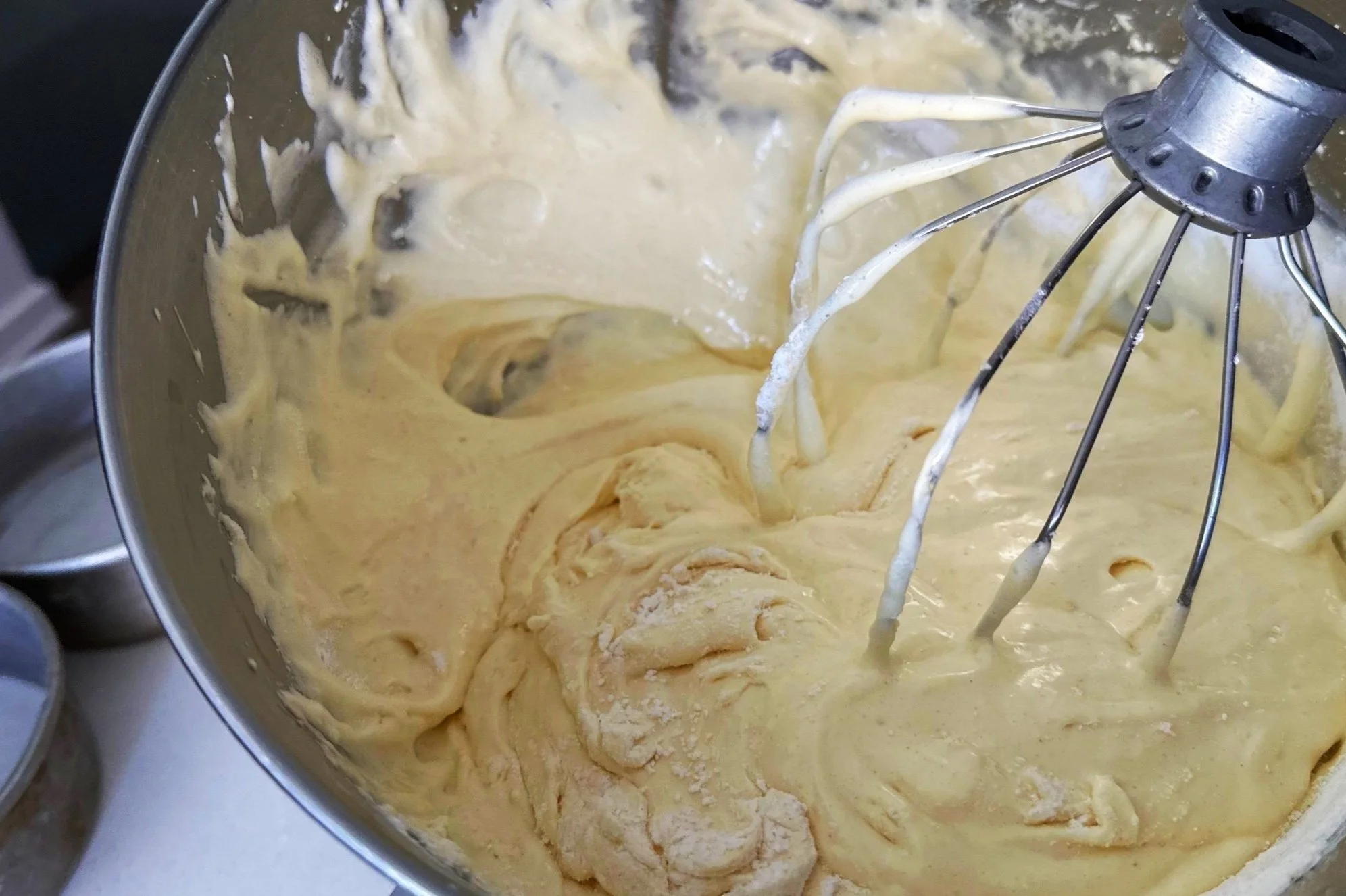
In the bowl of a stand mixer combine:
whole eggs
egg yolks
sugar
vanilla
pinch of salt
Beat on medium-high speed for 15–20 minutes.
The mixture should become very pale, thick, and fluffy.
This stage is called the ribbon stage.
3. Add Lemon Juice and Water
Add the lemon juice and water slowly while mixing.
This helps stabilize the foam and keeps the batter light.
4. Fold in the Flour
Sift together:
cornstarch
flour
Add the flour mixture in three additions, gently folding with a spatula.
Fold carefully to avoid deflating the batter.
5. Incorporate the Butter
To prevent the butter from sinking:
Mix a small amount of batter with the melted clarified butter.
Once combined, gently fold this mixture back into the batter.
Mix briefly until just combined.
6. Bake the Cake
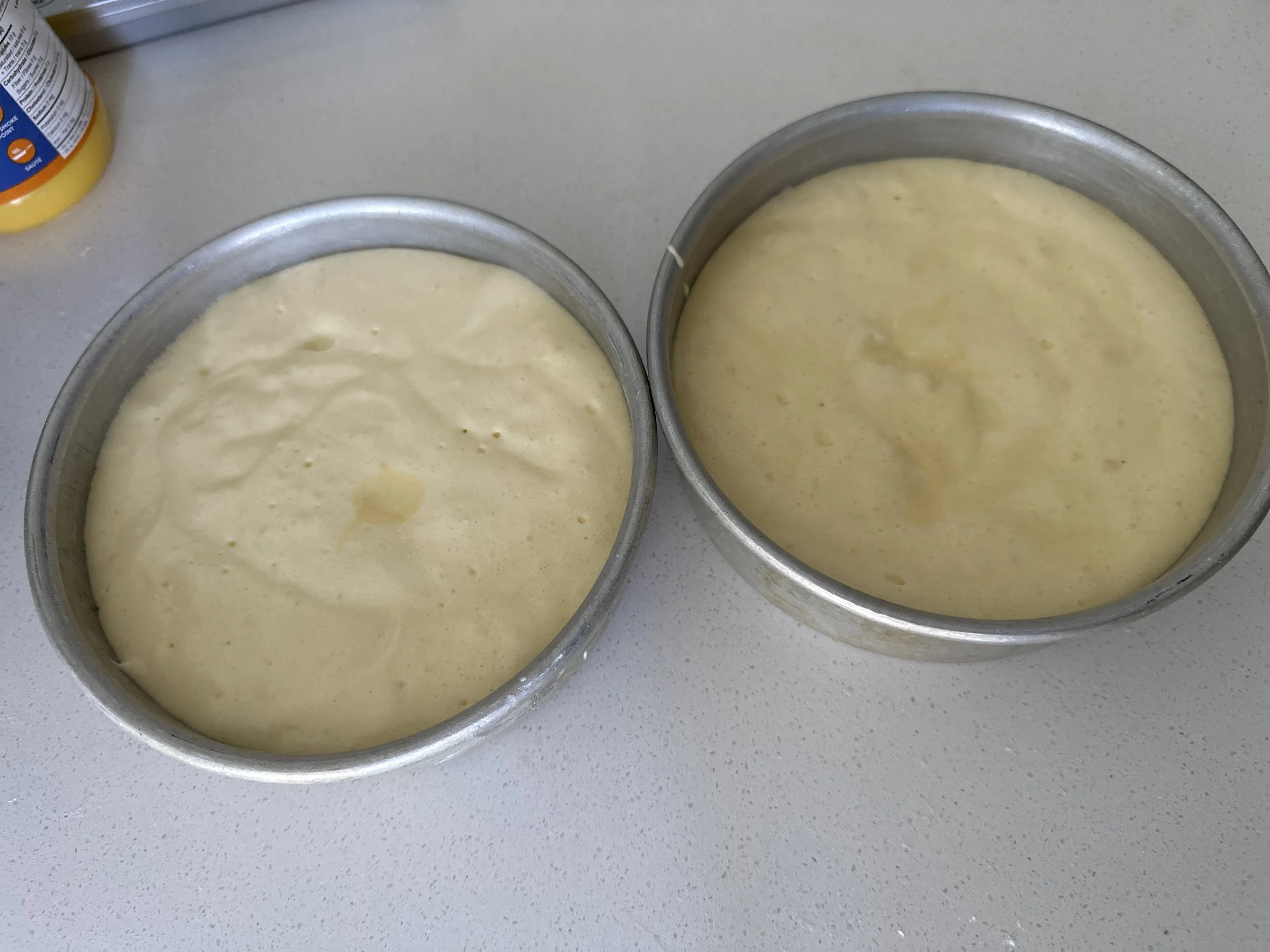
Divide the batter evenly between the prepared pans.
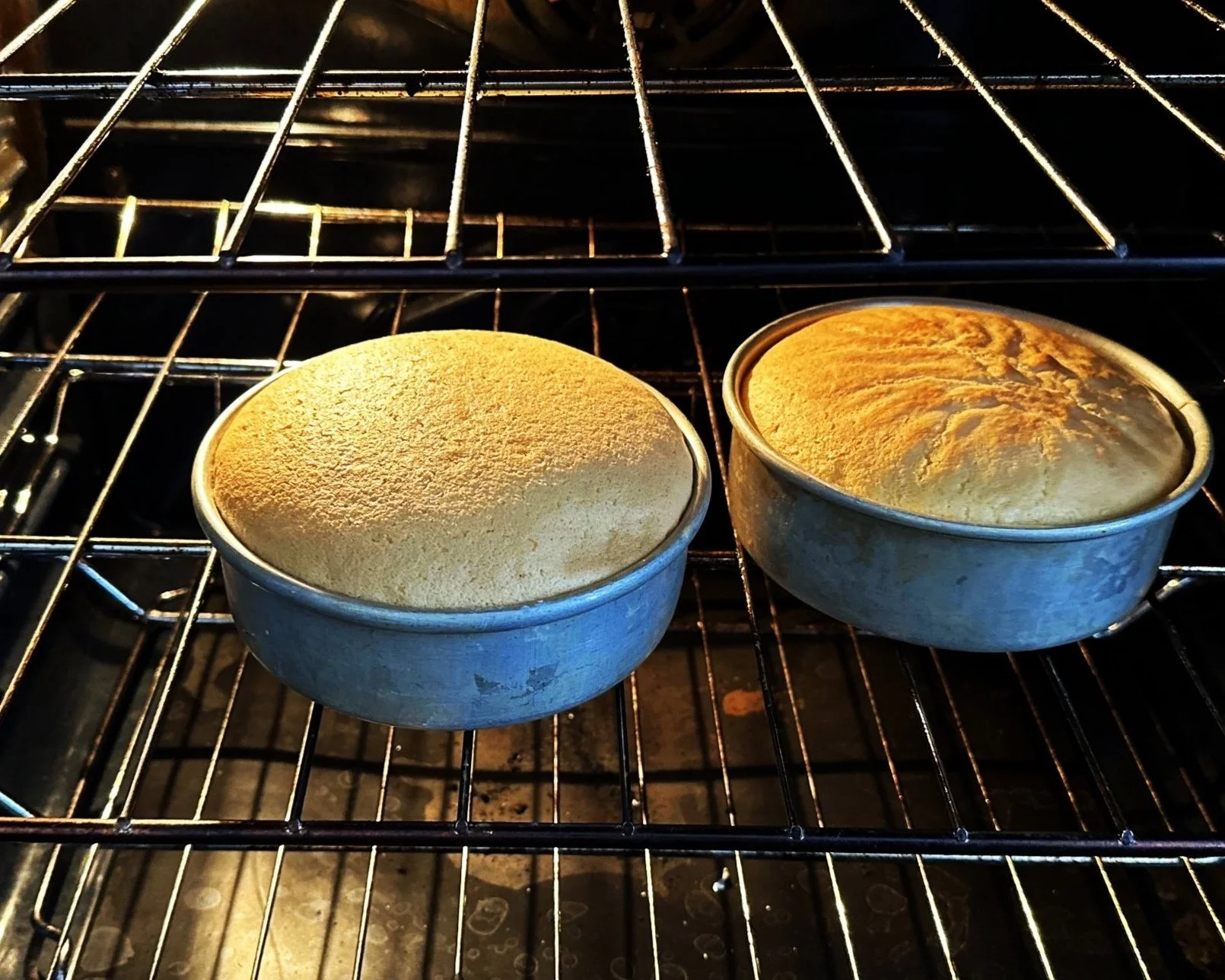
Bake at 350°F for 15–20 minutes.
The cake is ready when:
the top is light golden
a toothpick inserted comes out clean
The texture should be light with a fine crumb.
Let the cakes cool completely before removing from the pans.
How to Make Clarified Butter
Cut 1–2 sticks of unsalted butter into small pieces.
Melt the butter in a saucepan over medium heat.
A foamy layer will appear on top — skim it off.
Continue simmering until the butter turns light golden and fragrant.
Strain through a fine sieve or cheesecloth.
Discard the milk solids.
Clarified butter can be stored in the refrigerator up to 3 months.
Why This Genoise Works
This genoise technique creates a sponge cake that is:
light and airy
stable for layered cakes
perfect for Vietnamese bánh kem
ideal with buttercream, fruit, or whipped cream
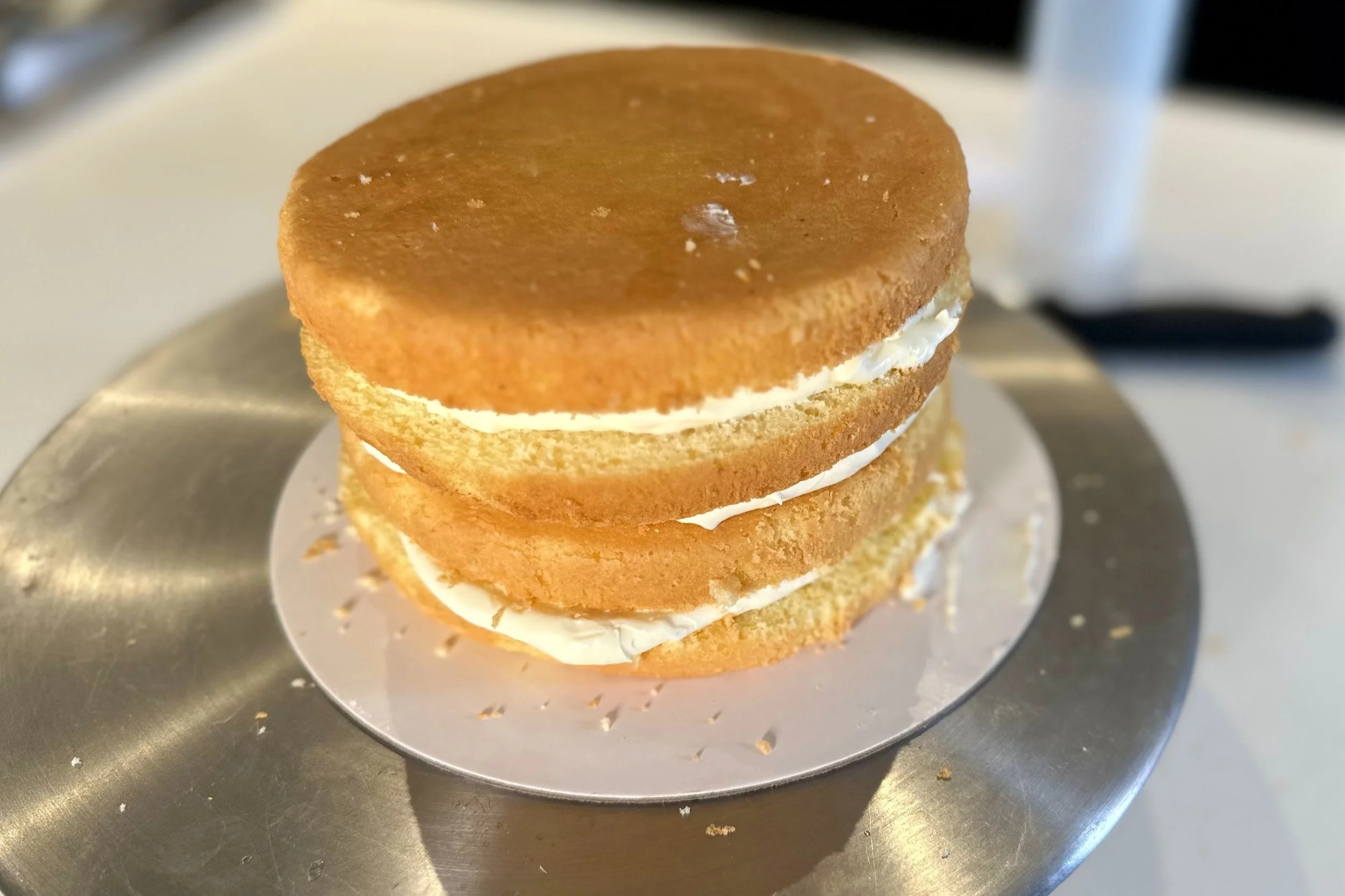
Assembly: Cool the cake, slice it in half, and drizzle with lemon syrup. Fill with lemon curd folded into whipped cream and cover with French meringue. Torch the meringue for a finishing touch.
Some common mistakes to avoid :
Room Temperature Ingredients: Ensure that your eggs are at room temperature before you start. This helps them whip up better and achieve the desired volume.
Gentle Folding: When incorporating the flour and clarified butter into the whipped eggs, use a gentle folding technique. Overmixing can deflate the batter and result in a dense cake.
Even Oven Temperature: Make sure your oven is preheated and maintains an even temperature throughout the baking process. This helps the cake rise properly and prevents it from sinking or cracking.
Clarified Butter: Use high-quality, unsalted butter for making clarified butter. Be careful not to burn the butter during the clarification process, as this can give it a bitter flavor.
Proper Pan Preparation: Grease your cake pans properly or line them with parchment paper to prevent the cake from sticking and ensure even baking.
Avoid Common Mistakes: Be mindful of common mistakes such as overmixing the batter, insufficiently beating the eggs, and not greasing the pan properly.
Relate topic recipes:
Lemon curd recipe: Click here
French meringue recipe: View recipe here
Cream Cheese Frosting Recipe