
LEVEL 4: Module 10 — Modern Pastry Architecture
Mirror Glaze
Teaches:
✔ gelatin glazing
✔ temperature control
✔ smooth finish
Velvet Spray
Teaches:
✔ chocolate + cocoa butter ratios
✔ frozen mousse finishing
Crunchy Layers
Examples:
feuilletine crunch
praline crunch
cookie crunch base
Teaches:
✔ texture contrast
✔ moisture protection
Fruit Inserts
Examples:
raspberry insert
mango insert
passion fruit gel
Teaches:
✔ freezing inserts
✔ layering structure
✔ acidity contrast
Joconde Sponge
VERY important.
Opera cake already introduced it, but here you can teach it as:
👉 a reusable pastry component
Crémeux
Examples:
chocolate crémeux
caramel crémeux
passion fruit crémeux
Teaches:
✔ custard-emulsion texture
✔ rich modern fillings
Whipped Ganache
VERY modern pastry energy.
You already basically use this technique.
Teaches:
✔ emulsification
✔ stabilization
✔ texture control
Glazing & Finishing
Examples:
neutral glaze
fruit glaze
chocolate glaze
Decorative Components
Examples:
chocolate curls
tempered chocolate shards
candied citrus
meringue kisses
Mirror Glaze
A glossy modern pastry glaze used to finish mousse cakes and entremets.
Mirror glaze creates a smooth reflective surface while protecting the mousse underneath.
Best applied over fully frozen cakes.
Ingredients (for one 9-inch cake)
300g granulated sugar
350g white chocolate
200g condensed milk
20g gelatin powder
150ml water
300g glucose
white food coloring
Before You Start
Mousse cake should be completely frozen
Glaze should be strained before use
Proper temperature is important for smooth finish
Method
1. Bloom the Gelatin
Combine gelatin powder with part of the water and allow to bloom.
2. Cook the Syrup
In a saucepan combine:
sugar
remaining water
glucose
Bring gently to a boil until sugar dissolves.
3. Melt the Chocolate
Place white chocolate and condensed milk into a tall container.
Pour hot syrup over chocolate mixture.
4. Add Gelatin
Add bloomed gelatin and stir until fully dissolved.
5. Blend
Add white food coloring.
Blend using immersion blender until smooth and glossy.
👉 Keep blender submerged to avoid air bubbles.
6. Strain & Rest
Pass glaze through a chinois or fine strainer.
Allow glaze to cool before using.
Ideal Glazing Temperature
Usually around:
👉 32–35°C (90–95°F)
depending on desired thickness.
How to Glaze
Place frozen mousse cake on rack
Pour glaze evenly from center outward
Allow excess glaze to drip away
Transfer carefully to serving board
What to Look For
glossy reflective surface
smooth coating
no bubbles
even coverage
Common Mistakes
glaze too hot → thin transparent coating
glaze too cold → thick uneven surface
cake not frozen → glaze slides off
excessive blending → bubbles
Important Insight
Mirror glaze works through the balance of:
👉 gelatin
👉 sugar
👉 chocolate
👉 glucose
Together they create:
✔ shine
✔ elasticity
✔ smooth flow
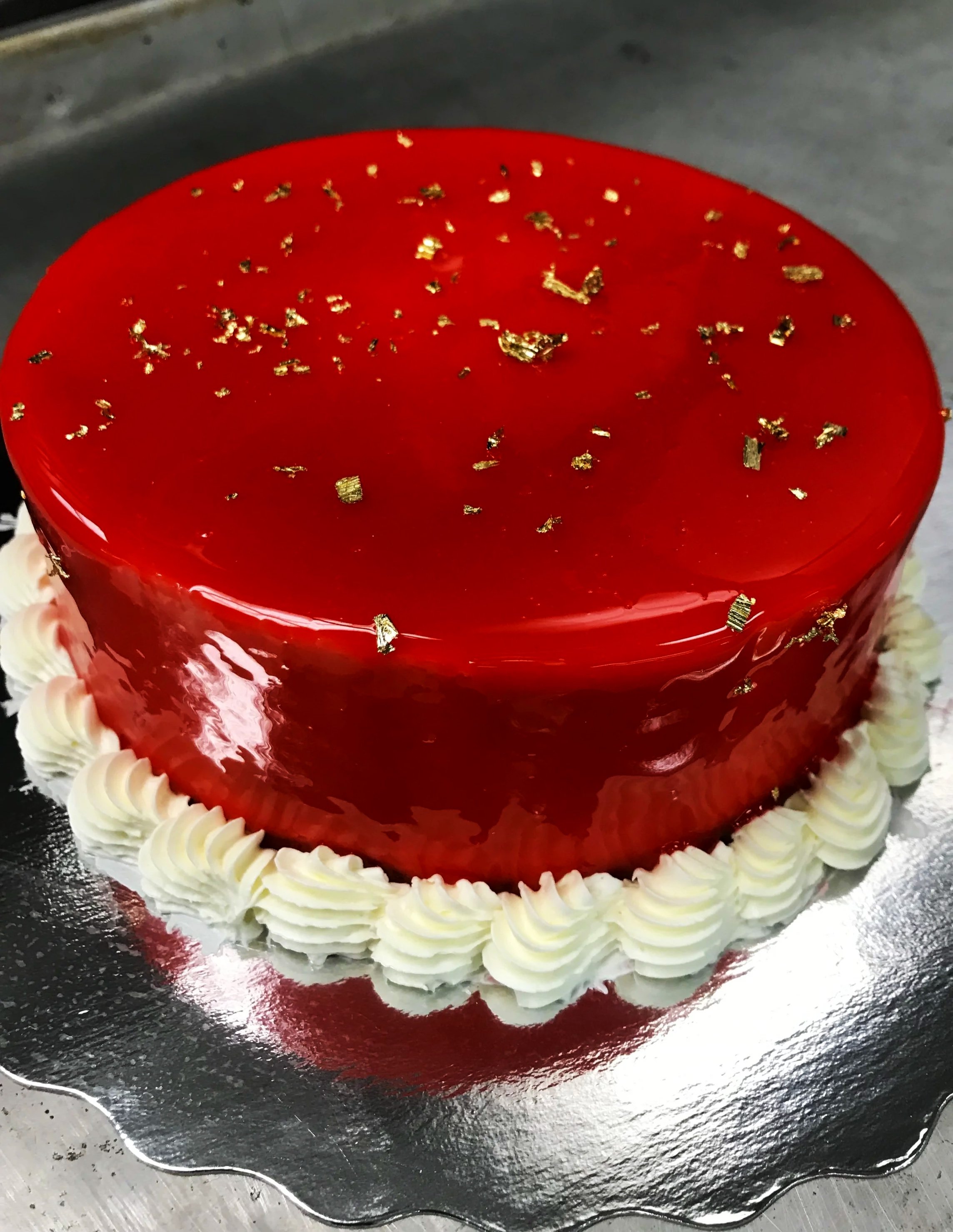
These decorative and plated dessert components were inspired by techniques learned in pastry school and professional kitchen environments. They are designed to add texture, elegance, and contrast to modern pastry desserts.
Modern Pastry Components
Modern pastry uses multiple components to create contrast in texture, flavor, structure, and presentation.
These components help transform desserts into composed plated pastries and entremets.
Apple Tuile
A thin crisp cookie used for texture and decorative garnish.
Ingredients
200g melted butter
200g brown sugar
200g white sugar
200g fruit purée
160g flour
Method
Combine all ingredients until smooth
Spread thinly using stencil or template
Bake until golden brown and crisp
What to Look For
thin crisp texture
caramelized edges
delicate structure
Important Insight
Tuiles create:
👉 texture contrast
👉 visual height
👉 crispness in plated desserts
Apple Jelly Foam
A modern plated dessert component combining apple jelly and siphon aeration.
Ingredients
800g apples
200g water
200g sugar
juice of 2 lemons
pinch cream of tartar
green food coloring
5 gelatin leaves
Method
1. Prepare Syrup
Combine:
sugar
water
cream of tartar
Bring to a boil.
2. Prepare Apples
Squeeze lemon juice into bowl.
Cut apples and place into lemon juice.
Pour hot syrup over apples.
3. Blend
Blend mixture with a small amount of green coloring.
Pass through chinois into tall container.
4. Stabilize
Measure 850ml mixture.
Add softened gelatin leaves.
Adjust color if needed.
5. Siphon Preparation
Pour 600ml into siphon.
Charge with cartridge and refrigerate.
Store remaining jelly separately.
What to Look For
smooth airy foam
fresh apple flavor
stable aerated texture
Important Insight
Siphons create:
👉 lightness
👉 modern texture
👉 elegant plated presentation
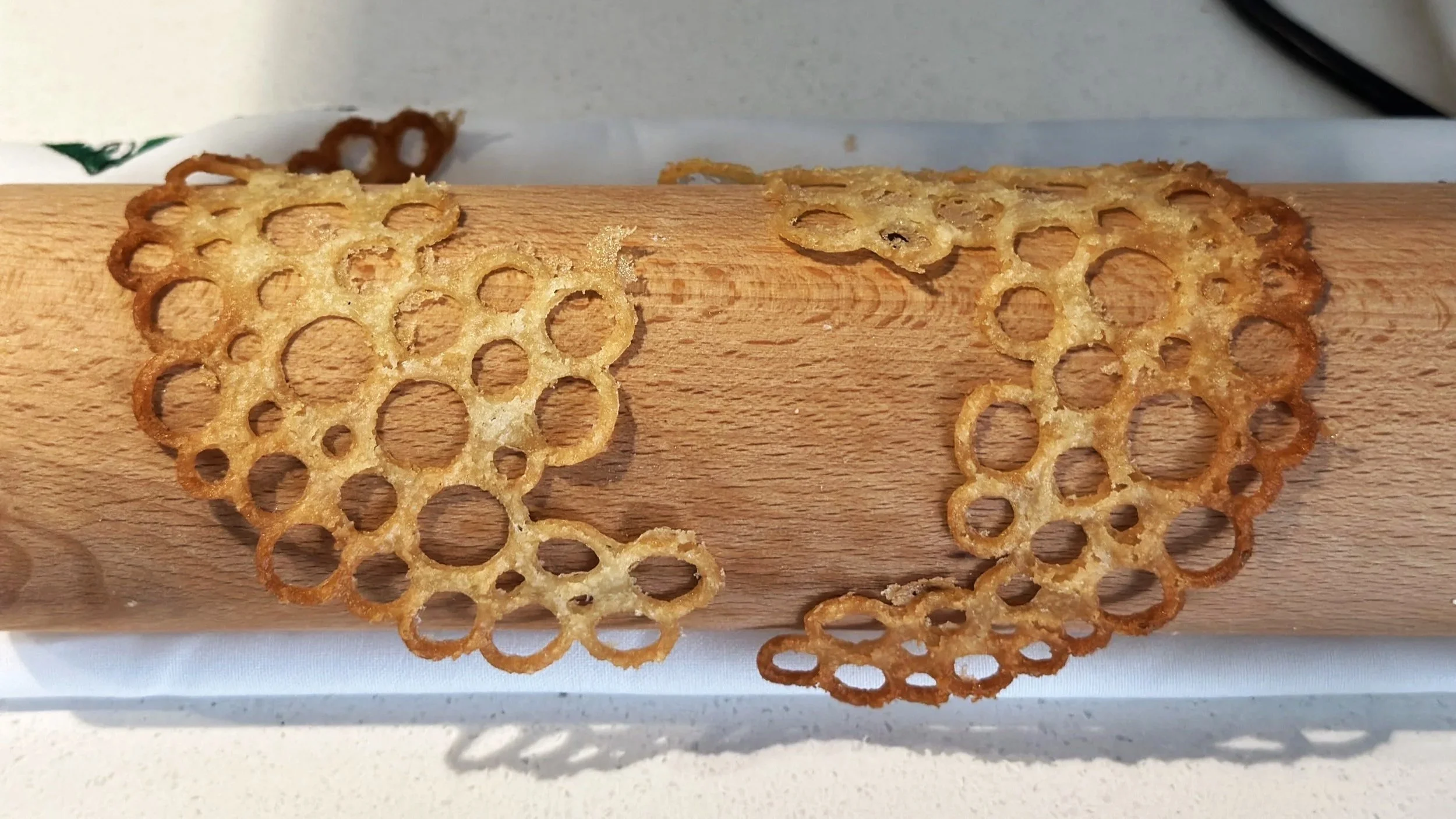
Mouchoir Blanc
A delicate white chocolate sugar garnish with crisp airy texture.
Ingredients
250g fondant
160g glucose
white chocolate couverture
Method
Cook fondant and glucose to 155°C
Remove from heat when lightly caramelized
Add white chocolate couverture
Process finely in Robot Coupe
Sift onto Flexipan mat
Bake until melted and delicate
What to Look For
lace-like structure
delicate crisp texture
light caramelized flavor
White Chocolate Almond Budino
A soft plated dessert cake with almond, white chocolate, and citrus flavor.
Ingredients
Dry Ingredients
205g flour
7g baking powder
1g baking soda
1g salt
190g ground almonds
Chocolate Mixture
150g white chocolate
120g milk
Cream Mixture
180ml butter
lemon zest
350ml cream
Egg Foam
150g sugar
3 eggs
Method
Sift dry ingredients together
Melt white chocolate with milk
Cream butter, lemon zest, and cream together
Beat eggs and sugar until light and fluffy
Fold dry ingredients and butter mixture alternately into egg foam
Fold gently to preserve aeration
What to Look For
soft delicate crumb
balanced almond flavor
moist texture
Raspberry Jelly Insert
A soft fruit jelly used in mousse cakes, entremets, verrines, and layered desserts.
Fruit jelly inserts add:
✔ acidity
✔ freshness
✔ texture contrast
✔ clean fruit flavor
Ingredients
250g raspberry purée
25g sugar
¼ lemon juice
2 gelatin leaves
Before You Start
Fruit purée should be smooth
Do not boil aggressively after adding gelatin
Freeze insert before assembling mousse cakes
Method
1. Bloom the Gelatin
Soften gelatin leaves in cold water.
2. Heat the Fruit Base
In a saucepan combine:
raspberry purée
sugar
lemon juice
Warm gently until sugar dissolves.
3. Add Gelatin
Remove from heat.
Add softened gelatin and stir until fully dissolved.
4. Mold & Chill
Pour into insert molds or shallow tray.
Freeze until firm before using in mousse cakes.
What to Look For
smooth jelly texture
clean fruit flavor
soft flexible consistency
stable frozen insert
Fruit Variation
This jelly method can also be adapted for:
mango
strawberry
passion fruit
blueberry
peach
apricot
Adjust sugar and lemon juice depending on the fruit’s sweetness and acidity.
Important Insight
Fruit jelly inserts create contrast inside mousse cakes by adding:
👉 freshness
👉 acidity
👉 texture variation
They help balance rich mousse and cream components.
Yuzu Lemon Crémeux
A silky French-style citrus cream used in modern pastry for fillings, inserts, and plated desserts.
🧾 Ingredients
45g yuzu juice
20g lemon juice
25g milk
10g lemon zest
75g eggs
45g sugar
15g cocoa butter
100g butter
2g gelatin leaves or gelatin powder
Basic Method
Bloom gelatin if using powder or leaves
Heat:
yuzu juice
lemon juice
milk
zest
Whisk eggs and sugar together
Temper warm liquid into egg mixture
Return to heat and cook gently until slightly thickened
Remove from heat and add:
gelatin
cocoa butter
butter
Blend until smooth and emulsified
Chill before using
What to Look For
silky texture
glossy finish
smooth stable consistency
balanced acidity
WHAT MAKES CRÉMEUX DIFFERENT?
Compared to mousse:
👉 denser
👉 creamier
Compared to curd:
👉 smoother
👉 richer
👉 more refined texture
Compared to ganache:
👉 lighter
👉 more custard-like
Tulip Paste
Tulip paste is a decorative paste used to create patterns and designs on sponge cakes, roulades, and decorative pastry sheets.
It is commonly spread through stencils or piped into patterns before sponge batter is added on top.
Ingredients
130g butter (room temperature)
130g icing sugar (sifted)
100g all-purpose flour (sifted)
2 egg whites
Before You Start
Butter should be soft but not melted
Sift dry ingredients for smooth texture
Chill paste before using for cleaner patterns
Method
1. Cream the Butter
Beat softened butter until smooth and lighter in color.
2. Add Sugar
Add sifted icing sugar and whisk until smooth and creamy.
3. Add Egg Whites
Add egg whites gradually, mixing a little at a time.
4. Add Flour
Fold in sifted flour until the paste becomes smooth and homogeneous.
5. Chill
Cover with plastic wrap and refrigerate before using.
👉 Chilled paste creates sharper decorative patterns.
Ways to Use Tulip Paste
stencil decorations
patterned sponge cake
roulade designs
decorative joconde sponge
plated dessert accents
What to Look For
smooth spreadable texture
clean stencil lines
flexible baked decoration
Common Mistakes
butter too warm → spreading patterns
overmixing → weak structure
paste too thick → uneven baking
Important Insight
Tulip paste is both:
👉 decorative
and
👉 structural
The balance of butter, sugar, and flour creates a paste that holds detailed patterns during baking.
Genoise Sponge
A light classic European sponge cake made by whipping eggs and sugar for aeration.
Genoise relies on air whipped into the eggs rather than chemical leaveners for its structure.
Ingredients
4 large eggs
100g sugar
50g cake flour
50g cornstarch
clarified butter (small amount folded in for tenderness)
Before You Start
Eggs should be room temperature
Do not overheat eggs while whipping
Fold gently to preserve volume
Method
1. Prepare the Pan
Line cake pan or baking tray with parchment paper.
Preheat oven.
2. Whip Eggs & Sugar
Place eggs and sugar over gentle heat while whisking until slightly warm.
Transfer to mixer and whip until:
pale
thick
ribbon stage
👉 The batter should fall slowly from the whisk.
3. Sift Dry Ingredients
Sift together:
cake flour
cornstarch
4. Fold Carefully
Fold dry ingredients gently into egg foam in stages.
5. Add Clarified Butter
Fold a small amount of batter into clarified butter first.
Then gently fold back into the main batter.
👉 This prevents deflating the sponge.
6. Bake
Spread evenly into prepared pan.
Bake until:
lightly golden
springy to touch
What to Look For
light airy texture
flexible sponge
even crumb
good volume
Common Mistakes
overmixing → dense sponge
adding butter too quickly → collapsed batter
underwhipping eggs → poor volume
Important Insight
Genoise depends entirely on:
👉 egg foam structure
Proper folding preserves the air that creates the sponge’s lift.
Common Uses
opera cake
mousse cakes
roulades
trifles
layered pastries
Joconde Sponge
A light almond sponge used in classic French pastries such as Opera cake, entremets, roulades, and layered mousse cakes.
Joconde sponge is soft, flexible, and designed for thin elegant layering.
Unlike genoise, joconde contains almond flour, which creates a more tender texture and rich flavor.
Ingredients
Dry Ingredients
110g ground almonds
85g sugar
26g flour
Egg Mixture
4 whole eggs
1 egg yolk
Meringue
3 egg whites
26g sugar
Fat
26g melted butter
Before You Start
Eggs should be room temperature
Butter should be melted but not hot
Fold gently to preserve aeration
Method
1. Prepare the Almond Base
In a mixing bowl combine:
ground almonds
sugar
flour
Using the paddle attachment, gradually add half of the eggs.
Mix until smooth.
Add remaining eggs and yolk.
Continue mixing until light and slightly aerated.
2. Prepare the Meringue
Whip egg whites and sugar to soft peaks.
👉 Do not overwhip.
The meringue should remain smooth and flexible.
3. Fold the Mixtures
Fold the meringue gently into the almond egg mixture.
At the same time, fold in melted butter carefully.
👉 Fold gently to avoid deflating the batter.
4. Bake
Spread evenly into prepared tray.
Bake until lightly golden and springy to touch.
What to Look For
thin flexible sponge
light almond flavor
soft even texture
smooth surface
Common Mistakes
overmixing → dense sponge
overwhipped meringue → dry texture
hot butter → deflated batter
uneven spreading → irregular layers
Important Insight
Joconde sponge is designed for:
👉 flexibility
👉 layering
👉 thin precise assembly
This makes it ideal for:
Opera cake
mousse cakes
entremets
decorative sponge work