LEVEL 3: Module 9: Custards, Fillings & Dessert Foundations
Lemon Curd
Bright, smooth, and rich — lemon curd balances acidity, sweetness, butter, and eggs into a silky citrus cream.
It can be used in tarts, cakes, pastries, and layered desserts.
Ingredients
2 large eggs
80ml lemon juice
120g caster sugar
150g unsalted butter, cubed
zest of 1 lemon
3g gelatin (optional for extra stability)
Before You Start
Cook over gentle heat
Stir constantly to prevent curdling
Add butter after removing from heat for a smoother texture
Method
1. Prepare the Base
In a saucepan, combine:
eggs
sugar
lemon juice
Mix well before heating.
2. Cook the Curd
Cook over medium-low heat while stirring constantly.
Continue stirring until the mixture becomes:
cloudy
slightly thickened
gently bubbling
👉 Do not boil aggressively.
3. Finish with Butter
Remove from heat.
Add:
cubed butter
lemon zest
Stir continuously until fully smooth and emulsified.
👉 An immersion blender can help create an extra silky texture.
4. Chill
Transfer to a container.
Cover the surface directly and refrigerate until ready to use.
What to Look For
smooth glossy texture
balanced sweet-tart flavor
thick but creamy consistency
Common Mistakes
cooking too hot → scrambled eggs
insufficient stirring → uneven texture
adding butter too early → broken emulsion
Optional Gelatin
A small amount of gelatin can help stabilize the curd for:
tart fillings
layered cakes
molded desserts
Important Insight
Lemon curd thickens through:
👉 egg coagulation
👉 butter emulsification
The key is gentle heat and continuous stirring.
Storage
Keep refrigerated until ready to use.
💬 REAL TALK
Lemon curd is one of those recipes that feels magical because:
👉 liquid suddenly becomes silky cream 😄
Lemon Tart
Pâte Sucrée, Lemon Cream & Meringue
I made this lemon tart many times while working in catering at Carleton University. One day, the university president was hosting a party at her residence. She normally didn't eat much dessert, but she tried this lemon tart and loved it.
I've always remembered that compliment. This tart has the balance I like: a crisp sweet dough shell, a bright lemon filling that is rich but still tart, and a light meringue finish.
Baking the Sweet Dough
Use ½ recipe of sweet dough for the tart shell:
200g flour
100g butter
100g sugar
1 egg
2g baking powder
Line the tart ring or pan with the sweet dough.
Bake at 350°F (175°C) until the shell is completely baked and lightly golden. Cool completely before adding the lemon filling.
Lemon Cream
150g whole eggs
180g sugar
150g fresh lemon juice
Zest of 3 lemons
225g unsalted butter
Place the sugar, lemon juice, and lemon zest in a saucepan.
Whisk the eggs, then add them to the saucepan. Cook while whisking continuously until the mixture comes to a boil and thickens.
Transfer the cooked lemon mixture to a food processor.
Add the butter a little at a time, processing continuously until all the butter is incorporated and the lemon cream is completely smooth and glossy.
A whisk or handheld mixer can also be used, but I prefer the food processor because it incorporates the butter very smoothly and helps prevent little clumps of butter from remaining in the cream.
Fill the cooled tart shell with the lemon cream, smooth the surface, and chill until set.
Finish with Italian meringue or French meringue, then pipe or spread it decoratively over the tart.
Why I Use a Food Processor
This is worth teaching because it's one of those small professional habits that a bare recipe doesn't explain.
The butter is added gradually to the cooked lemon mixture. Processing it continuously helps break the butter into the mixture evenly, producing a smooth, homogeneous cream without pieces of butter left behind.
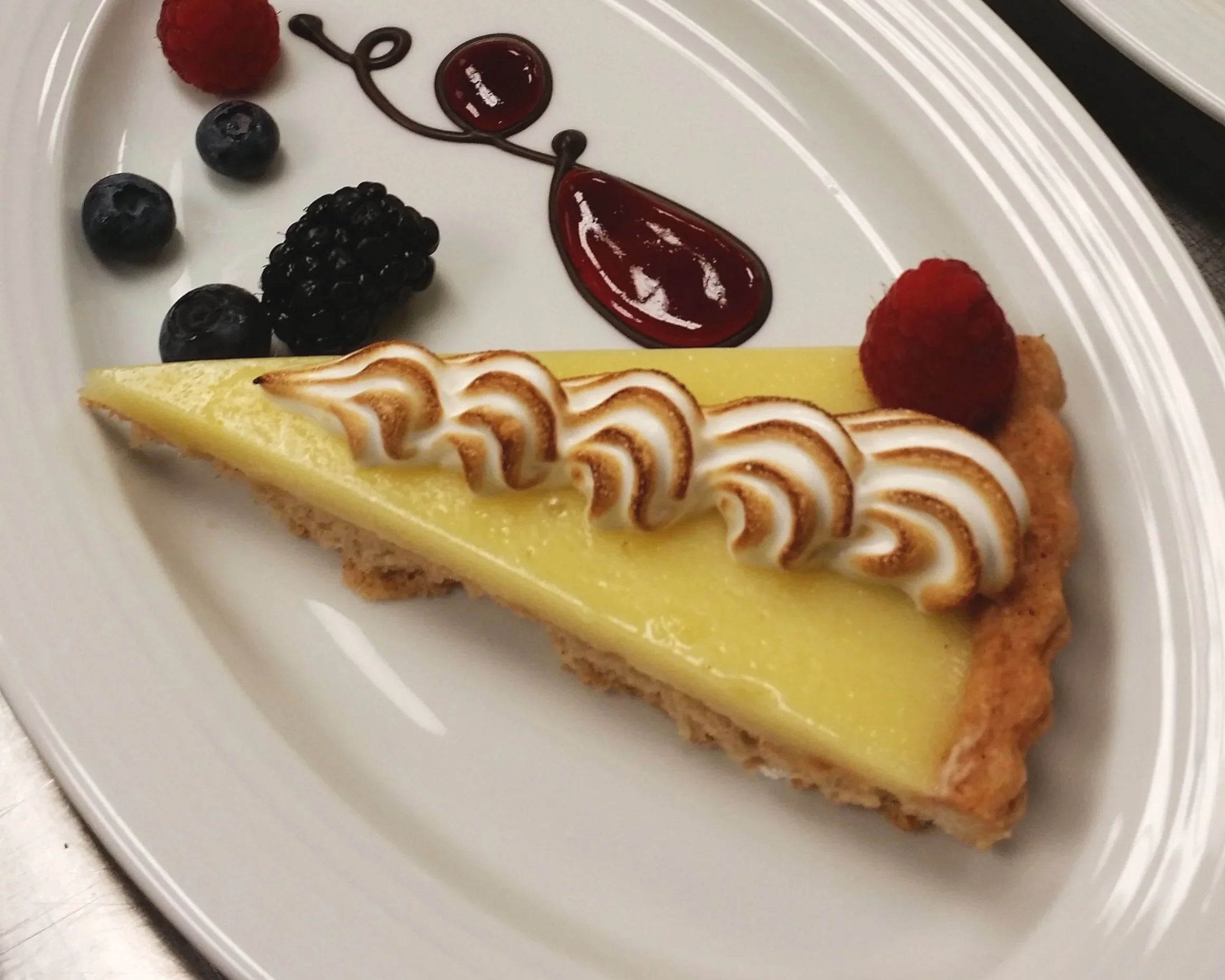
Plated Lemon Tart
with Fruit Coulis & Torched Meringue
For catering service, I like to cut the finished lemon tart into small, elegant portions rather than serving large slices.
Spread or swipe a small amount of fruit coulis across the dessert plate.
Place one portion of chilled lemon tart over or alongside the coulis.
Pipe the meringue decoratively onto the individual piece of tart. Using a kitchen torch, lightly caramelize the meringue until the peaks are golden brown, leaving some areas white for contrast.
Serve immediately or hold appropriately for service.
The Balance of the Plate
The plate has several contrasting elements working together:
Sweet dough — crisp and buttery
Lemon cream — rich, silky and tart
Meringue — sweet, light and softly toasted
Fruit coulis — adds acidity, fruit flavor and color